Quantcast
BANKTHINK

Why U.S. Banks Have Little to Fear from Sovereign Debt Downgrade

AUG 5, 2011 11:32pm ET
Print
Email
Reprints
(1) Comment

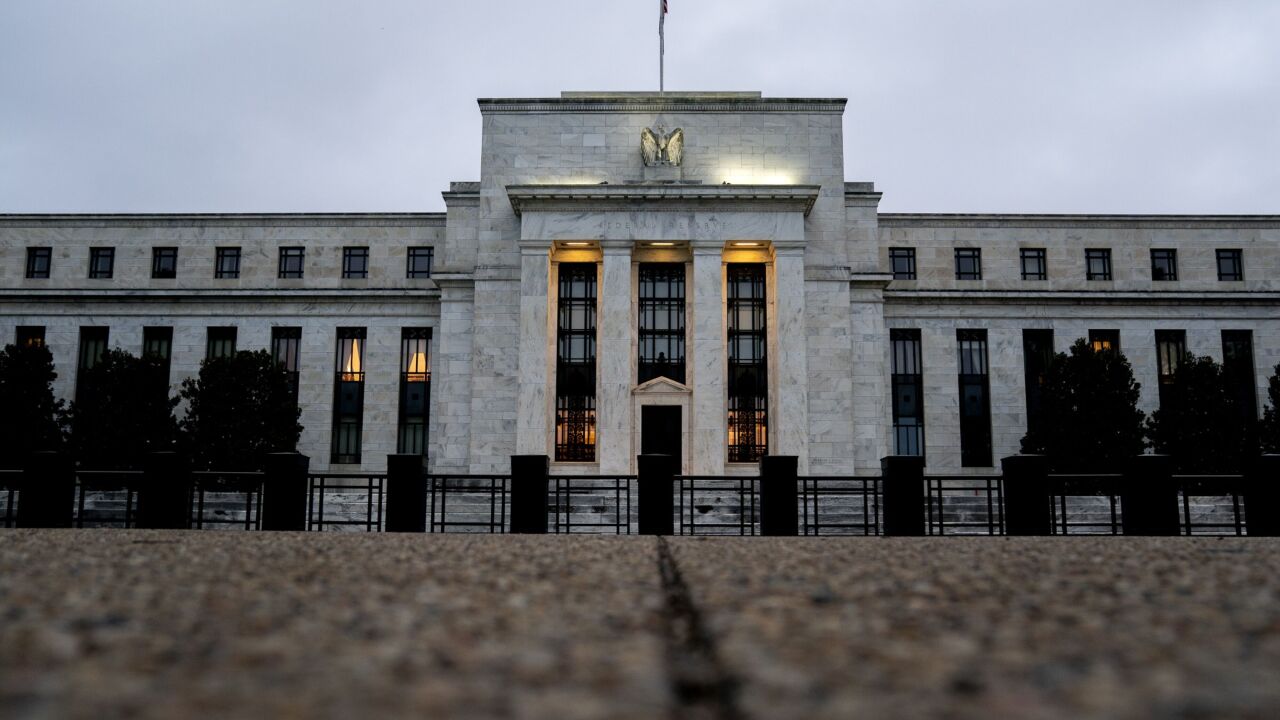
The downgrading of U.S. government debt by Standard & Poor's Friday evening is a grim milestone in the history of American finance—and one that will be parsed in excruciating detail in coming days—but the ultimate practical impact on financial institutions seems likely to be minimal in the short term. The reasons are many.

The downgrade of the U.S. sovereign debt from AAA to AA+ "will not change" the risk weights for Treasury securities and other securities issued or guaranteed by the U.S. government or government agencies,” the Federal Reserve, Federal Deposit Insurance Corp. and other federal banking regulators said in a statement.

"The treatment of Treasury securities and other securities issued or guaranteed by the U.S. government, government agencies, and government-sponsored entities under other federal banking agency regulations, including, for example, the Federal Reserve Board's Regulation W, will also be unaffected."

Other reasons that the impact on U.S. banks appears likely to remain muted: No U.S. banks are themselves rated AAA and thus do not risk automatic downgrades as a result of today’s move; the financial troubles of the U.S. government and government sponsored enterprises are already well-known to investors and factored into debt prices and yields; other leading ratings agencies Moody’s and Fitch have not followed suit; the downgrade was signaled three months ago when S&P declared its long-term outlook on U.S. government debt “negative”; interest rates are near record lows and unlikely to rise appreciably as a result of the ratings cut; S&P cut Japan’s sovereign rating to AA- in January, yet its government remains able to borrow at some of the world’s lowest interest rates with a debt-to-GDP ratio that is more than double the U.S. level; the credibility of ratings agencies have been severely undermined by their failure to accurately rate housing-related securities.

Such qualifiers aside, U.S. bankers have plenty to worry about these days. As my colleague Jeff Horwitz wrote earlier, investors have been rendering a harsh verdict on banks throughout the past week, with a particularly gloomy outcome for the likes of Bank of America and Citigroup.

Sum it up and S&P tonight declared what the financial markets have known for a long time: America's financial house is in a lousy, but not a crisis-level, condition. How that affects its government and banks will ultimately be determined by how well the nation tackles the problem — not by the self-evident declarations of a highly fallible, largely discredited and severely weakened ratings agency.

What effect do you think the U.S. debt downgrade will have on banks? Share your comments below.

JOIN THE DISCUSSION

(1) Comment

SEE MORE IN


How the Best-Known Bankers in Town Stay Connected

Which bankers are boldface names in your city? You know the type: chairs the local Chamber of Commerce, raises big money for cultural institutions, knows everyone down at the country club and can greet a room full of customers by name. Of course having a sizeable donations budget can help buy connections, but maintaining a high level of community engagement and balancing it all with a day job at a bank comes down to skill.

We've profiled six bankers who raise this aspect of their work to an art form. They are from different institutions in different parts of the country, and each has a different story. One is a third-generation banker who has known many of her community's leaders since childhood. Another is an immigrant who began in banking as a teller, and whose commitment to volunteerism flourished along with his career. Some balance their activities with quiet alone time; others are social butterflies to the core. They are business leaders, civic boosters and ambassadors for their institutions. Here are the stories of how they became the best-known bankers in town.

Comments (1)
This story is like saying that malaria carrying mosquitos' bite wasn't bad, was it? The short term view of most of this article is true. In the long term, which will be no more than 6 months, US banks will pay high rates in the global market for funds and this will flow quickly to community banks.
Posted by Michael M | Saturday, August 06 2011 at 9:42AM ET
Add Your Comments:
You must be registered to post a comment.
Not Registered?
You must be registered to post a comment. Click here to register.
Already registered? Log in here
Please note you must now log in with your email address and password.

Email Newsletters

Get the Daily Briefing and the Morning Update when you sign up for a free trial.

TWITTER
FACEBOOK
LINKEDIN

This feature displays payments industry news and analysis from American Banker sibling brand PaymentsSource. Registration is required; for more information contact customer service.

Marketplace
Fiserv is a leading global provider of information management and electronic commerce systems for the financial services industry.
Learn More
Informa Research Services is the premier provider of competitive intelligence, mystery shopping, and compliance testing services to the financial industry.
Learn More
CSC is a leader in private-label, third-party loan servicing with 30+ years of proven experience in delivering effective, cost-effective solutions.
Learn More
Already a subscriber? Log in here
Please note you must now log in with your email address and password.