

Kate Berry has covered the Consumer Financial Protection Bureau for American Banker since 2016. She joined the publication in 2006 covering mortgage lending and the financial crisis. Berry also has covered big banks including Bank of America, J.P. Morgan Chase and Wells Fargo. She has won five awards from the Society of American Business Writers and Editors, and has worked at several news organizations including the Orange County Register, the Los Angeles Business Journal and the Associated Press. Berry began her career as a clerk at the New York Times.
-
The Consumer Financial Protection Bureau's proposal to restrict the use of arbitration clauses would allow it to seize enormous amounts of data from financial firms that could lead to more enforcement actions, according to industry lawyers.
May 18 -
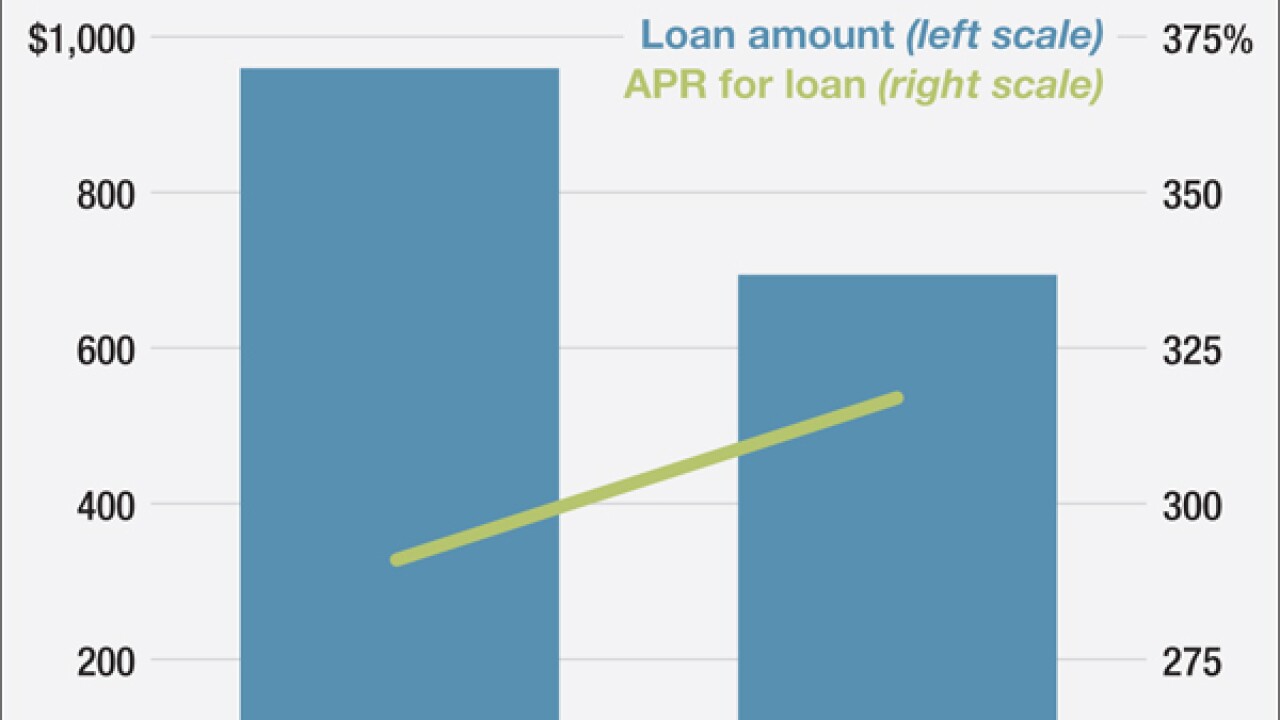
The Consumer Financial Protection Bureau found that one in five borrowers who take out short-term auto title loans have their vehicle seized for failing to repay the loan.
May 18 -
The Supreme Court on Monday ruled that private attorneys hired by states are not in violation of the Fair Debt Collection Practices Act when using official letterhead to collect a debt. The case has been watched closely by financial institutions for its interpretation of false, deceptive or misleading practices.
May 16 -
The Consumer Financial Protection Bureau has charged a Mississippi company with refusing to disclose check-cashing fees to consumers, deceptively pressuring borrowers into taking out multiple payday loans and keeping overpayments.
May 11 -
Payday lenders on Wednesday pushed back against Google's plan to ban payday loan advertisements, arguing it was discriminatory and "a form of censorship."
May 11 -
Google said Wednesday it will ban ads for payday loans to protect its customers from what it considers deceptive and harmful financial products. The ban goes into effect on July 13.
May 11 -
The finance industry pushed back against a proposal by the Consumer Financial Protection Bureau Thursday that would ban arbitration clauses in consumer contracts. If there is a flurry of class action lawsuits against banks and credit cards companies, the financial firms will no longer use arbitration because of the higher legal costs.
May 6 -
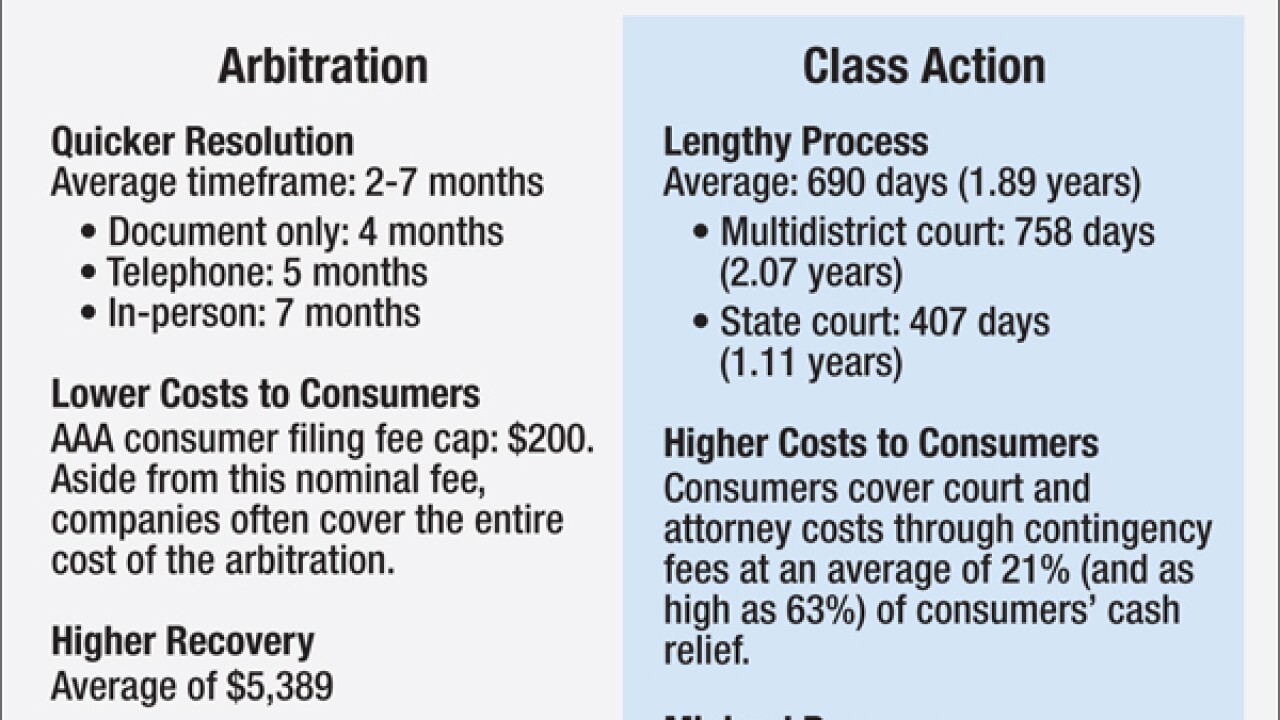
The finance industry pushed back against a proposal by the Consumer Financial Protection Bureau Thursday that would ban arbitration clauses in consumer contracts.
May 5 -
The Consumer Financial Protection Bureau is set on Thursday to issue a proposal that would ban the use of arbitration clauses that prevent consumers from bringing class action lawsuits.
May 5 -
The Consumer Financial Protection Bureau is set on Thursday to issue a proposal that would ban the use of arbitration clauses that prevent consumers from bringing class action lawsuits. The proposal on arbitration is a major setback for the financial services industry, which will face potentially higher expenses to defend lawsuits.
May 5 -
The Consumer Financial Protection Bureau is expected to issue a proposal Thursday that would limit the use of arbitration clauses on millions of financial contracts from cellphones to credit cards to checking accounts. Here are key areas to look at when the plan is released.
May 3 -
The Consumer Financial Protection Bureau is expected to issue a proposal Thursday that would limit the use of arbitration clauses on millions of financial contracts from cellphones to credit cards to checking accounts. Here are key areas to look at when the plan is released.
May 3 -
A federal appeals court case challenging the constitutionality of the Consumer Financial Protection Bureau is raising concerns that if the agency loses, it could open the floodgates for a flurry of other lawsuits against the CFPB.
May 3 -
A federal appeals court case challenging the constitutionality of the Consumer Financial Protection Bureau is raising concerns that if the agency loses, it could open the floodgates for a flurry of other lawsuits against the CFPB.
April 29 -
Consumer Financial Protection Bureau will propose changes in late July to its mortgage disclosure rule to provide "greater certainty and clarity" to the mortgage industry.
April 28 -
The Consumer Financial Protection Bureau will propose changes in late July to its mortgage disclosure rule to provide "greater certainty and clarity" to the mortgage industry.
April 28 -
The Consumer Financial Protection Bureau is set Thursday to propose new disclosures for federal student loans that would require servicers to provide several repayment options for borrowers.
April 28 -
The Consumer Financial Protection Bureau is set Thursday to propose new disclosures for federal student loans that would require servicers to provide several repayment options for borrowers.
April 28 -
Consumer Financial Protection Bureau Director Richard Cordray sent a four-page response to Sen. Bob Corker, R.-Tenn, about new mortgage disclosures but fell short of providing any new official guidance to address industry concerns.
April 27 -
The Consumer Financial Protection Bureau ordered the New Jersey law firm Pressler and Pressler and a debt buyer to pay $2.5 million for allegedly filing "mass-produced" lawsuits against consumers based on nonexistent debts.
April 25

