

Brendan Pedersen covered Capitol Hill and regulatory politics for American Banker until September 2022. From 2019-2021, he covered the Federal Deposit Insurance Corp. and Office of the Comptroller of the Currency as well as fintech policy. Originally from Chicagoland, he was previously a staff writer for Kiplinger's Personal Finance and covered local business affairs in Denver, Colorado for BusinessDen.
-

Consumer Financial Protection Bureau Director Rohit Chopra has helped assert the authority of the three Democrats — including himself — who serve on the governing body of the Federal Deposit Insurance Corp. GOP lawmakers responded with a bill to strip the consumer agency's head of voting powers on the FDIC board.
December 15 -

Neither Federal Deposit Insurance Corp. Chair Jelena McWilliams nor the board’s three Democratic directors gave ground in their dispute over control of the agency and the direction of bank merger policy during a meeting Tuesday.
December 14 -

The American Bankers Association urged the agency to maintain “an orderly, transparent policymaking process” after three Democratic directors had approved a board action without including Trump-appointed Chair Jelena McWilliams. The U.S. Chamber of Commerce went a step further, accusing them of trying to “circumnavigate” McWilliams’ authority.
December 13 -
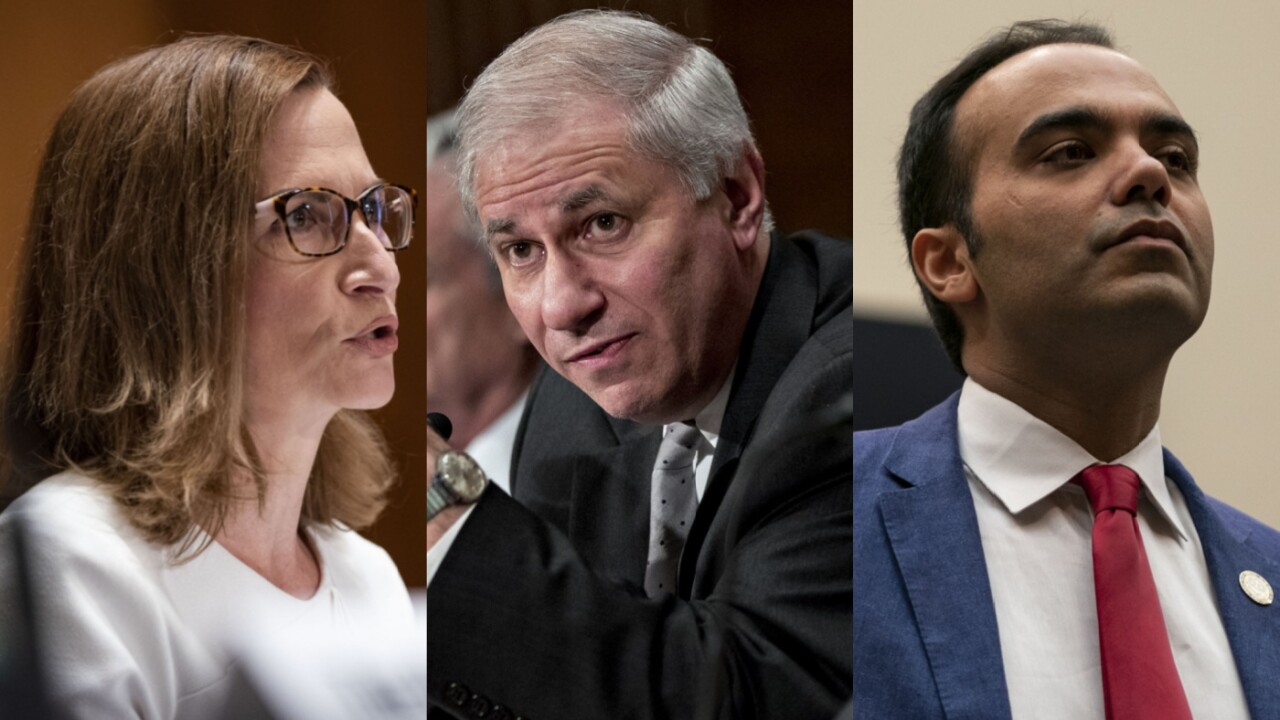
If the Democratic majority on the Federal Deposit Insurance Corp.’s board succeeds in advancing a review of bank merger policy — over the disapproval of Chair Jelena McWilliams — progressive regulators could be emboldened to push for more substantive reforms.
December 10 -
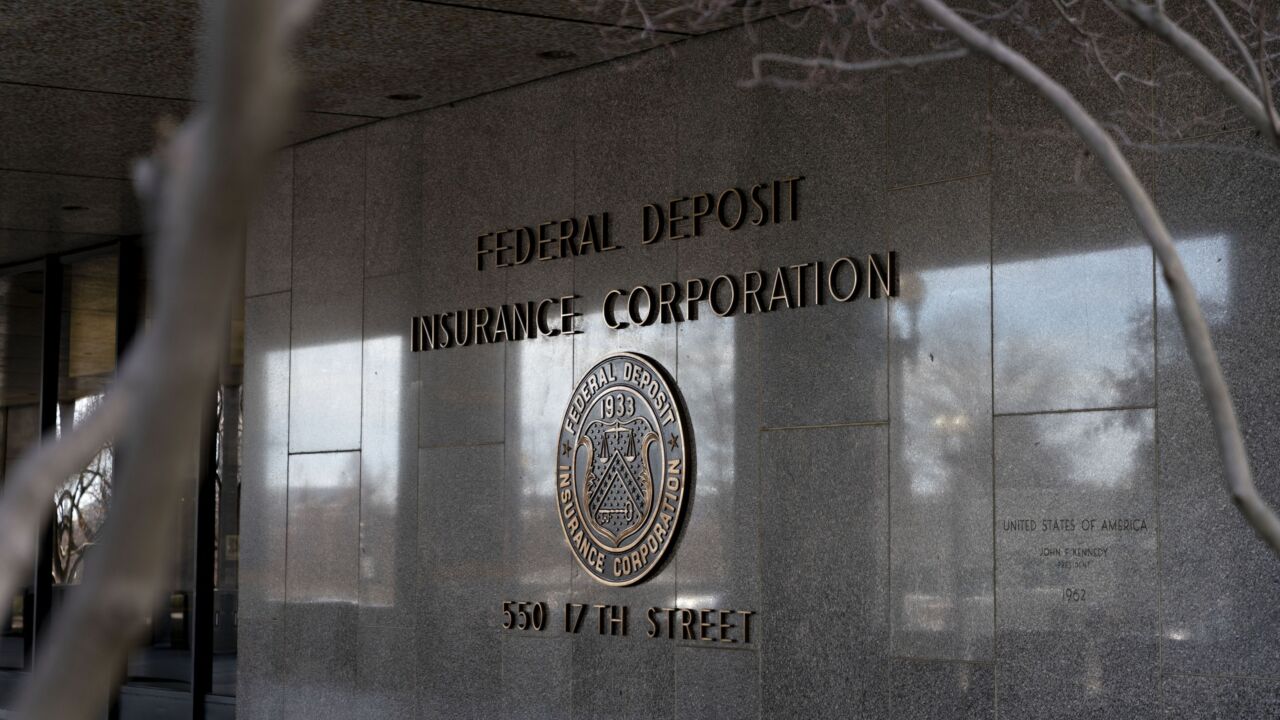
In an unprecedented move, two Democrats on the Federal Deposit Insurance Corp.’s board said they had approved a review of the policy without the consent of Trump-appointed Chair Jelena McWilliams. The agency released a statement saying the action had no legal standing.
December 9 -

Executives representing leading cryptocurrency firms such as Circle and FTX told Congress that some federal oversight of their industry is worthwhile, but they criticized a recent report by a Biden administration working group recommending that stablecoin issuance be limited to FDIC-insured banks.
December 8 -

The economic tremors caused by the COVID-19 crisis led some analysts to argue that it was only a matter of time before some financial institutions collapsed. But thanks to government stimulus, the industry’s ample capital levels and moderate risk exposure, bank closings have become a rarity.
December 8 -

The Financial Crimes Enforcement Network proposed standards to determine which companies must report their beneficial owners under a law enacted in January. Banks hope the new requirements will free them of the burden of collecting true-owner information about their customers.
December 7 -

Reps. Rashida Tlaib and Alexandria Ocasio-Cortez called on Treasury Secretary Janet Yellen and Fed Chair Jerome Powell to be more aggressive in using their oversight of the financial system to combat risks associated with a warming planet. Recent recommendations from the Financial Stability Oversight Council do not go far enough, they said.
December 1 -

Banking industry advocates are urging the Senate to follow the House's lead and pass the National Defense Authorization Act with a provision that includes a safe harbor for financial institutions working with cannabis firms.
November 30 -

Higher interchange fees and a giveback of loan-loss provisions helped banks overcome rising expenses and other headwinds in the third quarter, according to the Federal Deposit Insurance Corp.'s Quarterly Banking Profile.
November 30 -

The White House is considering nominating Richard Cordray, who led the Consumer Financial Protection Bureau from 2013 to 2017, as the Federal Reserve's next vice chairman of supervision, according to a report in The Wall Street Journal.
November 30 -

Some Senate Democrats are mulling a revised proposal that would require banks and credit unions to report account data tied only to business, not personal, income. Despite the change and attempts to minimize compliance costs, industry officials remain opposed.
November 29 -

The Office of the Comptroller of the Currency reaffirmed national banks' ability to offer cryptocurrency services — with the caveat that its permission is necessary. Meanwhile, it joined other regulators in previewing additional crypto-related guidance.
November 23 -

The nomination hearing for Saule Omarova featured sharp questioning from members of both parties, raising further doubts about her chances of getting confirmed. The industry views her as too anti-business to lead the Office of the Comptroller of the Currency.
November 18 -

The Independent Community Bankers of America made the rare move of urging senators not to confirm Saule Omarova to lead the Office of the Comptroller of the Currency. The group argued that some of her proposals could have drastic consequences for the industry.
November 17 -

Saule Omarova faces an uphill climb to confirmation as comptroller of the currency over concerns that she supports more government control of the banking system. Her hearing before the Banking Committee could be a make-or-break moment, observers say.
November 16 -

Saule Omarova is scheduled to appear before the Banking Committee as progressives cheer her potential appointment to lead the Office of the Comptroller of the Currency and critics describe her views as too radical. Her confirmation would rely on the support of every Democrat in the chamber.
November 11 -

In a letter to the agency’s new director, top Senate Democrats recommended policy steps intended to limit mistakes in consumers’ credit files that they said “can ruin lives.”
November 11 -
![Climate risk management standards from the OCC and others could aim to provide regulatory incentives. “If banks participate in the Chesapeake Bay regional cleanup, and that benefits a lot of minority fishermen on the Eastern Shore, I think the agencies would definitely think about giving that [Community Reinvestment Act] credit,” said a former OCC official.](https://arizent.brightspotcdn.com/dims4/default/f423715/2147483647/strip/true/crop/3746x2107+0+64/resize/1280x720!/quality/90/?url=https%3A%2F%2Fsource-media-brightspot.s3.us-east-1.amazonaws.com%2F64%2F6e%2F2f60cbf546feadc2e8b93aa43257%2Fadobestock-55069042.jpeg)
The OCC is expected by year-end to issue high-level guidance for banks on assessing how they contribute to climate change and how it impacts them. The agency and other regulators may next consider further actions, such as giving Community Reinvestment Act credit for financing environment-friendly projects and even more rigorous stress tests, analysts say.
November 10


![Climate risk management standards from the OCC and others could aim to provide regulatory incentives. “If banks participate in the Chesapeake Bay regional cleanup, and that benefits a lot of minority fishermen on the Eastern Shore, I think the agencies would definitely think about giving that [Community Reinvestment Act] credit,” said a former OCC official.](https://arizent.brightspotcdn.com/dims4/default/c57c1aa/2147483647/strip/true/crop/3746x2107+0+64/resize/1440x810!/format/webp/quality/90/?url=https%3A%2F%2Fsource-media-brightspot.s3.us-east-1.amazonaws.com%2F64%2F6e%2F2f60cbf546feadc2e8b93aa43257%2Fadobestock-55069042.jpeg)