-
Key proponents and critics of the 2010 financial reform law commemorated its anniversary by keeping the debate over its legacy front and center.
 July 21
 -
Rolling back unnecessarily burdensome and costly regulations is the only way to ensure credit unions survival. To that end, lawmakers should pass a bill that would give credit unions relief from annual privacy notice requirements and grant safe harbor qualified-mortgage status for certain loans held in their portfolios.
July 21
-
On the five-year anniversary of Dodd-Frank, it's time to increase accountability and transparency at the CFPB. Congress should start by passing a bill that would overhaul the agency's organizational structure from a single-director model to a bipartisan, five-person commission appointed by each incoming president.
July 21 -
Five years after the Dodd-Frank Act was signed into law by President Obama, it remains as controversial as when it was enacted. While partisans may debate whether the changes are good or bad, there is no doubt theyve had a sizable impact. Following are the biggest ways the system has changed.
July 21
-
WASHINGTON Treasury Secretary Jack Lew said Monday that the Obama administration will continue to defend the Dodd-Frank Act amid Republican efforts to water down the law, even as one of its namesakes suggested changes to it may be necessary.
July 20 -
Regulators and Congress can take several key steps to ease community banks' burden, from implementing tiered regulation to requiring less frequent call reports. And they should also remember that banks are innocent until proven guilty.
July 20 -
Final guidelines for dealing with failing institutions from the international Basel Committee include direct capital injections something the Dodd-Frank Act tried to end in the U.S. as a last-ditch option.
July 16 -
Wall Street's favored bank-resolution strategy would virtually guarantee future bailouts while imposing the costs on taxpayers and ordinary investors. At the very least, the damage can be mitigated with three key reforms.
July 16 -
Federal Reserve Board Chair Janet Yellen sounded at least open to the idea that new regulations have contributed to potential liquidity problems, but said more study is needed.
 July 15
 -
Sens. Elizabeth Warren and Sherrod Brown called for continued vigilance to counter efforts to undermine the 2010 law.
July 15 -
Most banks ask executives to coordinate a vast patchwork of regulation in addition to managing their day jobs. They'd be better off putting one person in charge of regulatory communication, remediation and coordination.
July 14 -
The Dodd-Frank Act orders regulators to create diversity standards that govern financial institutions' hiring and contracting practices. So why did they shy away from the chance to propose clear, measurable reporting requirements?
July 14 -
Those looking for easy answers from a government report about what caused recent volatility in the Treasury markets including whether regulation is to blame were likely disappointed.
July 13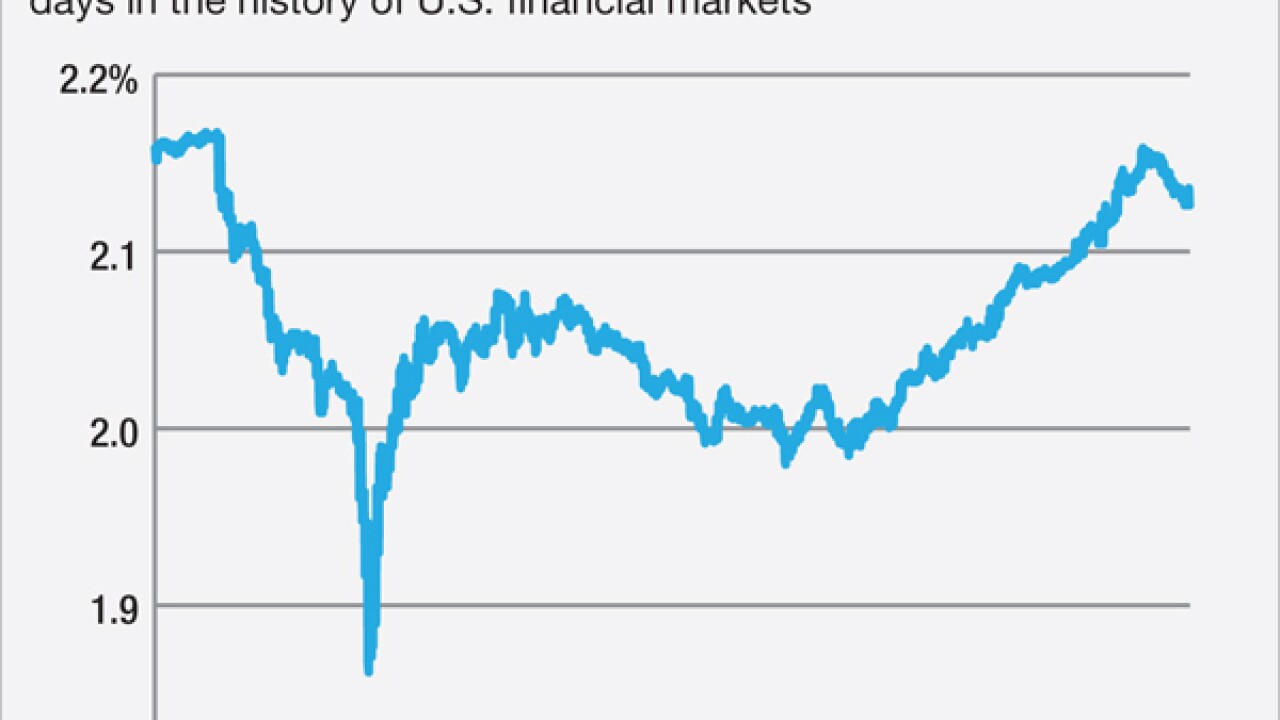
-
Democratic presidential fron-trunner called for tougher reforms on Wall Street and harsher penalties for financial misconduct, but avoided more aggressive positions embraced by other candidates to break up the biggest banks.
 July 13
 -
IMGCAP(1)]
July 10 -
Federal Reserve Board Gov. Lael Brainard jumped into the debate over growing concerns about diminishing market liquidity, conceding that new bank rules may be a factor.
 July 9
 -
While the Federal Reserve and other regulators extended the deadline for some parts of the Volcker rule, July 21 is the deadline for all banks to have a compliance regime in place.
July 9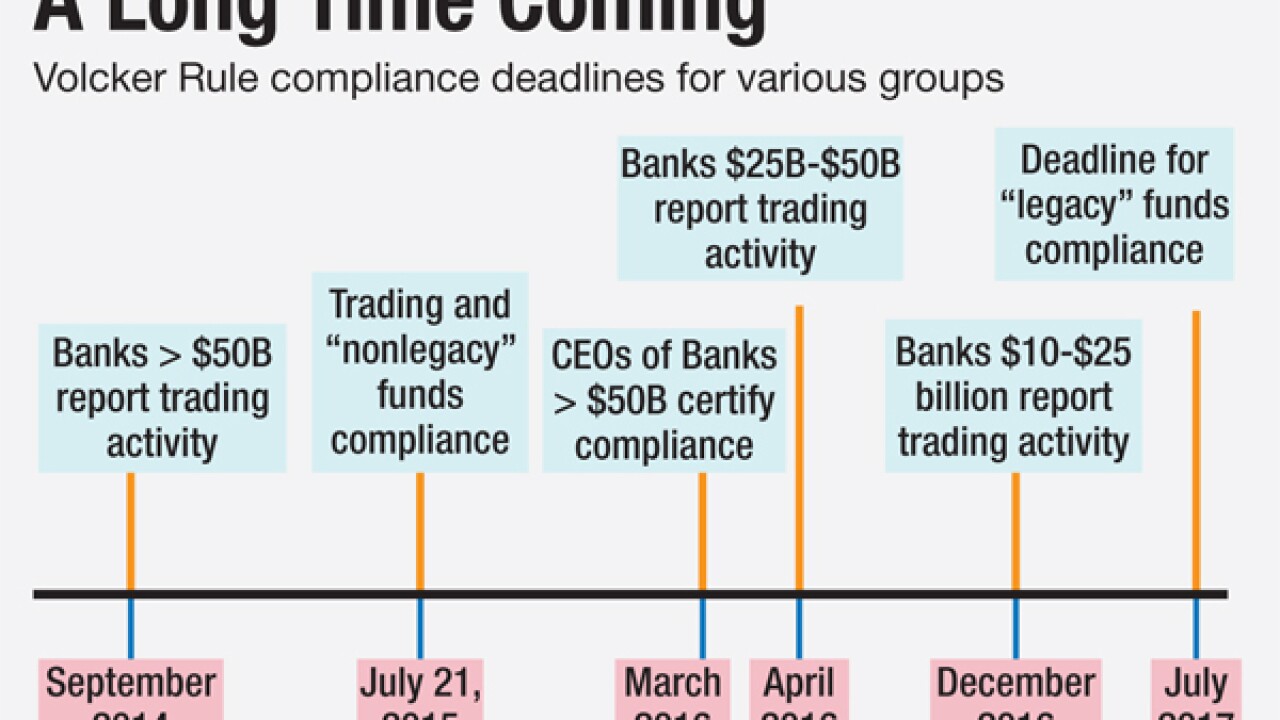
-
The Senate Banking Committee Chairman Richard Shelby, R-Ala., convened a hearing where he and others criticized the Financial Stability Board for its lack of accountability and influence on U.S. regulators.
July 9 -
As Treasury Secretary Jacob Lew defended the legacy of the 2010 reform law, in another part of the capital a banker and Republican lawmakers pleaded for legislative changes.
July 8 -
The Fed determined that the purchase of Susquehanna Bancshares, which would push BB&T's assets above $200 billion, will not pose a threat to the U.S. financial system. The approval could give more regional banks confidence to pursue bigger acquisitions.
 July 7


