
Banking Politics & Policy News
American Banker's Politics & Policy coverage delivers news and analysis on how legislative action, federal agency rulemaking, regulatory politics, and public policy debates shape banking strategy, risk, competition, and compliance. Coverage explores congressional priorities, executive branch initiatives, regulatory agency actions, and the political forces that shape and impact the operating environment for financial institutions, payments companies, fintechs and distributed finance companies.
Bank leaders must navigate a dynamic policy environment where congressional action, regulatory priorities, and political forces influence capital standards, supervisory expectations, digital asset frameworks, deposit insurance, consumer rules, and competitive dynamics.
-
Employers added 151,000 employees in February and the unemployment rate ticked up to 4.1%. The reading bolsters the Federal Reserve's argument to hold rates steady amid economic uncertainty.
 March 7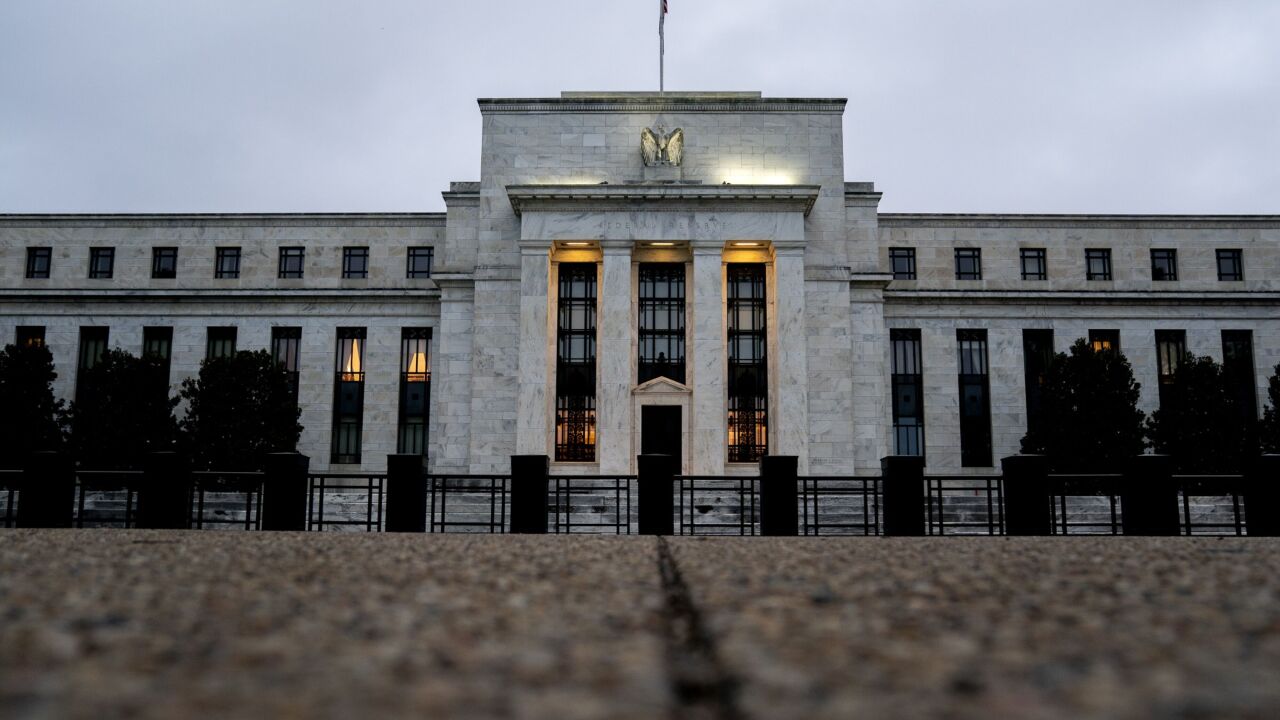
-
Banks have embraced the Federal Deposit Insurance Corp.'s swift reversals on a range of topics, but the regulatory whiplash is complicating long-term business planning.
 March 7
-
Federal Reserve Gov. Christopher Waller said the Founding Fathers supported independent money management and undoing it now would be a mistake.
March 6
-
The Treasury secretary criticized post-crisis bank rules as outdated and burdensome, vowing to streamline financial regulation, revamp supervision and reduce constraints on private enterprise.
March 6
-
The nomination of Jonathan McKernan to lead the Consumer Financial Protection Bureau moves to the full Senate, where he's likely to be confirmed along party lines.
 March 6
-
A pair of Congressional Review Act resolutions directed at the Consumer Financial Protection Bureau's overdraft and larger participant rules are expected to make it to President Donald Trump's desk.
March 6
-
The chairman of the House Financial Services Subcommittee on Financial Institutions will reintroduce a bill at noon today designed to speed up the bank merger review process.
March 6


-

As stablecoins and other cryptocurrencies enter the mainstream, lawmakers in Illinois have imposed a new transaction tax on digital assets. It will raise costs for everyday consumers and drive away businesses.

-

Yes, banks' capital burden will decline, leaving more potential funds available for lending. But the big question is which banks will find a way to deploy those funds to generate meaningful returns.

-

Restrictions that limit access to private market investments are harmful to ordinary investors, who are denied better returns. They also seal off a large potential source of funding for long-term infrastructure investments.


