-
The regulators have yet to complete rules on regional bank supervision, community bank capital and other provisions meant to ease institutions' burden.
August 1
-
The eight "systemically important" banks currently file resolution plans annually, but a pending proposal would require them every two years.
July 23
-
The German banking giant is also looking to create a "bad bank" to wind down as much as $56 billion in unwanted assets, according to a person familiar with the matter.
June 17
-
This is the first year that only the largest and most complex banks will be included after the Federal Reserve decided to let smaller firms wait until next year to resume testing.
May 31
-
Fitch Ratings issued a negative warning for global banks after federal regulators proposed some relief from resolution plan requirements.
 May 6
May 6
-
Following the Federal Reserve Board, the FDIC signed off on proposed measures to ease resolution planning requirements and tailor supervisory standards for foreign banking companies operating in the U.S.
April 16 -
Despite consensus that regulators should ease so-called “living will” requirements by some degree, critics charge that a proposal by the Fed and FDIC could undo gains in making large banks easier to resolve.
April 15
-
On the same day the House Financial Services Committee held a hearing with CEOs of seven of the largest banks, Sen. Sherrod Brown said bank misconduct since the crisis demanded further inquiry by the Senate Banking Committee.
April 10
-
The Federal Reserve Board unveiled a host of proposed changes to tailor U.S. supervision of foreign firms, as well as a proposal easing “living will” requirements for both domestic and overseas banks.
April 8
-
The CEO of the nation's largest bank urged policymakers to ease capital rules for banks and tackle inefficiencies in the housing markets, while offering bold ideas of his own on education and health care.
 April 4
-
The Federal Reserve voted Wednesday to keep the countercyclical capital buffer at its current level of zero, ending some speculation that the board could be looking at a possible increase.
March 6
-
The central bank is limiting the use of its qualitative objection in this year’s stress tests, the agency announced Wednesday.
March 6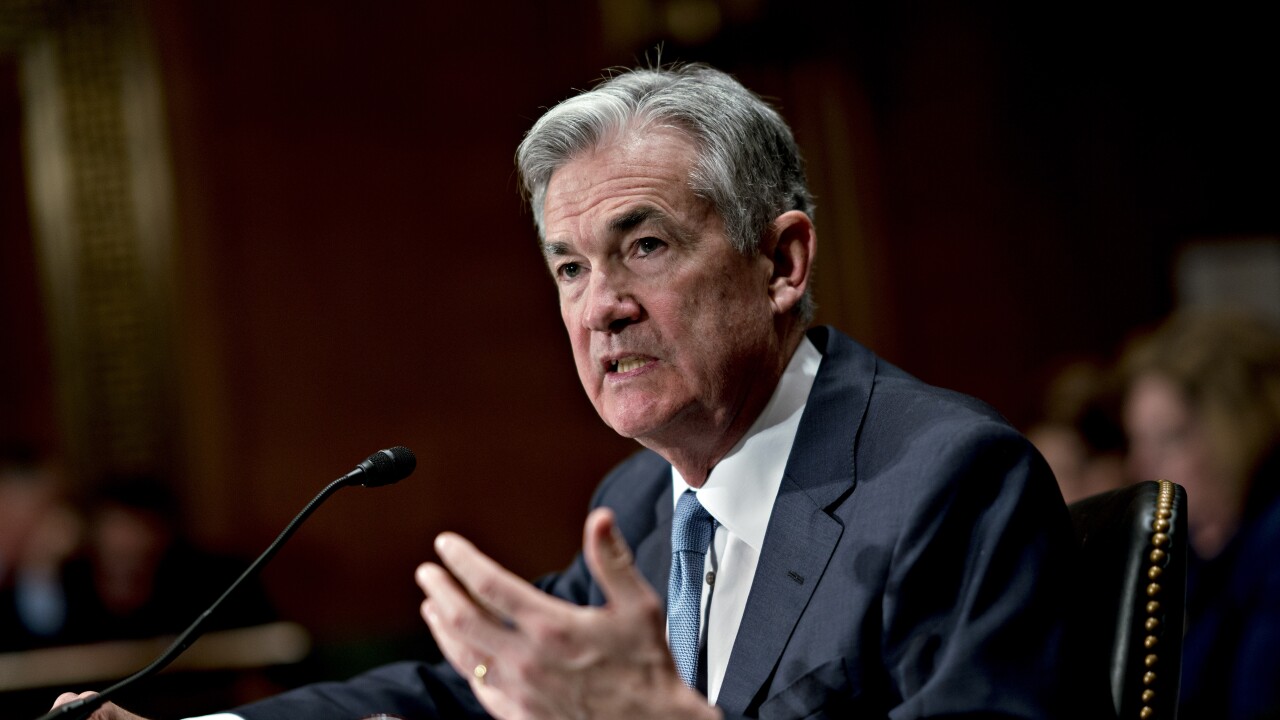
-
It’s possible the G-SIB surcharge, an additional capital charge on large banks, contributed to market volatility at the end of last year, argues Sen. Thom Tillis.
January 31 North Carolina
 -
A no-deal Brexit could throw the international swaps market into disarray in a way that could be difficult to predict, and could have dire consequences for U.S. banks and the world economy.
January 15 American Banker
 -
Federal Reserve Chairman Jerome Powell demurs on regulatory relief for largest banks while saying he is “open” to countercyclical buffer.
 December 19
-
Big-bank execs downplayed gloomy economic forecasts and said a commercial lending rally, niche M&A and smart tech spending will drive growth in 2019.
December 4
-
The new CEO is trapped in the same feedback loop of negative news, rising funding costs and declining revenue that foiled his predecessor.
November 30
-
Just as a recent law softened Dodd-Frank resolution plan requirements, the head of the Federal Deposit Insurance Corp. announced an effort to ease such rules for depository institutions.
November 28
-
Technology is often cited as the leg up large banks have in winning over customers, but regionals are worried about the “billions and billions” bigger rivals can pour into ubiquitous ad campaigns.
 November 27
-
While they won’t be in position to enact legislation, House Democrats could use their newfound power to spotlight issues that Republicans have largely ignored, including the exploding levels of corporate debt.
 November 13


