-
Federal Reserve Gov. Stephen Miran sidestepped whether policy setting pressure from the administration is a welcomed development, but reiterated that he wants to avoid succumbing to "groupthink."
 October 7
-
Legal experts say the Supreme Court's decision not to immediately rule on a request to remove Federal Reserve Gov. Lisa Cook from office suggests that, whatever the court's views on independent agencies may be, it views the central bank differently.
October 7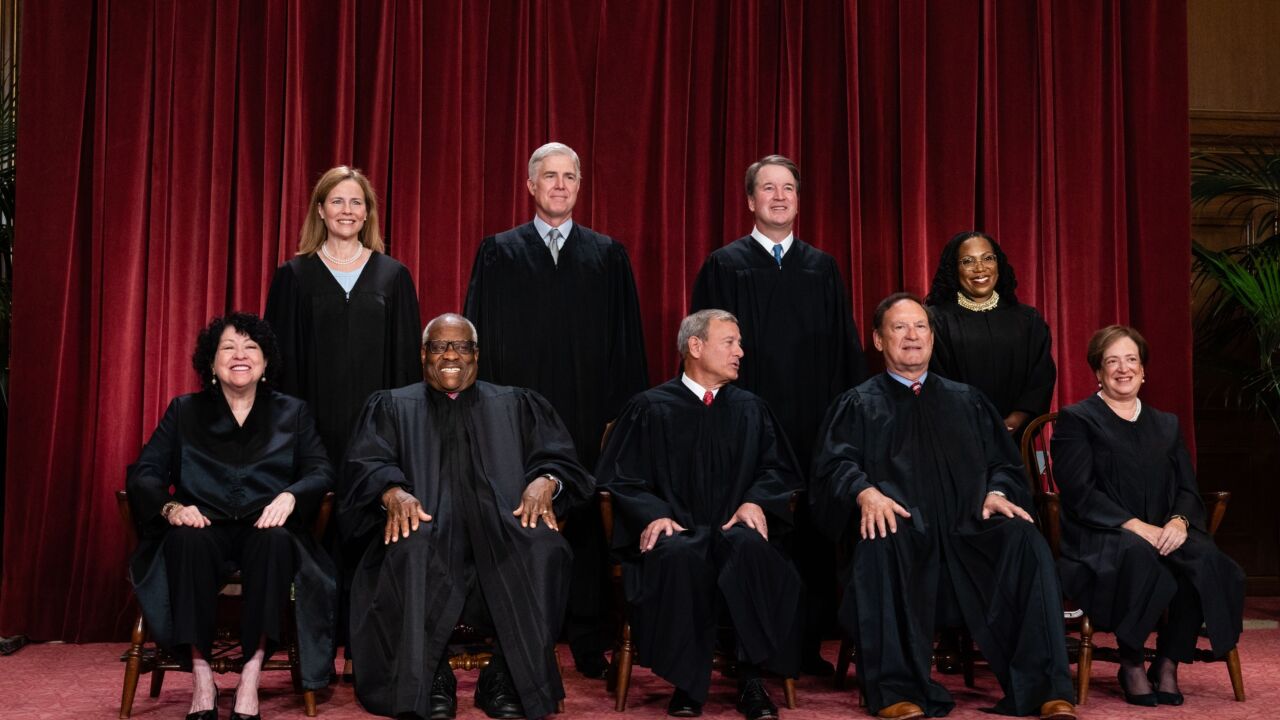
-
Federal Reserve Vice Chair Philip Jefferson said Friday that the economic outlook is uncertain and that he was adopting a cautious approach to gauging whether slowing growth and a softening labor market outweigh inflation pressures from tariffs.
 October 3
-
The Supreme Court said Wednesday that it would defer President Donald Trump's request for a stay until after oral arguments scheduled for January 2026, allowing Federal Reserve Governor Lisa Cook to remain on the board at least until then.
October 1
-
Federal Reserve Vice Chair Philip Jefferson said despite the near term cloudiness to economic projections, he does expect inflation to resume its downward trajectory next year and reach the Fed's 2% inflation target in the coming years.
September 30
-
Federal Reserve Bank of Kansas City President Jeff Schmid said that the central bank should continue its focus on curbing inflation, as the job market is "largely in balance."
September 25
-
Federal Reserve Chair Jerome Powell said in a speech Tuesday that the central bank's policy stance is "modestly restrictive," a stance that will give the central bank flexibility to react to an uncertain economic future.
September 23
-
Federal Reserve Vice Chair for Supervision Michelle Bowman said in a speech Tuesday that steeper interest rate cuts should be on the table if the labor market continues to show signs of decline.
September 23
-
Federal Reserve Governor Stephan Miran floated the idea of conducting monetary policy with an eye toward the neutral rate and suggested that the president's immigration and fiscal policies will exert downward pressure on inflation.
September 22 -
Federal Reserve Bank of St. Louis President Alberto G. Musalem would not directly say whether central bank independence is under threat, instead highlighting that the topic has received more attention.
September 22
-
Prior to this week's Federal Open Market Committee meeting, many onlookers thought a Trump-aligned and oppositional voting bloc could emerge, complicating the central bank's message. But the quarterly economic projections show that not to be the case.
September 22
-
Federal Reserve Governor Stephen Miran said he hasn't spoken to President Donald Trump since the central bank's policy meeting this week, and didn't promise the president he would vote a particular way on interest rates.
September 19
-
Federal Reserve Chair Jerome Powell said there was a "high degree of unity" among committee members during this week's Federal Open Market Committee vote. Out of 12 FOMC members, 11 voted for a 25 basis point cut.
September 17
-
The Federal Open Market Committee's decision to reduce interest rates for the first time in nine months lifted bank stocks Wednesday. The 25-basis-point reduction could lead to net interest income headwinds now, but loan growth later, analysts said.
 September 17
-
The Federal Reserve is widely expected to lower interest rates, but questions about how big of a cut and the trajectory for future cuts remain uncertain — and the White House's power struggle with the central bank is a complicating factor.
September 17
-
Market watchers expect the Federal Open Market Committee to announce a 25 basis point rate cut today, but are also watching for signals of more cuts to come and how many members push for a larger 50 basis point cut.
September 17
-
The Department of Justice argued that Federal Reserve Gov. Lisa Cook has not provided an explanation for her alleged primary residential claims on separate mortgage applications, but the motion made no mention of newly uncovered documentation that suggests Cook represented one of those mortgages as a vacation home in her application, undermining claims of fraud.
September 15
-
The White House's appeal of a lower court injunction allowing Federal Reserve Gov. Lisa Cook to remain on the Fed board is urging the court to rule in its favor ahead of the Federal Open Market Committee meeting on Sept. 16 and 17.
 September 11
-
The White House has appealed a D.C. District Court ruling allowing Federal Reserve Gov. Lisa Cook to remain on the Fed board pending the outcome of her challenge to President Trump's moves to fire her.
September 11
-
Consumer prices rose 0.4% in August, up from 0.2% in July, as weak job growth and lingering tariff uncertainty reinforce expectations for a September Fed rate cut.
September 11


