-
A defense spending package includes a measure requiring new businesses to report their beneficial owners directly to the Financial Crimes Enforcement Network, shifting the burden away from banks.
 December 9
-
The Maryland Democrat served five terms in the U.S. Senate, a 30-year tenure in which he was chairman of the Senate Banking Committee when it responded to a rash of accounting scandals. He didn’t seek a sixth term and retired on Jan. 3, 2007.
December 7 -
House Financial Services Committee Chairwoman Maxine Waters urged the incoming administration to overhaul policies on payday lending and the Community Reinvestment Act and make personnel changes at two agencies.
 December 7
-
Banking trade organizations are usually cautious about making endorsements. But with Democrats winning the White House and control of Congress on the line in the two races, some groups are pouring in cash for the GOP candidates.
December 6
-
The Bank Policy Institute submitted a Freedom of Information Act request to the Office of the Comptroller of the Currency requesting the agency's analysis used in crafting the plan.
December 1
-
The reduction marks the third time in three years the agency has cut annual fees for national banks.
December 1
-
Community banks that were pushed past key asset limits by the Paycheck Protection Program say they will be unable to shrink their balance sheets back to normal size by the 2022 deadline, especially if there is a new round of rescue aid.
November 25
-
The plan still lacks concrete details about standards banks must meet to earn high ratings, but the agency said the new methodology would end grade inflation and could penalize banks that underperform.
November 24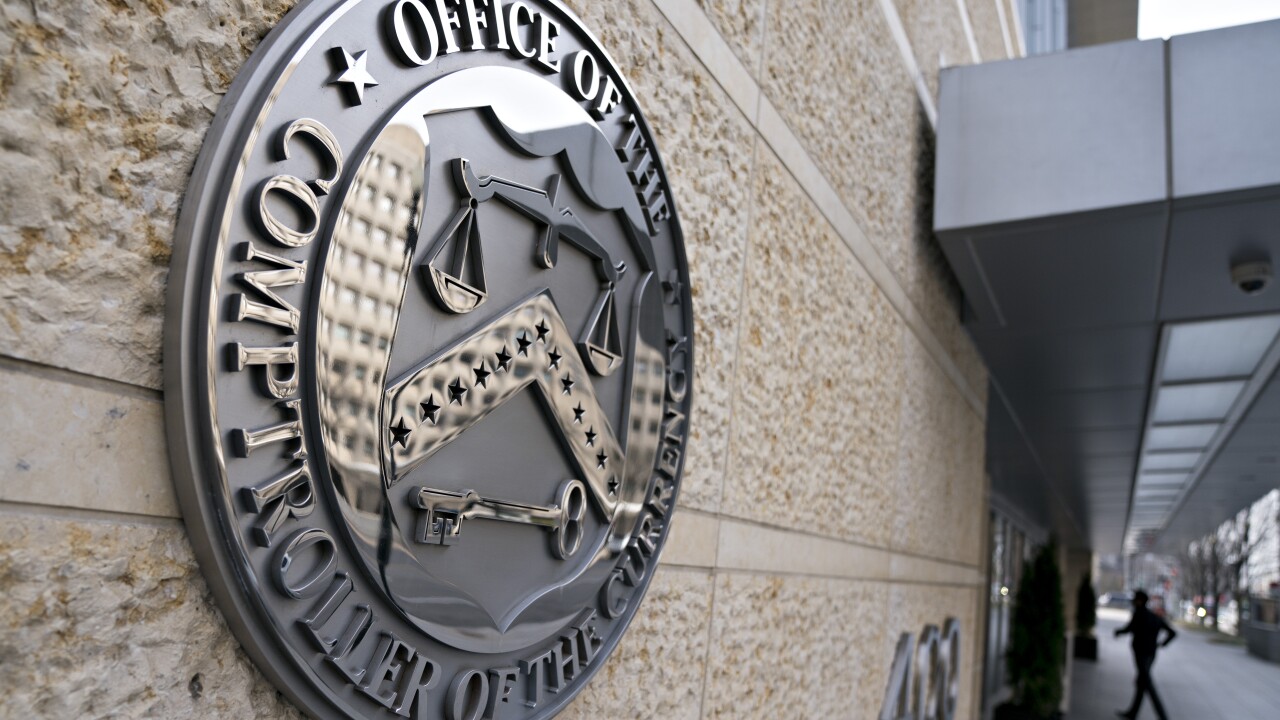
-
Participation in the Paycheck Protection Program and other emergency lending during the pandemic has swelled many small banks’ balance sheets. Federal regulators are giving them a temporary pass on supervisory requirements tied to their size.
November 20
-
Banks are responsible for reporting their business customers' beneficial owners, but a bill that would shift that anti-money-laundering duty to businesses themselves has been added to a must-pass defense spending package.
November 20
-
The Trump administration has moved forward on a plan to privatize Fannie Mae and Freddie Mac, but Joe Biden appointees could take steps to slow or stop their release from conservatorship.
November 18
-
Global regulators are preparing to tighten restrictions on companies believed to have threatened the financial system at the height of pandemic-fueled volatility.
November 17
-
Among the core changes in the regulation, more national banks will be able to use the agency's expedited review process to approve certain corporate transactions.
November 16
-
The former FDIC chief oversaw the resolution of hundreds of failed banks during the financial crisis and knows how to build relationships with regulators. Those skills could be crucial in helping Fannie exit federal control.
November 9
-
With a Democrat set to take the White House in January, the political balance at NCUA could shift amid changes for the CFPB and housing reform, and progressive banking ideas that were unthinkable over the past four years could gain traction.
November 7
-
With a Democrat set to take the White House in January, the agenda for agencies like the CFPB could undergo a rapid transformation, housing finance reform could be turned on its head and progressive banking ideas that were unthinkable over the past four years could gain traction.
November 7 -
A final Senate breakdown still depends on the outcome in a few key races, but with Republicans closer to keeping power, Democrats' proposals to cap interest rates, create a postal banking system and establish a public credit reporting agency are likely dead on arrival.
November 6
-
If days go by without a clear result, the uncertainty could lead to market volatility, put off talks for a stimulus plan and complicate bankers' planning for a potentially new regulatory environment.
November 4
-
If days go by without a clear result, the uncertainty could lead to market volatility, put off talks for a stimulus plan and complicate bankers' planning for a potentially new regulatory environment.
November 4 -
The agency’s final rule modernizing the Fair Debt Collection Practice Act limits calls to seven per week, but collectors won stronger protections from liability claims and other key changes to the original proposal.
 October 30


