-
General Electric's decision to sell most of its financial assets marks the most prominent victory in regulators' quest to incentivize breakups of large conglomerates. But it may turn out to be a one-off event.
April 10 -
JPMorgan chief Jamie Dimon tried to defend his bank's size and scope by suggesting that community banks are just as vulnerable in a crisis. But he succeeded only in proving that Wall Street firms will make the same mistakes all over again unless the government takes steps to disincentivize their risky behavior.
April 9
-
If the Financial Stability Oversight Council was hoping for any kind of consensus on whether and how it should regulate asset management companies, the feedback it has received on its request for comment is likely disappointing. Asset management companies, their representatives and public interest groups presented widely divergent visions about what, if anything, the council should do.
 April 7
 -
Critics say the SEC uses too liberal a hand in granting waivers that allow firms that violate securities laws to be exempted from certain penalties. But the agency needs these waivers to adjust rules designed to be overly broad.
April 6 -
The fight over the Dodd-Frank Act's $50 billion threshold will determine whether some banks get a respite from tougher rules, but it may also shape how the industry and lawmakers think about threats to the financial system more broadly.
 March 31
 -
Senate Democrats have now joined the fight over the Financial Stability Oversight Council's designation process, calling for "systemically important" firms to be able to shed the label.
March 25 -
Deron Smithy, executive vice president and treasurer of Regions Financial, said compliance costs across the 20 regional banks that are above the target have jumped by $2 billion, with his bank alone spending roughly $200 million.
March 24 -
Bank regulators rejected three foreign banking organizations' resolution plans so-called "living wills" that were submitted last year, finding "shortcomings" and ordering the institutions to make certain improvements when they resubmit their plans this year.
March 23 -
A new report from the Office of Financial Research says that current stock valuations show some signs of an asset bubble that could put the financial system at risk if or when it bursts.
March 20 -
Regulators pressed for more flexibility when it comes to stress tests, among other things, as lawmakers consider changes to the Dodd-Frank Act.
March 19 -
The controversial $50 billion-asset cutoff was one of a host of policy issues the Treasury secretary addressed before lawmakers on Tuesday.
March 17 -
WASHINGTON The Federal Reserve Board issued a proposal Monday that would require certain financial institutions that have been assigned Legal Entity Identifiers to include that information in their regular reports, a first but tentative step toward broader reliance on the universal counterparty ID.
March 16 -
A recap of the informed opinions (and the discussions they generated) on BankThink this week, including the benefits of regulating banks by complexity rather than size and how to make the Fed's stress tests more effective.
March 13 -
Informing banks about the details of stress-test requirements in advance would help mitigate financial institutions' unnecessary costs. And conducting the tests on a quarterly basis would ensure that banks are unable to game the system.
March 13 -
Two foreign-owned banks Santander and Deutsche Bank failed the Fed's stress test. Two other foreign banks that failed last year, HSBC and RBS Citizens, passed this year.
 March 11
 -
Citigroup Chief Executive Michael Corbat will still have a job tomorrow (and probably several days after that). The bank's capital distribution plan was approved by the Federal Reserve on Wednesday, undoubtedly to the delight of shareholders who were surprised by last year's rejection.
March 11 -
JPMorgan Chase, Morgan Stanley and Goldman Sachs were each forced to resubmit their capital plans in order to pass the Fed's CCAR stress test, while Bank of America was publicly faulted for weaknesses in its capital planning process. While some saw that as a bad sign, others contended the banks appear more comfortable in pushing the limits of the stress testing process.
March 11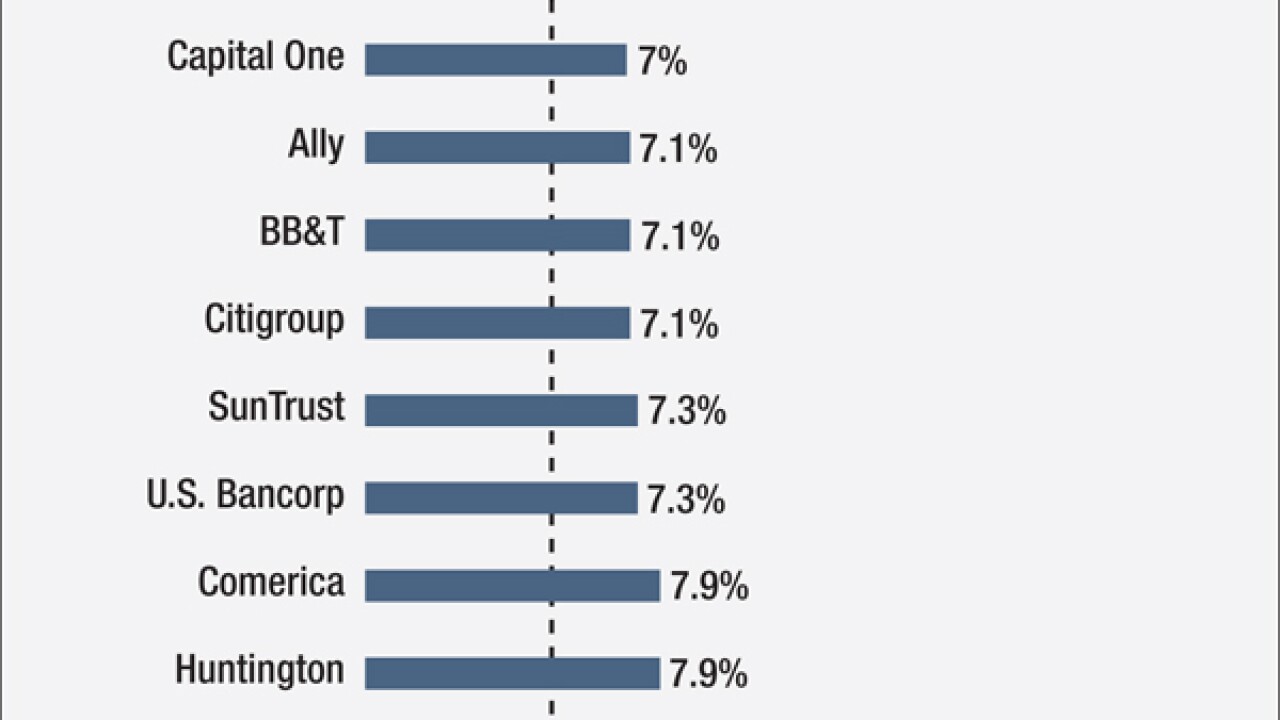
-
The Subsidy Reserve Act would bring into the open the financial benefits of being "too big to fail" benefits the big banks claim to be nonexistent.
March 10 -
A recap of the informed opinions (and the discussions they generated) on BankThink this week, including the downside of public banking and the vulnerabilities unaddressed by global regulators' bail-in plan for megabanks.
March 6 -
All 31 firms that took this year's Dodd-Frank Act Stress Test had enough capital to withstand the Fed's hypothetical severe economic scenario, but several of the largest banks were teetering on the edge of the leverage and risk-based capital requirements.
March 5


