
Commercial Banking News, Strategy & Risk Analysis
American Banker's commercial banking coverage explores how banks serve middle-market and corporate clients, focusing on issues such as interest-rate volatility, regulatory pressure, and intensifying competition for deposits and credit relationships. This section focuses on balance-sheet strategy, commercial lending, treasury and cash management, risk governance, and the technologies reshaping relationship banking.
Learn how institutions are recalibrating growth expectations, managing credit exposure, and using payments and treasury capabilities to deepen client relationships while preserving profitability.
Commercial banking is under structural pressure from higher funding costs, uneven loan demand, and increased supervisory scrutiny. Banks are being forced to prioritize relationship depth, disciplined credit selection, and non-interest income generation rather than balance-sheet expansion alone.
-
Executives now see Wells Fargo's NII rising roughly 14% for the full year, more than the 10% jump they had earlier projected.
July 14
-
JPMorgan Chase's revenue soared to a record in the second quarter, boosted by the Federal Reserve's interest rate hikes and its acquisition of First Republic Bank.
July 14
-
The U.K. entrepreneur died from a rare form of bone cancer, with which he was diagnosed at the start of 2020.
 July 13
-
The six biggest banks in the U.S. are expected to sell between $28 billion and $32 billion of new bonds after they report quarterly earnings, and regional banks — seeking to raise more capital — could be right behind them.
July 13
-
Tom Drake is joining Wells from Barclays as a managing director in its mergers-and-acquisitions group focusing on health care services and medical-technology deals. Chris Norman, most recently at Citigroup, is joining as a managing director in M&A focusing on technology in San Francisco.
July 12 -
JPMorgan Chase hired Silicon Valley Bank veteran John China to co-lead the business of banking venture capitalists and startups, part of the firm's growth strategy for the sector.
July 11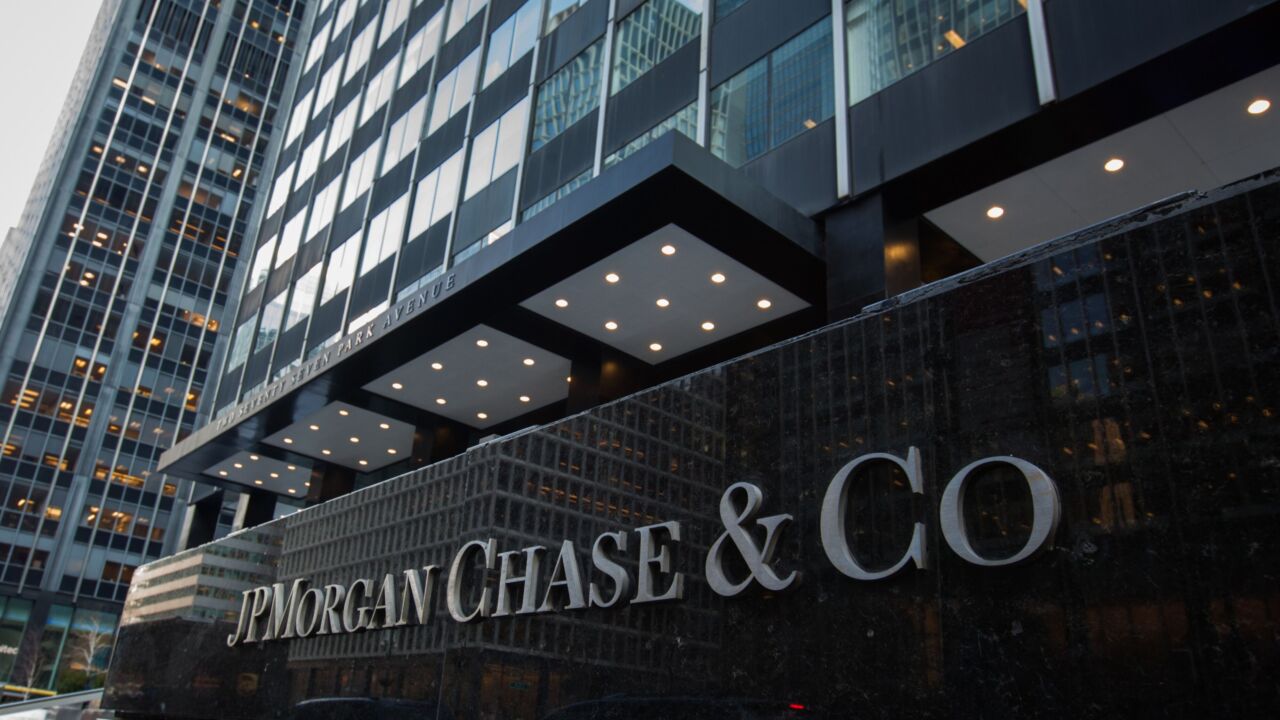
-
The Cleveland-based regional bank recently announced a $20 million line of credit for Lendistry, a Los Angeles-based, minority-led community development financial institution.
 July 10


