
Banking Politics & Policy News
American Banker's Politics & Policy coverage delivers news and analysis on how legislative action, federal agency rulemaking, regulatory politics, and public policy debates shape banking strategy, risk, competition, and compliance. Coverage explores congressional priorities, executive branch initiatives, regulatory agency actions, and the political forces that shape and impact the operating environment for financial institutions, payments companies, fintechs and distributed finance companies.
Bank leaders must navigate a dynamic policy environment where congressional action, regulatory priorities, and political forces influence capital standards, supervisory expectations, digital asset frameworks, deposit insurance, consumer rules, and competitive dynamics.
-
The court filing contradicts Fed Chair Jerome Powell's statement to Congress in February that the central bank has had "no contact" with DOGE.
March 12
-
In a positive sign for the economy, headline inflation slowed in February. But the reading alone likely is not enough to break the Federal Open Market Committee out of its wait-and-see mode.
 March 12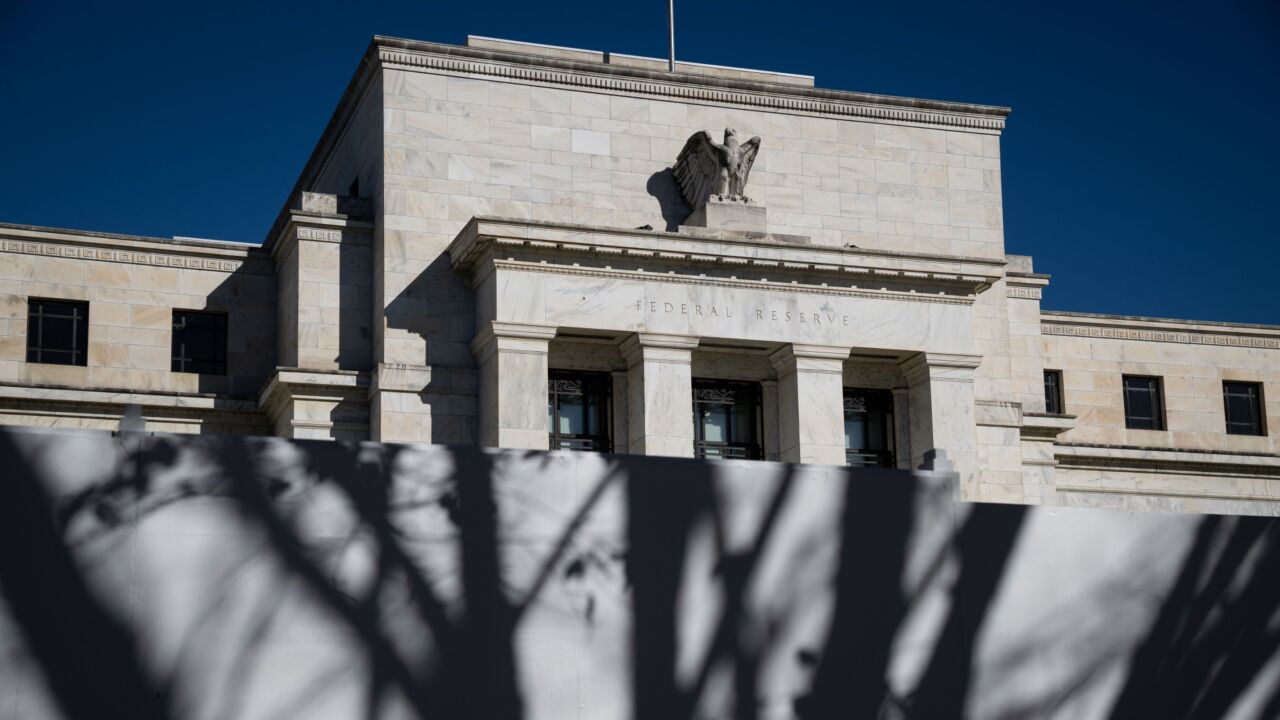
-
In a packed courtroom, a federal judge parsed whether the Trump administration's aggressive actions to rein in the Consumer Financial Protection Bureau are part of a "normal" transition of power or would impede its statutorily required functions.
 March 10
-
In a letter to Federal Reserve Chair Jerome Powell, Sen. Elizabeth Warren called on the Fed to impose penalties and sanctions on leaders of the failed bank.
March 10
-
The Office of the Comptroller of the Currency reversed policies on crypto banking, withdrawing its guidance on custody, stablecoin reserves and risk management requirements.
 March 7
-
Federal Reserve Chair Jerome Powell emphasized the need for patience amid uncertainty over the Trump administration's policies, saying there would be no immediate rate changes but that the Fed would proceed carefully.
March 7
-
Federal Reserve Gov. Michelle Bowman, one of the central bank's more inflation-wary officials, said the balance of risks for monetary policymaking could soon shift.
March 7


-

As stablecoins and other cryptocurrencies enter the mainstream, lawmakers in Illinois have imposed a new transaction tax on digital assets. It will raise costs for everyday consumers and drive away businesses.

-

Yes, banks' capital burden will decline, leaving more potential funds available for lending. But the big question is which banks will find a way to deploy those funds to generate meaningful returns.

-

Restrictions that limit access to private market investments are harmful to ordinary investors, who are denied better returns. They also seal off a large potential source of funding for long-term infrastructure investments.


