
Banking Politics & Policy News
American Banker's Politics & Policy coverage delivers news and analysis on how legislative action, federal agency rulemaking, regulatory politics, and public policy debates shape banking strategy, risk, competition, and compliance. Coverage explores congressional priorities, executive branch initiatives, regulatory agency actions, and the political forces that shape and impact the operating environment for financial institutions, payments companies, fintechs and distributed finance companies.
Bank leaders must navigate a dynamic policy environment where congressional action, regulatory priorities, and political forces influence capital standards, supervisory expectations, digital asset frameworks, deposit insurance, consumer rules, and competitive dynamics.
-
A Government Accountability Office report Thursday said emergency actions taken by federal regulators in the wake of Silicon Valley Bank's failure were justified and appear to have stemmed further disruption, but noted those actions could contribute to moral hazard.
 January 23
-
Scott Turner, President Trump's pick to head the U.S. Department of Housing and Urban Development, faced opposition from Democrats on the Senate Banking Committee, but his nomination was nonetheless approved by a vote of 13-11.
 January 23
-
The president has signed dozens of executive orders touching a wide range of government functions, but banking policy has largely gone untouched — so far.
January 23
-
The New York Department of Financial Services has proposed several changes to overdraft fees including banning banks from charging more than three overdraft or nonsufficient funds fees per consumer per day.
 January 22
-
Senate Republicans would like to do a large bill on immigration and energy first and then tackle tax reform in a second bill. House Republicans prefer one large bill.
January 22
-
The hedge fund manager and Trump advisor also lent support to the idea of reconsidering deposit insurance limits for some kinds of accounts, such as those used for payrolls.
January 21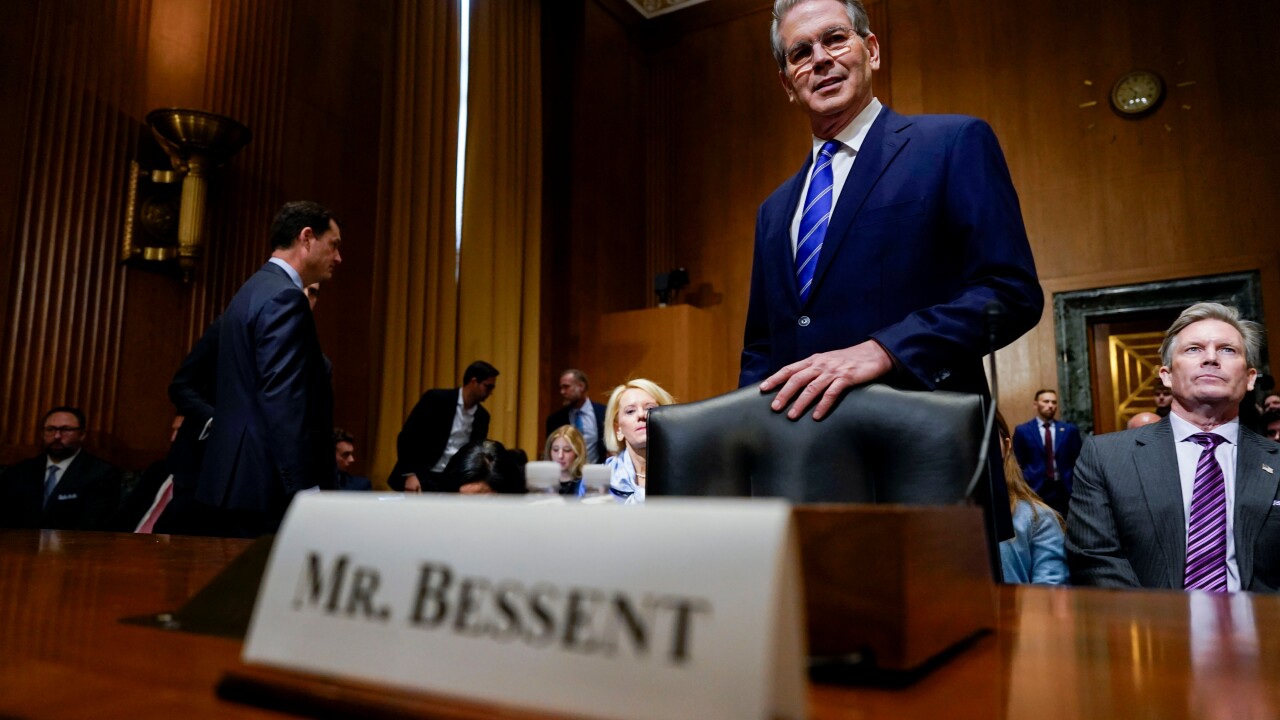
-
Trump's pick for treasury secretary commits to a thorough and careful recapitalization and release process for Fannie Mae and Freddie Mac.
January 21


-

As stablecoins and other cryptocurrencies enter the mainstream, lawmakers in Illinois have imposed a new transaction tax on digital assets. It will raise costs for everyday consumers and drive away businesses.

-

Yes, banks' capital burden will decline, leaving more potential funds available for lending. But the big question is which banks will find a way to deploy those funds to generate meaningful returns.

-

Restrictions that limit access to private market investments are harmful to ordinary investors, who are denied better returns. They also seal off a large potential source of funding for long-term infrastructure investments.


