-
Federal Reserve Gov. Christopher Waller said there was a popular "misunderstanding" Thursday regarding who can qualify for a "skinny" master account, noting that only firms with a bank charter would qualify for approval.
 November 6
-
Custody is the foundation, but the real opportunity for TradFi lies in what comes next
November 6
-
In late 2021, Vast Bank, a regional bank operating throughout Northeast Oklahoma,
November 6
-
Institutional adoption of digital assets hinges on one foundational capability: secure custody
November 6
-
Noelle Acheson looks at what the outsourcing of stablecoin issuance means for the GENIUS Act, and for our understanding of money.
November 6
-
The Minneapolis-based bank is still exploring stablecoin options outside of custody services, but sees opportunity in trade finance, CEO Gunjan Kedia said at The Clearing House Annual Conference in New York Wednesday.
 November 5
-
Comptroller of the Currency Jonathan Gould said Tuesday that chartering compliant fintechs is "the only way" to level the playing field between banks and nonbanks. His comments come as the Office of the Comptroller of the Currency weighs new trust charters and stablecoin rules.
 November 4
-
Federal Reserve Vice Chair for Supervision Michelle Bowman said she wants banks to be competitive in the digital assets space, provided those operations are siloed from the traditional finance side of the business.
November 4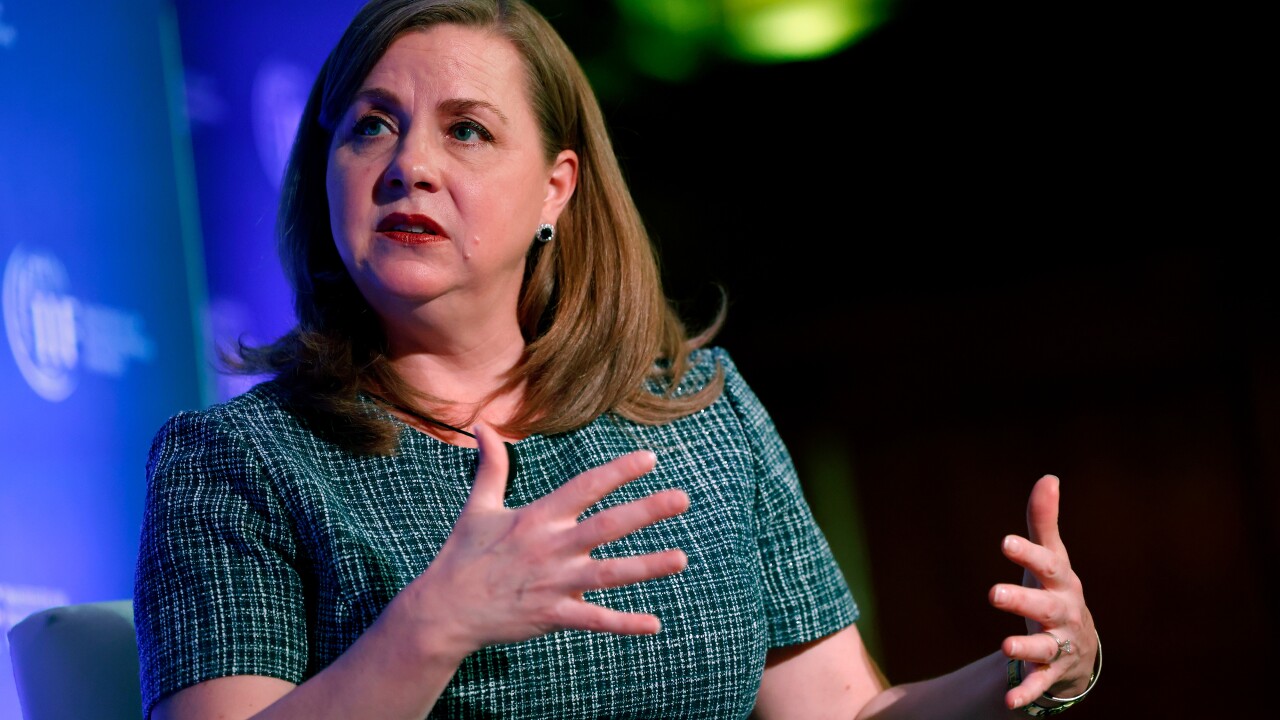
-
Findings from American Banker's On-Chain Finance Report show how market leaders view digital assets as a permanent fixture in the banking industry.
 November 4
-
The United States cannot assume its early lead in stablecoins will last. Dollar-pegged tokens dominate today, but Japan's clear regulations and institutional adoption could mean yen stablecoins dominate tomorrow.
October 31
-
The legacy money transfer firm plans to launch USDPT, a coin designed to improve international payment processing. That and more in the American Banker global payments and fintech roundup.
October 29
-
The agency's approval of the stablecoin-focused Erebor will be the first of many applications to open new banks, many focused on nontraditional elements of the business.
October 29
-
Zelle's parent Early Warning Services said Friday it was planning to take its peer-to-peer payments network international through a new stablecoin initiative. It says the details will come later.
October 24
-
Stablecoins aren't fungible, and yet they're considered an on-chain substitute for money. Noelle Acheson argues that this is about more than a shift in definitions.
October 23 -
Speakers at the Most Powerful Women in Banking conference Tuesday shared several scenarios in which banks will benefit from dollar-pegged cryptocurrency.
 October 21
-
Federal Reserve Gov. Christopher Waller has directed central bank staff to explore the concept of a limited payment account, which would give nonbank entities in the payments space — including crypto firms — access to traditional payment systems.
October 21
-
Banks and credit unions are steering away from stablecoins chiefly due to lack of customer demand, per new American Banker research.
October 21
-
The two companies are collaborating on making the digital asset private for payroll and other business transactions. While it's unusual, as the most well-known stablecoins are on public ledgers, tech firms are warming to the idea.
 October 21
-
An internal error worth more than double the world's GDP highlights both the operational risks and the transparent, self-correcting nature of public blockchains.
 October 16
-
Federal Reserve Governor Michael Barr said strong oversight mechanisms and consumer protections are needed for stablecoins to make them a more viable payment instrument.
October 16


