
-
JPMorgan Chase once again stands alone as the world’s most systemically important bank after global financial regulators recommended a higher capital burden for the firm.
November 23
-
The European Union plans to soften the blow to banks from new capital rules, arguing that an easier stance ensures lenders can keep funding the economy as it recovers from the shock of the pandemic.
October 25
-
This year’s stress tests examined 23 banks including JPMorgan Chase and Goldman Sachs, with the remainder of the firms on an “every other year” test cycle. The capital requirements for those remaining firms are unchanged from last year.
August 6
-
Nine of the 12 largest banking companies in the U.S. proposed higher quarterly payouts to shareholders. In announcing the actions, the banks touted their strength after more than a year of economic dislocation.
June 28
-
Some of the 23 large banks that participated in last week’s stress tests will be better positioned to reward shareholders than others, since they padded their capital amid the pandemic. Still, all are expected to tread cautiously amid ongoing economic uncertainty.
June 28
-
Federal Reserve Chairman Jerome Powell said the market dislocations of the past year resulting from the pandemic had changed the impact that the supplementary leverage ratio was having on the largest banks. After temporarily easing the requirement, the central bank is considering longer-term reforms.
June 16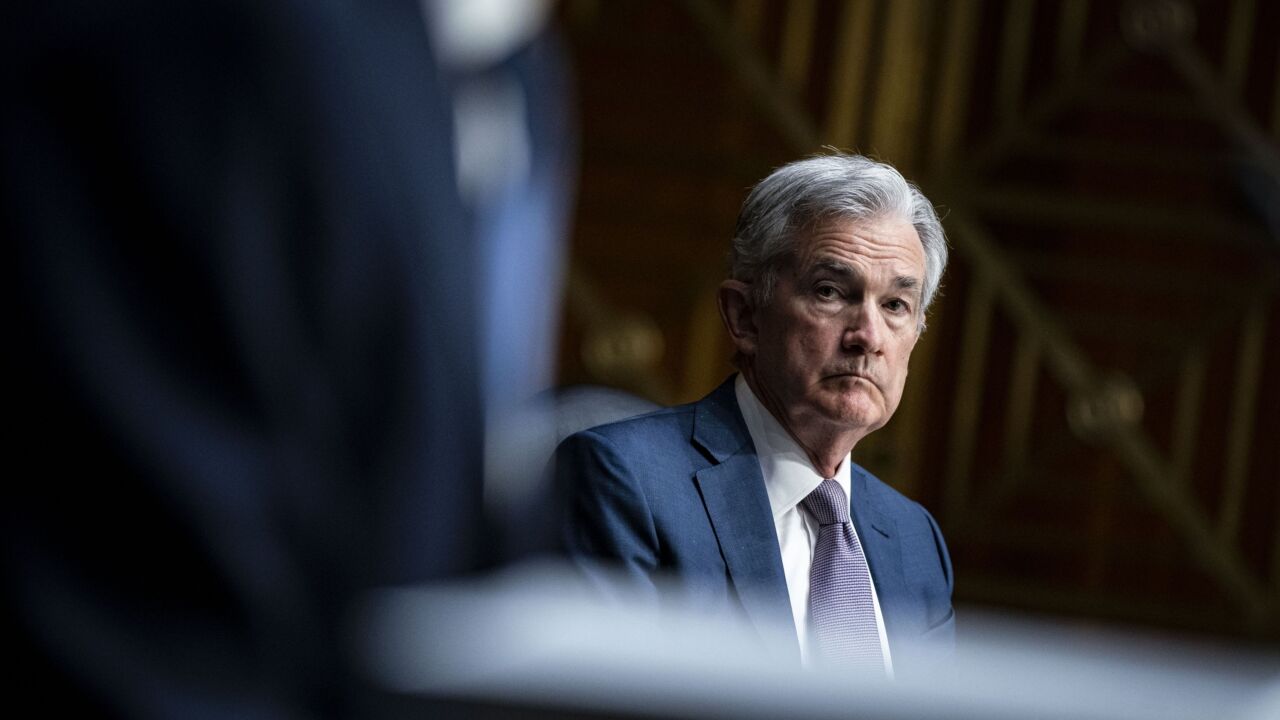
-
Randal Quarles, the Federal Reserve's vice chair for supervision, says the central bank was wise not to require banks to build capital cushions in the lead-up to the pandemic. But that decision rested on a misleading a narrative and could wind up threatening the economic recovery.
June 14
-
Federal Reserve Vice Chair of Supervision Randal Quarles suggested that the massive influx of reserves stemming from the central bank's COVID-19 response may lead to a recalibration of the supplementary leverage ratio.
June 1
-
Rep. Andy Barr, R-Ky., has introduced legislation to make it easier for new community banks to open in areas that are underserved by the banking system.
April 15
-
The central bank should consider using a tool requiring higher capital amounts when times are good rather than offering temporary regulatory relief in a downturn, said Boston Fed President Eric Rosengren.
April 12
-
The decision is seen as a setback for the banking industry, which had been pushing for an extension, and a win for Democrats, who have argued that a pandemic is no time for banks to be shedding capital.
March 19
-
The Federal Reserve will determine within days whether to extend the easing of the supplementary leverage ratio for big banks past March 31, Chairman Jerome Powell says. And it's a couple of weeks away from announcing whether there will be limits on second-quarter dividends and buybacks, he says.
March 17
-
The Senate Banking Committee is questioning whether Goldman Sachs Group paid dividends at the expense of lending to businesses and households during the pandemic as lawmakers take a broad look at the support big banks offered clients to get through the economic slump.
March 15
-
The House Financial Services chair joined other Democrats to warn the federal agencies against further easing of the supplementary leverage ratio, a key capital requirement for large banks.
March 10
-
The industry wants regulators to extend a temporary measure making it easier to satisfy the supplementary leverage ratio. But Democrats’ control of the White House and Congress has given a bigger platform to those who say banks have had enough relief.
March 4
-
Sens. Elizabeth Warren and Sherrod Brown urged regulators not to give in to industry requests to extend a temporary policy easing compliance with the supplementary leverage ratio.
March 2
-
Chair Jerome Powell told a congressional panel that the Federal Reserve is weighing whether to extend temporary relief from the “supplementary leverage ratio” — meant to help banks lend more during the pandemic — beyond March 31.
February 23
-
The Federal Reserve's “midcycle” assessment — conducted in light of the COVID-19 pandemic — said the path of the economic recovery is still uncertain even though the banks that were evaluated maintained adequate capital levels under hypothetical scenarios.
December 18
-
Executives from U.S. banks continue to play down near-term expectations, but they say customers are growing more confident ahead of the rollout of coronavirus vaccines, and that key commercial lending segments could drive an economic rebound.
December 8
-
Adolfo Marzol came to the agency after a stint at HUD and a 30-year career in the mortgage industry. He will depart on Dec. 18.
December 4


