-
Foreclosure rates were highest in the region, and nationwide, completed repossessions also saw a significant jump, according to Attom.
 September 17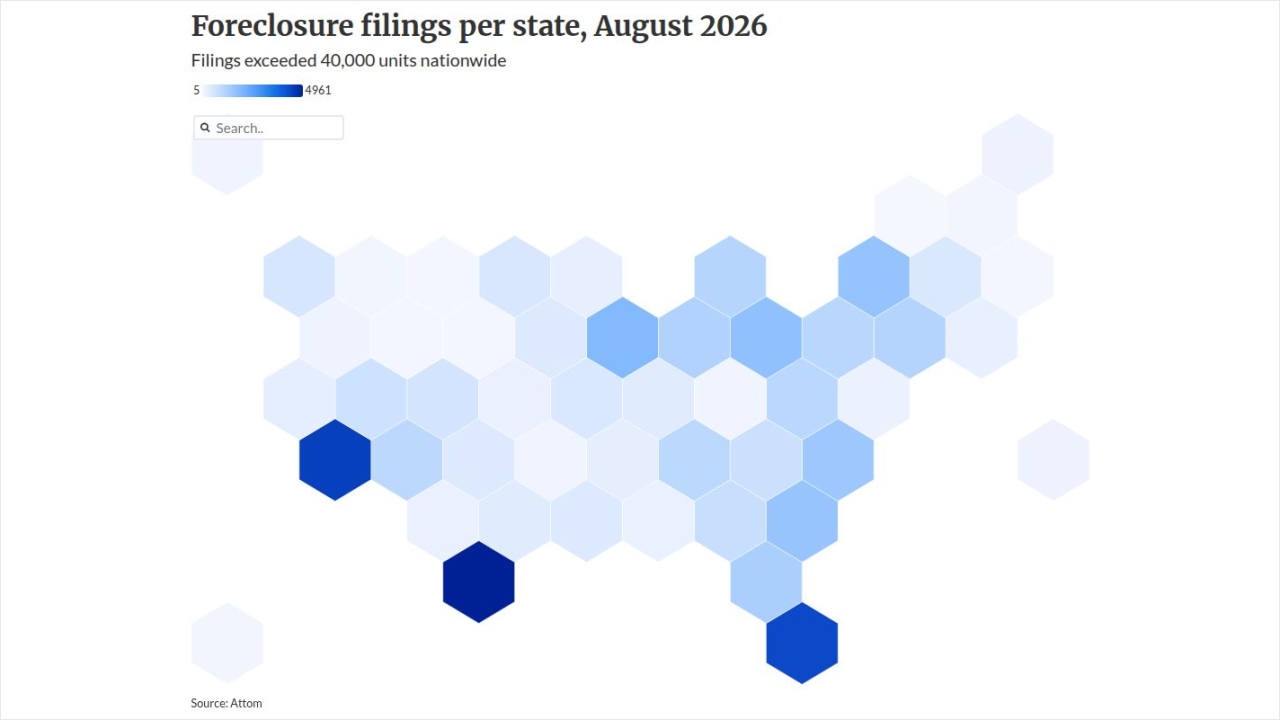
-
Non-QM securitizations hit $78B as lenders ease guidelines to capture unserved borrower demand, even as total impairments rise for the 10th time in 13 months to 6.27%.
 August 26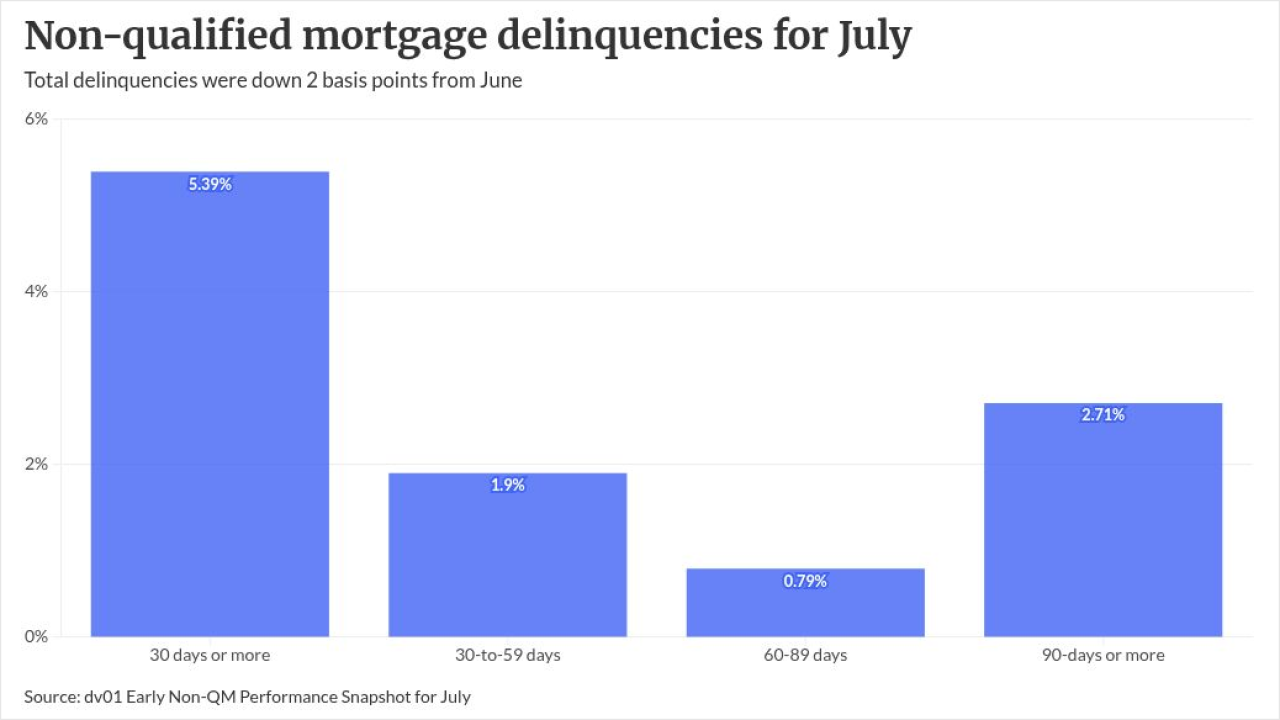
-
The new record arrives after five months of annual home-price growth, which surged to its highest in more than a year, according to ICE Mortgage Technology.
August 10
-
The drop in the annual metric for FHA loans was the biggest in over four years but other performance indicators ICE Mortgage Technology tracked were mixed.
 July 24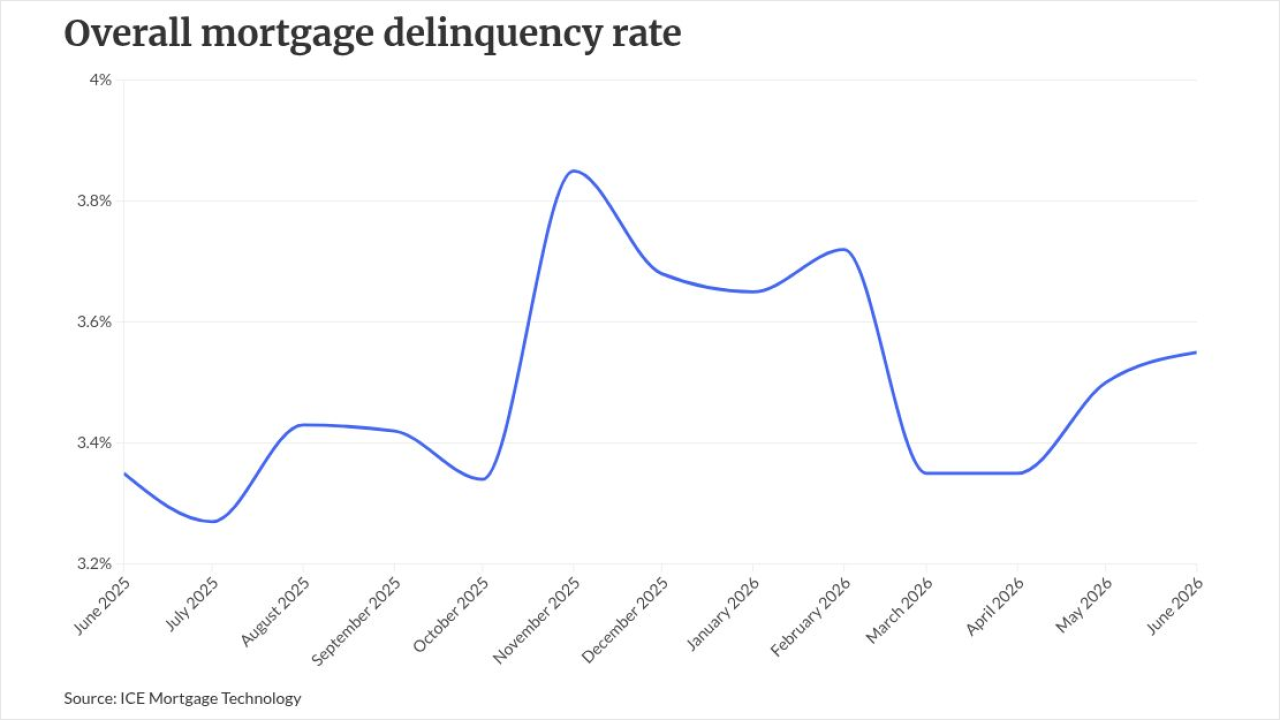
-
The rise in completed modifications occurred as many other loan performance indicators plateaued, and may reflect the temporary impact of recent rule changes.
July 1
-
The portfolio for sale contains hundreds of millions of dollars worth of reperforming loans that the government-sponsored enterprise co-marketed with Citigroup.
June 30
-
There's broad support for the effort to reduce costs and processes, but the Appraisal Institute warns about reducing property valuation quality control checks.
June 24
-
The Department of Veterans Affairs will accept the legislatively-mandated partial-claim option soon and servicing systems must accommodate it by November 28th.
June 2
-
The total delinquency rate rose 0.2 percentage points annually in March, with the share of loans 90 days late rising out of the range they were in since 2024.
May 29
-
Foreclosure filings were reported on 42,430 properties in the United States last month, down 8% from the month prior but up 18% from a year ago.
 May 14
-
A rule change requiring trial modifications before other loss-mitigation options is creating workflow and liquidity challenges, especially for smaller servicers without deep resources.
May 6
-
Quarterly filings are far from historic highs but rising more consistently, with concentrations in Florida, California and Texas, Attom's latest numbers show.
April 16
-
Half of Gen Z homeowners and 44% of millennial homeowners were at risk of missing at least one mortgage payment over the last two years, ServiceLink found.
April 14
-
Sheer luck kept all but one hurricane from U.S. shores in 2025; one landfall in 2026 could devastate servicers.
April 13
-
The national delinquency rate ticked up seven basis points to 3.72% last month, coupled with a 10-basis-point increase in prepayment speed, according to ICE.
March 25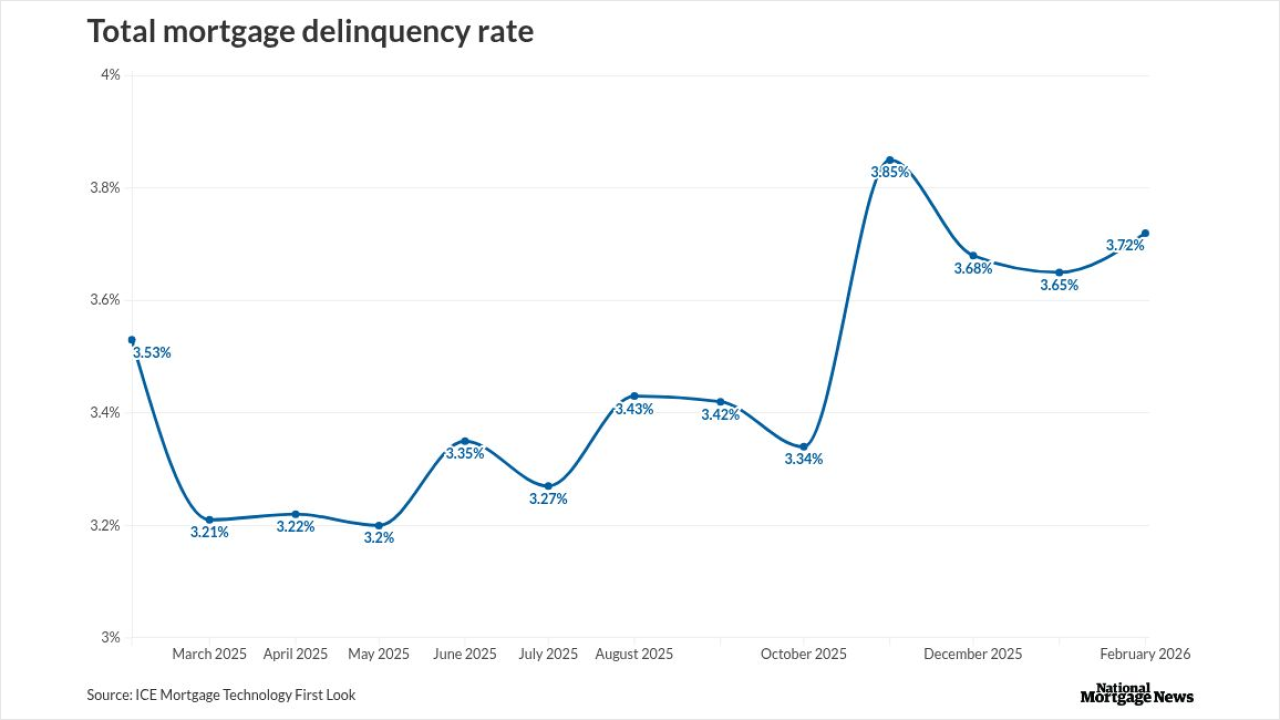
-
While consumer distress in auto and personal loans also picked up, the pace of growth among mortgages was atypical, Vantagescore's monthly credit gauge said.
June 27
-
Foreclosure activity surged in the first quarter, underscoring the growing need for borrower support as certain federal protections expired.
June 23
-
Nationally, starts are higher even when seasonal differences are accounted for and in some areas distress is far above the U.S. average, Attom found.
March 11
-
Foreclosure filings increased 7% in January from December, which could be a housing market starting to experience trouble, or a post-holiday return to normal.
February 13
-
News reports of the negative impact to borrowers from the partial claims program's discontinuation, and a letter from Senate Democrats, appear to have prompted the statement.
November 20