-
Ocwen Financial's internal review group is "independent," and the Atlanta servicer is in compliance with the national mortgage settlement, settlement monitor Joseph A. Smith said Tuesday.
 August 11
 -
JPMorgan Chase is the bank most integral to the stability of the global financial system, followed by HSBC and Citigroup, according to a U.S. study.
August 4 -
While the Federal Deposit Insurance Corp. has not deviated from a 2013 paper outlining a method for unwinding a giant firm, the agency has appeared to fine-tune its approach in significant ways.
 July 31
 -
Marlin Business Bank has launched a new site to compete with alternative lenders such as OnDeck and Kabbage, which specialize in providing quick and convenient access to small-business credit.
 July 31
 -
WASHINGTON Republican lawmakers continued their assault Wednesday on a portion of the Dodd-Frank Act that grants the Federal Deposit Insurance Corp. the ability to seize and unwind a failing banking company, arguing that reforming the bankruptcy code is a better way to tackle "too big to fail."
July 29 -
Regulators have given the merger between CIT Group and OneWest Bank the green light so long as CIT comes up with a revised Community Reinvestment Act plan. This condition is good news for the low-income communities impacted by the merger and sets a strong precedent for regulators' review of future bank deals.
July 29
-
WASHINGTON Three nonbank giants designated for tougher federal supervision received added guidance Tuesday on what regulators expect to see in the companies' mandated resolution plans.
July 28 -
The bankruptcy of Wingspan Portfolio Advisors epitomizes the existential crisis facing default servicing. This once-thriving sector of the mortgage industry now finds itself declining in lockstep with the drop in loan delinquencies and foreclosures.
 July 24
-
The debate about how big a bank needs to be before it poses a threat to the economy heated up again Thursday as lawmakers battled over the $50 billion threshold imposed by the Dodd-Frank Act.
July 23 -
Regulators and lawmakers are wrong to focus on bank size as a measure of risk. A far better indicator of bank stability is the riskiness of a bank's assets, as well as which of the bank's sources of funding bear that risk.
July 23 -
Republican lawmakers continued their legislative attempts Wednesday to require more transparency from the Federal Reserve Board and force the central bank to more accountable to lawmakers.
July 22 -
Bankers were pleased with the dramatic leap in home lending last quarter, but they cautioned that volume will slow in the second half as rate increases curb refinancings, nonbanks provide stiffer competition, servicing costs remain high and underwriting standards change.
July 22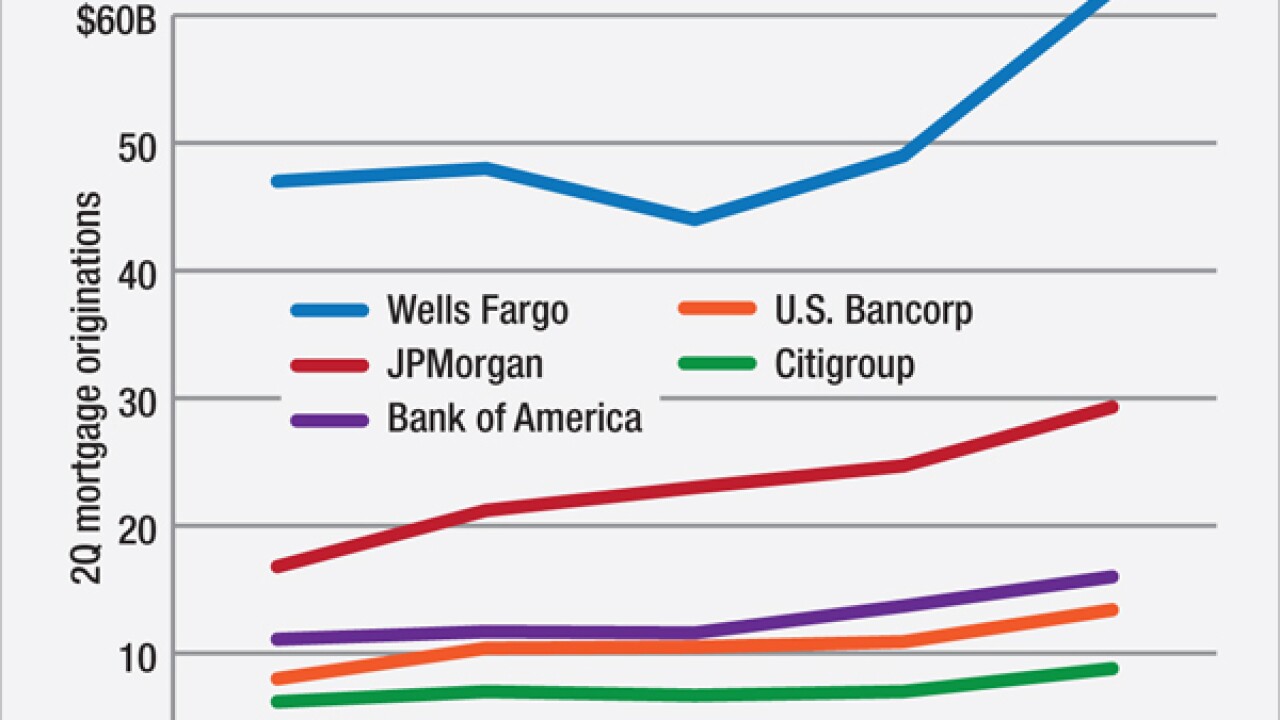
-
Despite recent changes to the Financial Stability Oversight Council's systemically risky designation process, Senate Banking Committee members feared that once a designation is made, there is no way for a company to remove that label.
 July 22
 -
A growing number of regulators have indicated their support for raising the asset thresholds at which banks face new regulatory requirements. That's welcome news but time is of the essence in implementing any changes.
July 22 -
Key proponents and critics of the 2010 financial reform law commemorated its anniversary by keeping the debate over its legacy front and center.
July 21 -
In one fell swoop, the Federal Reserve Board completed two of the most significant rules on its docket, completing a surcharge rule for the largest and most systemically risky U.S. banks and outlining the first capital rules for a nonbank systemically important financial institution.
July 20 -
In a surprise move, the Federal Reserve Board proposed significant changes to its stress testing regime, including dropping its Tier 1 Common Capital requirements and delay leverage and risk-based capital ratio requirements for banks with "advanced approaches" in risk-based modeling.
July 17


