-
Several crypto-friendly voices join the Senate Banking Committee from Nebraska and Ohio, while Democrats leave a banking policy expert off the House Financial Services Committee.
 January 8
-
In a Wednesday morning speech, the Federal Reserve Gov. Christopher Waller said President-elect Donald Trump's nascent trade policy will likely lead to a one-time jump in prices rather than broader inflationary pressure. He also said he expects further interest rate cuts in 2025.
 January 8
-
Experian said it has gone "above and beyond the law" to investigate consumer disputes related to the accuracy of information.
 January 7
-
Michael Barr's surprise announcement that he will step down as the Federal Reserve's chief regulator could ultimately mean little for the central bank's approach to regulation under the incoming Trump administration.
January 7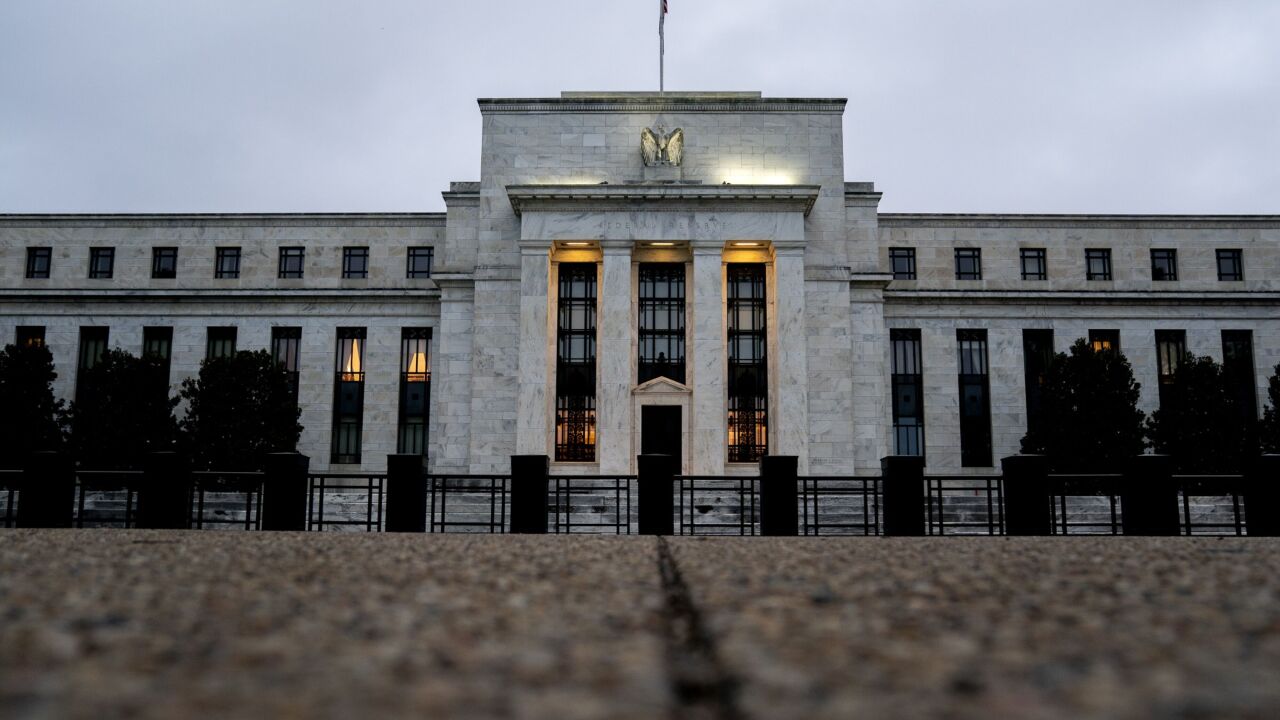
-
The banking giant's exit from the global Net-Zero Banking Alliance leaves just three smaller U.S. banks in the group. Climate activists called large banks' departures a capitulation to Republicans' climate denialism.
 January 7
-
Barr gave up his prestigious position as the Federal Reserve vice chair for supervision. In keeping his seat on the Board of Governors, he may have strengthened his hand in shaping banking regulation.
January 7 American Banker
 -
Acting Comptroller of the Currency Michael Hsu reflects on his tenure, the challenges of financial regulation, and the delicate balance of fostering innovation while maintaining trust in the financial system.
 January 7
-
The Consumer Financial Protection Bureau finalized a rule that will remove medical bills from credit reports to end what the bureau called "coercive debt collection practices."
 January 7
-
In his letter of resignation, Federal Reserve Vice Chair for Supervision Michael Barr said an attempt by the Trump White House to remove him could create a "distraction" for the Fed. He plans to retain his seat on the Board of Governors, which expires in 2032.
January 6
-
In the year ahead, financial services regulatory agencies should take the opportunity to pull back from ideology-driven supervisory decisions and embrace a fact-based approach that will boost the U.S. economy.
January 6
-
The Consumer Financial Protection Bureau's last-minute actions are expected to annoy the incoming Trump administration, which will seek to undo them, putting protections in jeopardy.
January 6
-
The Federal Reserve Bank of Richmond president said while he believes the central bank's current level of rates is restraining the economy enough to continue lowering inflation in 2025, there are still upside risks to inflation and growth.
January 3
-
In their new book, "The New World Economy in 5 Trends," Koen De Leus and Philippe Gijsels predict a future in which neutral interest rates are higher, technology is transformative and the urgency of climate-change adaptation creates investment opportunities.
January 3American Banker -
The changes add some steps that would have to be taken before Fannie Mae and Freddie Mac could exit following statements from a Trump ally indicating plans for a near-term release.
January 2
-
Bill Ackman, founder of Pershing Square Capital Management, predicts Fannie Mae and Freddie Mac will be removed from conservatorship within the next two years.
 January 2
-
The Consumer Financial Protection Bureau has sued some of the largest U.S. corporations and banks before the changeover to the Trump administration later this month.
January 2
-
With Securities and Exchange Commission Chair Gary Gensler preparing to step down, the CEO of Unicoin, which is being sued by the agency, expresses hope for more acceptance of cryptocurrencies by the incoming Trump administration.
January 1
-
Bankers expected big changes for community banks, digital assets and regulation. Were they correct?
December 30
-
A passivity agreement with the FDIC means that when the asset management giant Vanguard owns more than 10% of an FDIC-overseen bank, it can't seek certain levels of control over the bank's behavior.
December 27
-
The president-elect's history of deregulatory financial services policies could offer some benefits to minority businesses and consumers, but the more likely outcome is reduced access to capital and higher costs.
December 27


