-
The financial reform law may hinder growth modestly in the short term, but it should be judged by its impact on the economy years down the road.
April 27 Moody's Analytics
 -
As NCUA amended at 2014 regulation on capital planning and stress testing, the two-person committee also marked 24 months of operating with a vacant seat on the board, commending one another for a productive working relationship.
 April 19
-
Fed vice chair wants to put stress test scenarios out for comment by banks; C&Is outstanding at record level in March.
April 17
-
The Federal Reserve is considering allowing banks a chance to comment on stress tests before they take them and dropping any qualitative review for the largest banks’ performance, according to Randal Quarles, the central bank’s vice chairman for banking supervision.
 April 16
-
The bank revealed Friday that it is facing hefty regulatory penalties and will likely have to restate first-quarter earnings. Declines in loan balances and fee income and questions about upcoming stress tests are only adding to investors' worries.
 April 13
-
Over the past week, regulators have proposed the most substantial changes to capital requirements for the largest banks in years, but the most startling thing was how unremarkable they were.
April 13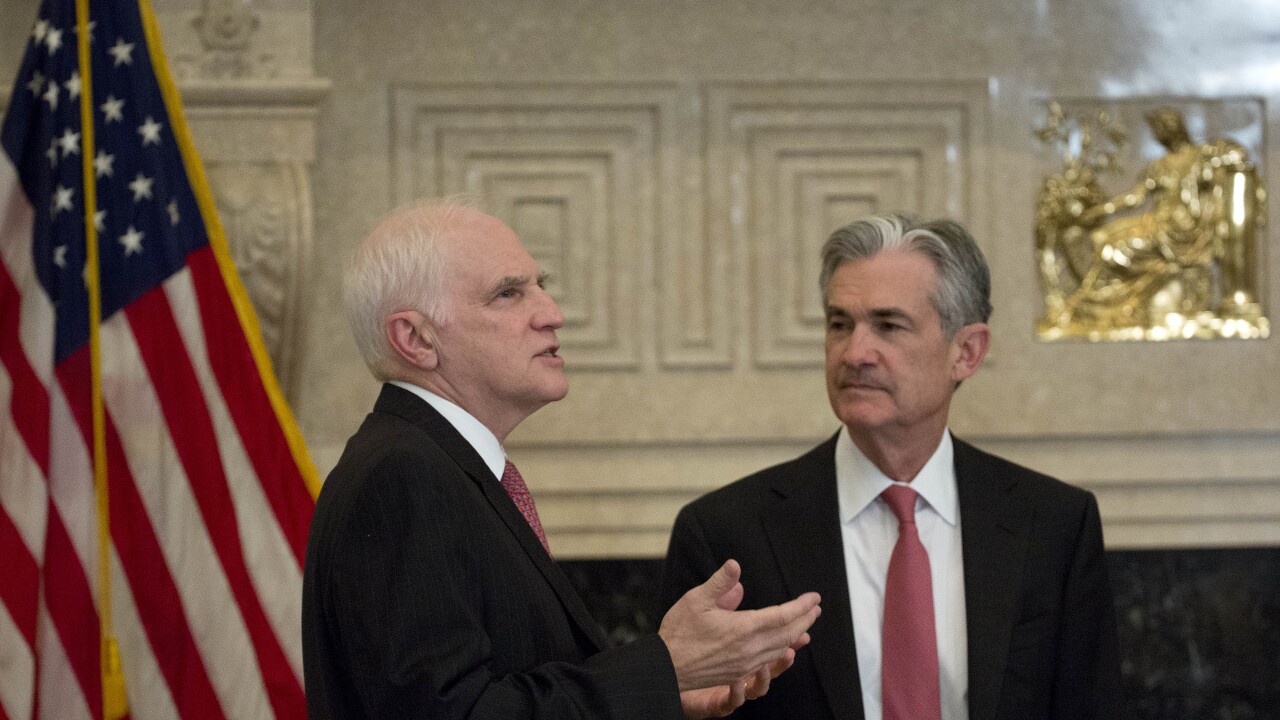
-
Critics argue that Community Reinvestment Act standards need to be more transparent, but creating more objective measures would require regulators to favor some types of loans over others.
April 11
-
Proposal would lower capital requirements for some, raise them for others; Mulvaney says enforcement division will continue to police lending discrimination.
April 11
-
The Federal Reserve Board released a proposal Tuesday to modernize its stress testing regime by replacing many of the existing post-stress minimum capital levels with a so-called “stress capital buffer."
April 10
-
On quarterly earnings calls set to begin next week, investors will be listening closely to CEO comments for any hints of how banks might deploy excess capital if they are no longer deemed systemically important.
 April 2
-
The biggest legacy of the current regulatory relief effort may be the increasing focus on whether organizing banks in supervisory buckets by asset size makes sense. Yet the bill deals with just one of the two big asset thresholds in the law.
 March 26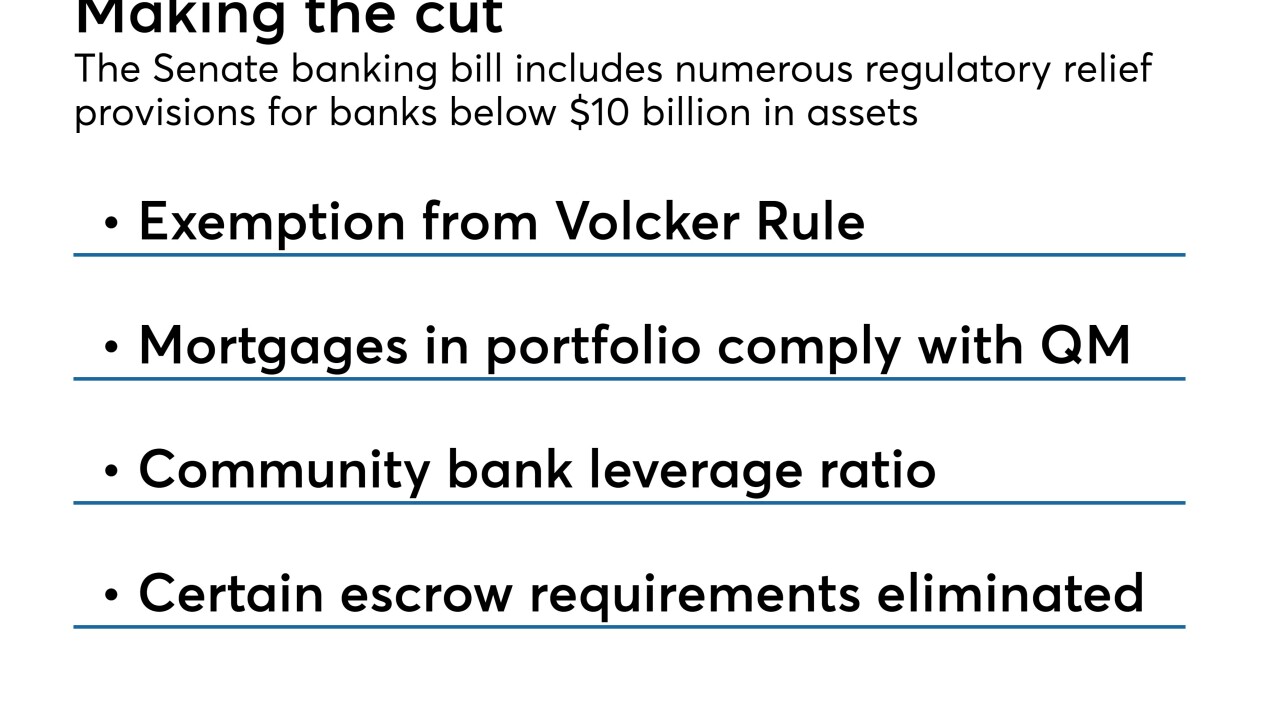
-
While regulatory relief legislation would raise the asset threshold for “systemically important” banks, Federal Reserve Chairman Jerome Powell said the central bank could still apply prudential scrutiny to banks below that new cutoff.
March 21
-
The Senate legislation would weaken scrutiny of large financial institutions, undercutting Dodd-Frank’s mission to provide tailored oversight across the system.
March 5 University of Michigan
 -
The Senate is poised to pass the most substantial bank regulatory relief since the crisis, but any disruption of the post-crisis regime is still eclipsed by how much the bill enshrines Dodd-Frank.
March 2
-
House Chief Deputy Whip Patrick McHenry, R-N.C., said House lawmakers are having discussions with the Senate about ways to go further on rolling back Dodd-Frank before the Senate is expected to hold a floor vote.
February 26
-
Banks may start paying special dividends now that capital levels have improved.
 February 23
-
The California company has agreed to buy Grandpoint Capital, a business bank in Los Angeles, for $641 million.
 February 12
-
Banks will have to show they can withstand “severely adverse” conditions; the office will be under the direct control of acting director Mick Mulvaney.
February 2 -
The Fed released its stress testing scenarios for banks this year, raising the bar on what constitutes severely adverse hypothetical market conditions.
February 1 -
Swelling capital levels, tax cuts and changing attitudes about post-crisis regulation could encourage bigger banks to issue the one-time payouts to reward shareholders and better manage their returns.
January 31


