
Commercial Banking News, Strategy & Risk Analysis
American Banker's commercial banking coverage explores how banks serve middle-market and corporate clients, focusing on issues such as interest-rate volatility, regulatory pressure, and intensifying competition for deposits and credit relationships. This section focuses on balance-sheet strategy, commercial lending, treasury and cash management, risk governance, and the technologies reshaping relationship banking.
Learn how institutions are recalibrating growth expectations, managing credit exposure, and using payments and treasury capabilities to deepen client relationships while preserving profitability.
Commercial banking is under structural pressure from higher funding costs, uneven loan demand, and increased supervisory scrutiny. Banks are being forced to prioritize relationship depth, disciplined credit selection, and non-interest income generation rather than balance-sheet expansion alone.
-
Regulators' de facto ban on bank mergers and acquisitions is not just harming individual institutions. It poses systemic risk.
May 9 Patomak Global Partners
 -
The Federal Reserve's survey of senior loan officers is being closely watched since it follows the recent turmoil in the banking industry, which has prompted concerns that a pullback in bank lending could slow economic growth.
 May 8
May 8
-
The top five banks and thrifts have combined total deposits of more than $7 trillion as of December 31, 2022.
May 8
-
Rock-bottom stock prices at midsize banks are fueling concerns that depositors could get spooked, and short sellers are drawing much of the blame. But their persistence may be exposing a broader lack of confidence in the industry.
May 7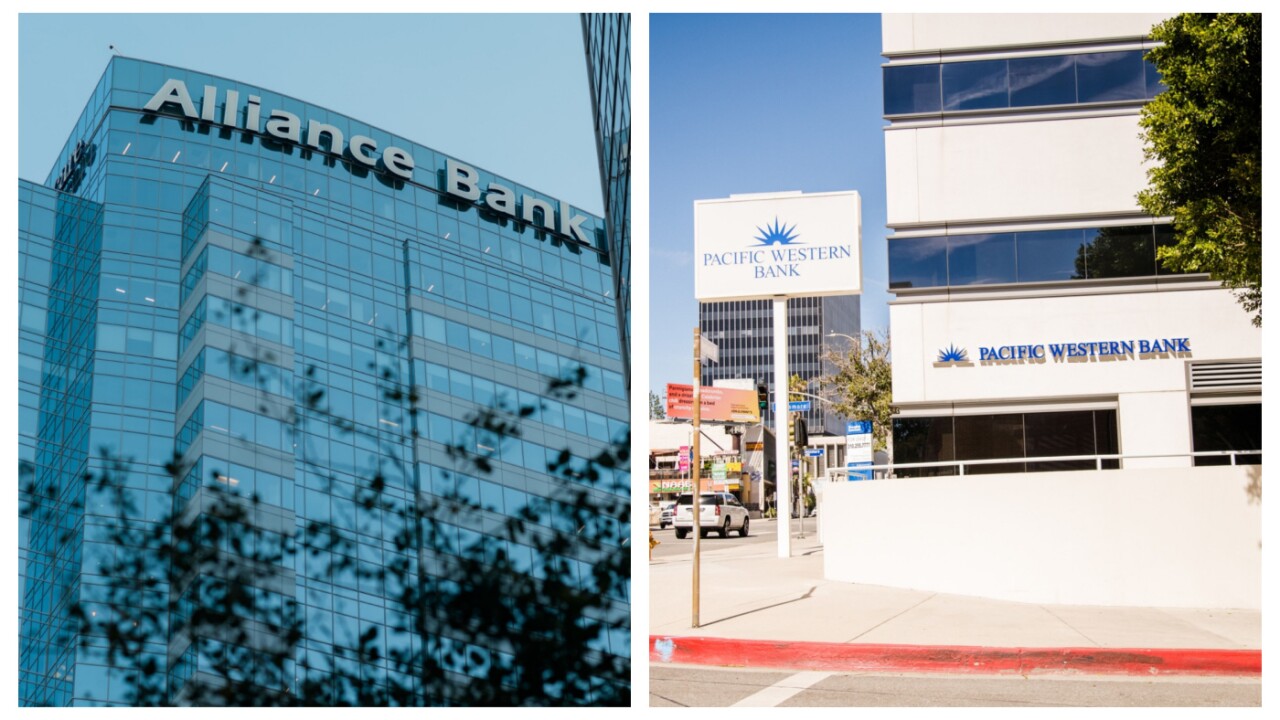
-
On one level, the failed bank's narrative mirrors the interest rate misplay and depositor panic at Bay Area neighbor Silicon Valley Bank. But it's also a deeply personal story about Herbert, who founded First Republic in the 1980s, championed its aggressive growth and failed in a last-ditch attempt to engineer a private-sector rescue.
May 3
-
Ninety-eight percent of owners reported that they had not changed their business's primary financial institution in the last month, according to a National Federation of Independent Business survey out Wednesday.
May 3
-
Metropolitan Bank Holding is rescinding a $7.5 million loan it made to its CEO, and canceling a stock purchase he used the proceeds to fund, after determining that the loan was likely impermissible.
 May 2
May 2


