-
A new survey found artificial intelligence was a top compliance-related priority for 85% of firms responding, while cybersecurity was only a concern for 37%.
 July 31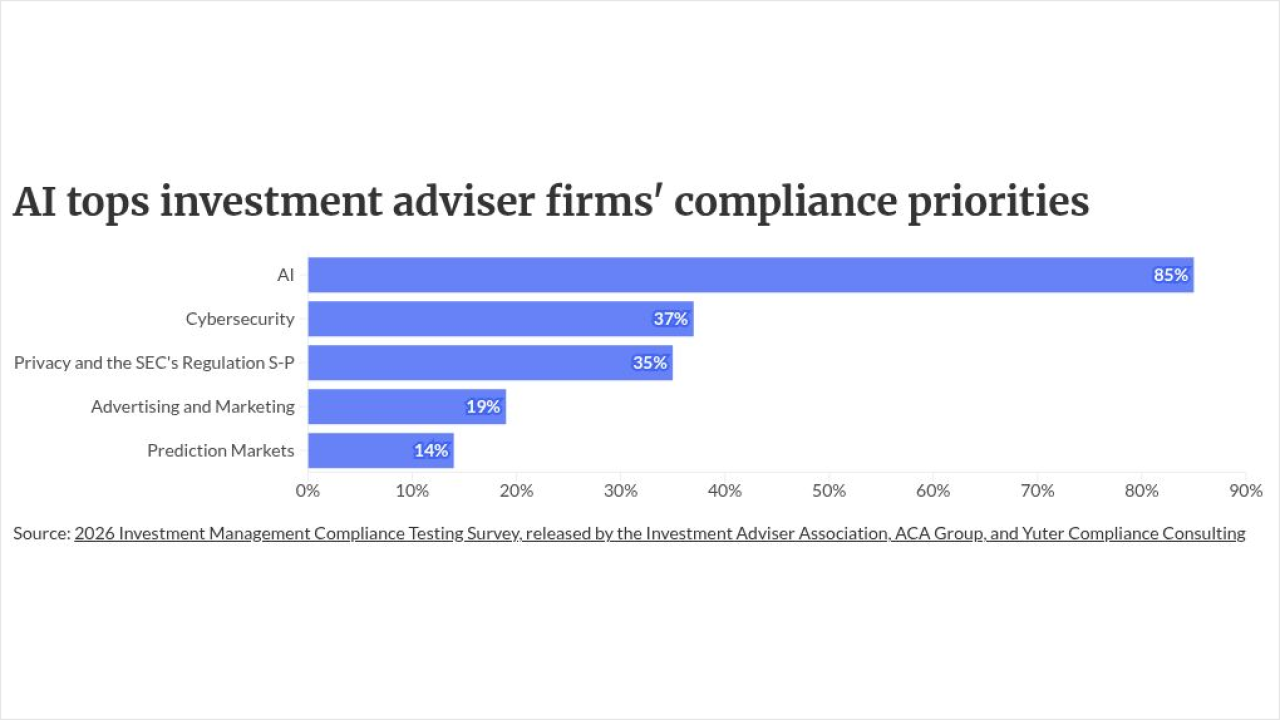
-
The policies most community banks rely on for cyber liability, fidelity bonds and directors and officers insurance are full of overlapping exclusions, restrictive coverage sublimits and vague specifications. That can become an expensive problem.
July 28
-
The DTCC piloted a tokenized version of its stock-settlement system. But the real future of trading has to involve currency, not just securities.
 July 22
-
The class action is an early test of whether credit unions can hold their vendors liable for the cybersecurity they promise.
 July 21
-
Banks must tell regulators of a serious breach within 36 hours under a codified rule. Regulators say they will tell banks 72 hours of their own data breaches, in a memo nobody can enforce.
July 17
-
Feeding vulnerabilities into Gold Eagle could expose a bank to regulators or lawsuits, a cybersecurity lawyer warns.
July 16
-
The biggest core providers have each tied their security to a frontier AI developer. The guidance that would govern any of it excludes agentic AI.
July 14
-
Caitlin Long, CEO of Custodia Bank, sits down with tech reporter Melinda Lucy to talk about the bank's launch of its on-chain Hazel Network in partnership with Vantage Bank, the stablecoins versus tokenized deposits debate and how the Hazel Network brings the two technologies together under a familiar legal framework for banks.

-
Seventeen banks, including BNY, Citi, HSBC, Standard Chartered and Wells Fargo, will make tokenized cross-border payments as the messaging network looks to counter threats from digital asset fintechs.
 July 9
-
The nation's largest bank's fund for stablecoin issuers seeking GENIUS Act–compliant yield vehicles already has $700 million in assets.
 July 8
-
With Robinhood Chain now live, the company is pushing into tokenized equities, stablecoin lending and international markets.
July 7
-
The order covers the European units of JPMorganChase, Goldman, Citi and Morgan Stanley, and previews what U.S. regulators may eventually demand.
July 7
-
Market watchers say it is plausible that regulators will have established rules of the road for tokenized bank deposits by next year. But to get there, many outstanding issues will need to be ironed out first.
 July 7
-
Two executive orders pulled federal deadlines for quantum-proof encryption forward to 2030, after 2026 research cut the cost of breaking today's codes.
July 6
-
The company has built even more safeguards into the model, including a fallback to Opus 4.8 for requests that trigger security controls.
 July 1
-
Securities and Exchange Commission Chair Paul Atkins said tokenized bank deposits are likely to be a reality in 2027, and added that he is working with banking agencies on digital assets and capital requirements.
 June 30
-
Foreign investors are gobbling up tokenized U.S. equities while domestic investors remain unable to take advantage of the opportunities such assets offer. U.S. policymakers need to level the playing field.
June 26
-
Chair Travis Hill said the Silicon Valley Bank failure showed banks can't always sell securities fast enough to cover deposit outflows, but acknowledged the "stigma problem" with discount window borrowing remains unsolved.
June 18
-
As banks have adopted multifactor customer authentication systems, they have inadvertently made it more difficult for many disabled customers to access their accounts. The fix is less complicated than it appears.
June 18
-
Two industry leaders at American Banker's Digital Banking conference said banks' fraud and identity controls weren't built for software acting as the customer.
June 16


