
Federal Reserve
Federal Reserve


-

Wells Fargo said it can't fully meet demand from small businesses rushing to participate in a U.S. relief program because of constraints imposed by the Federal Reserve on the bank's growth.
April 6 -

Requiring banks to test themselves is likely to be a waste of time in the current crisis, says a former Senate Banking counsel.
April 3 -
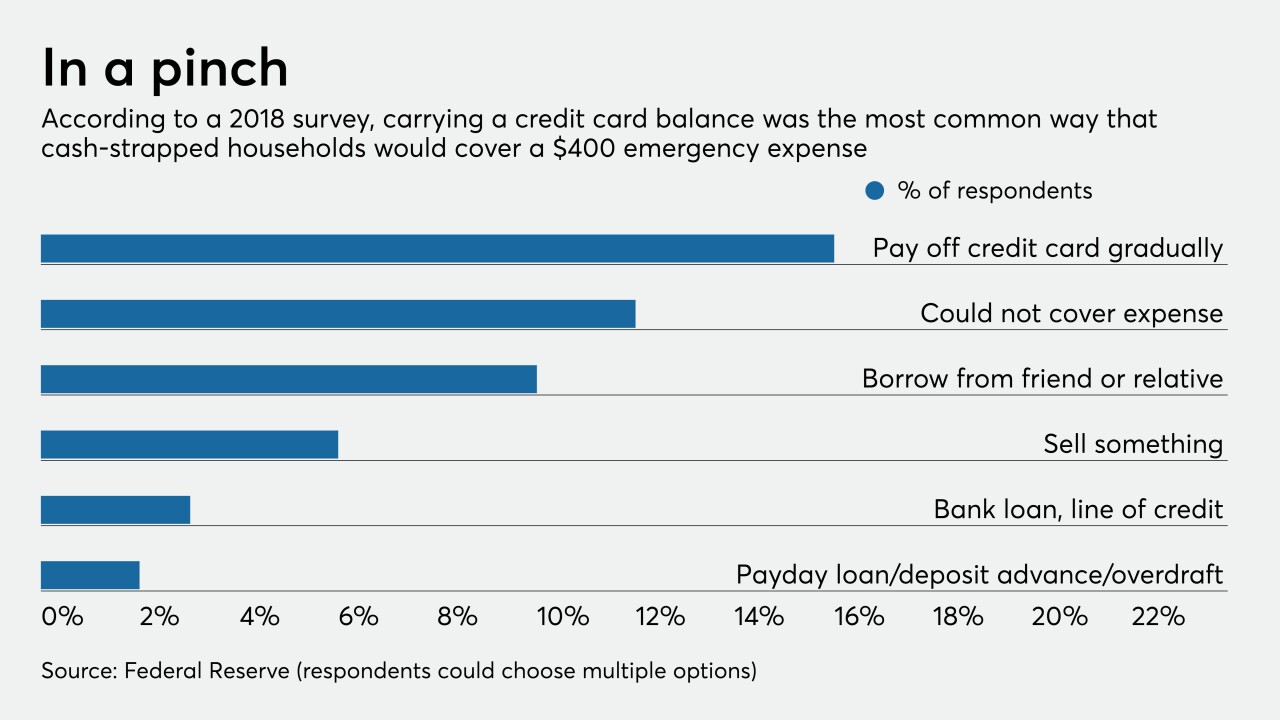
Regulators point to traditional financial institutions as well-positioned to meet short-term credit needs during the coronavirus pandemic, but there are still a host of questions about whether the industry should try to compete with high-cost lenders.
April 2 -

The agencies will give the industry another month to submit feedback on the so-called covered fund portion of the rule "in light of potential disruptions resulting from the coronavirus.”
April 2 -

The change — effective immediately — will reduce capital demands by about 2% overall, the Fed estimated, and will be open for a 45-day comment period.
April 2 -

The one-year relief is intended to free up lending to consumers and businesses; the online small business lender not making loans, shrinks credit lines, staff.
April 2 -

Amid the coronavirus emergency, the central bank may have to decide at what point the imperatives of an economic crisis outweigh the requirements of its most severe enforcement action in recent memory.
April 1 -

Lenders and government guarantors can use loan technology to bring immediate relief to business owners, former OCC official Jo Ann Barefoot says.
April 1 -

SBA loans could pour billions into bank coffers; Fed bailed out government-backed market, others may suffer.
April 1 -

The regulation established standards for investors who own less than a quarter of an institution. Banks are getting more time for implementation as they focus on effects of the COVID-19 pandemic.
March 31 -

After the financial crisis banks took a PR beating, limiting bonuses could prevent criticism; the Fed moved with authority in the face of the coronavirus.
March 31 -
All financial institutions are now in the decision mode of being a "fast follower" and joining the Clearing House scheme, or being a "patient follower" and waiting for the Fed, writes Icon Solutions Gene Neyer.
March 30 -

Banks and fintechs are not taking undue risks in lending to new customers; Jefferies CFO Peg Broadbent succumbs to the disease at age 56.
March 30 -
The $2 trillion stimulus package, which the House passed earlier in the day, aims to expand Federal Reserve liquidity resources and provide financial institutions with some regulatory relief.
March 27 -
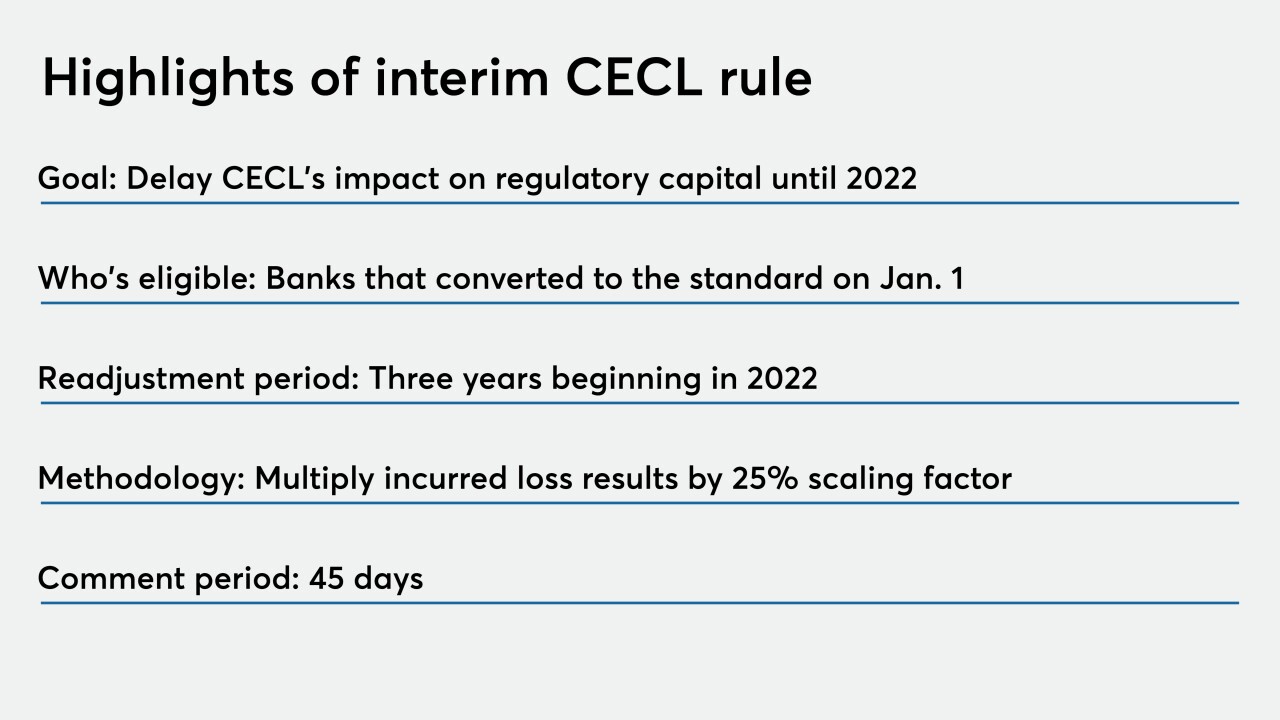
Lawmakers and regulators opted to delay compliance for banks that have implemented the credit loss standard, sparing them near-term capital hits.
March 27 -

Many argue the economic turmoil from the pandemic makes the Comprehensive Capital Analysis and Review irrelevant this year, while others say testing banks’ capital strength is crucial now more than ever.
March 27 -

The $2 trillion stimulus package, which the House passed earlier in the day, aims to expand Federal Reserve liquidity resources and provide financial institutions with some regulatory relief.
March 27 -

Regulators are allowing banks that implemented the loan-loss standard to forestall any capital hits until 2022.
March 27 -
The joint statement said examiners will not impede banks and credit unions’ responsible efforts to offer open lines of credit, closed-installment loans or other products to borrowers dealing with fallout from the pandemic.
March 26 -
The regulator's extension for first-quarter documents applies to BHCs with less than $5 billion in assets.
March 26


