-
The head of the Federal Reserve Bank of Boston said the central bank had acquired stakes in 32 business loans as of Monday, four times the amount from two weeks earlier.
August 12![“Much of the increase [in loans] has occurred recently, and I expect we will continue to see more activity as more firms are impacted by the pandemic,” said Boston Fed President Rosengren.](https://arizent.brightspotcdn.com/dims4/default/f6fc5c5/2147483647/strip/true/crop/4000x2250+0+208/resize/1280x720!/quality/90/?url=https%3A%2F%2Fsource-media-brightspot.s3.us-east-1.amazonaws.com%2F31%2F24%2F6942fc3a4ec4920c1f2aac8c5926%2Frosengren-eric-bl-081220.jpg)
-
Whoever wins the White House in November may have immediate agency openings to fill, while a key decision looms about who will run the Federal Reserve after Jerome Powell’s term expires in 2022.
August 7
-
Just eight loans had been made as of late July, six of them through a single community bank in Florida, according to new data on the federal rescue program for small and midsize companies hurt by the pandemic.
August 6
-
The central bank released new details about FedNow, which officials hope to get off the ground before a 2023 or 2024 target launch date.
 August 6
![“The urgency with which the emergency [stimulus] payments were spent underscores the importance of rapid access to funds for many households and businesses that face cash flow constraints,” said Federal Reserve Gov. Lael Brainard.](https://arizent.brightspotcdn.com/dims4/default/cf7d7c5/2147483647/strip/true/crop/3998x2249+0+209/resize/1280x720!/quality/90/?url=https%3A%2F%2Fsource-media-brightspot.s3.us-east-1.amazonaws.com%2F90%2F99%2F26dab0f84aad919e2f91c299ab1b%2Fbrainard-lael-bl-080620.jpg)
-
The Federal Reserve Racial and Economic Equity Act would direct the Fed to consider racial inequality in employment, income and access to affordable credit when making monetary policy and in its regulation and supervision of banks.
August 5
-
For too long, nonbanks have been allowed to form industrial loan companies to operate as banks without Fed oversight. This regulatory pass should not be given during a crisis.
July 31 Calvert Advisers LLC
 -
As Senate Republicans consider a new coronavirus relief package, the Federal Reserve chairman said easing the so-called Collins amendment would help financial institutions support the economy.
July 29
-
Many commercial property owners are locked out of existing coronavirus relief by financing terms that bar them from taking new loans. Under a House bill, they would receive government-backed equity investments.
July 22
-
The central bank is expanding its lending facilities meant to help businesses weather the coronavirus pandemic to organizations like educational institutions, hospitals and social service groups.
July 17
-
Many big banks say they will focus on existing customers in offering credit through the Federal Reserve’s emergency lending program for midsize businesses. Complex vetting and fear of being inundated are said to be among their concerns.
July 9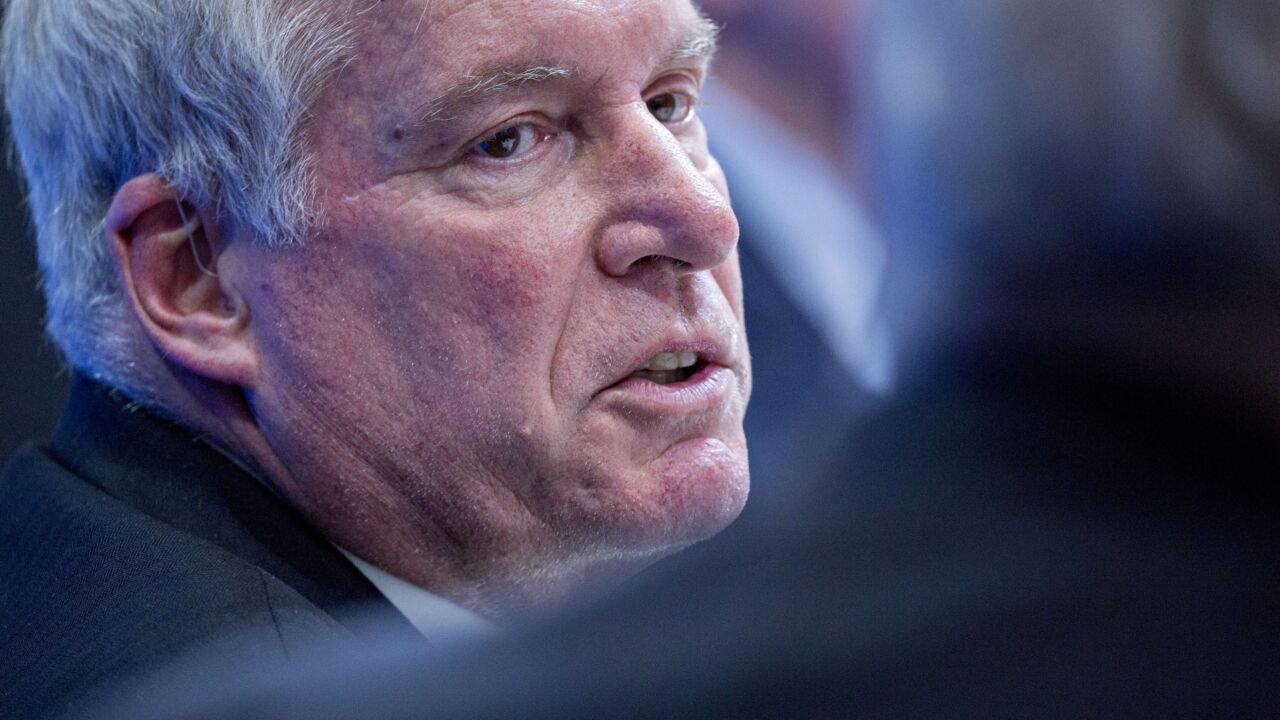
-
Federal Reserve Chairman Jerome Powell said about 300 lenders have signed on to the program and that the central bank is committed to making adjustments that could attract more borrowers.
June 30
-
The lawmakers argued in a letter to the Federal Reserve that suspending dividend payouts would be the "prudent course of action," allowing banks to build their capital cushions and continue lending during the coronavirus pandemic.
June 24
-
Worried about a lack of demand and that some of their customers are ineligible, community banks are still on the fence about participating in the effort to back loans for businesses recovering from the pandemic crisis.
June 19
-
At a congressional hearing, Fed Chairman Jerome Powell discussed steps to get the flow of coins to financial institutions back to pre-pandemic levels, as well as ways to ease other industry burdens.
June 17
-
The Fed chairman updated senators about the agency's new credit facility for midsize firms struggling in the pandemic. He also left open the possibility of additional stress tests to gauge the industry’s coronavirus response.
June 16
-
Fed Chair Jerome Powell will address lawmakers twice this week while the Supreme Court could come out with a long-awaited ruling on the Consumer Financial Protection Bureau.
June 15
-
The central bank is only now nearing the launch of the credit facilities after the effort was announced in April. But Chairman Jerome Powell said loans have been available through other means.
June 10!["Lots and lots of companies are getting financed, the banks are lending, the markets are open [and] you have a much easier lending climate certainly than we had in February and March,” said Fed Chairman Jerome Powell.](https://arizent.brightspotcdn.com/dims4/default/fbc1bc2/2147483647/strip/true/crop/5000x2813+0+260/resize/1280x720!/quality/90/?url=https%3A%2F%2Fsource-media-brightspot.s3.us-east-1.amazonaws.com%2F83%2F6e%2F85f1644b4882ba60928b3af2d61b%2Fpowell-jerome-bl-061020.jpg)
-
The central bank will increase support for credit issued through the Main Street Lending Program while providing midsize firms with more flexibility on the amounts they receive.
June 8
-
Chairman Jerome Powell said the Federal Reserve's actions during the coronavirus outbreak have been aimed squarely at helping U.S. workers, not Wall Street or wealthier Americans. He also said Friday that a new lending program geared toward middle-market firms is "days away" from getting up and running.
May 29
-
Payouts continue to be relatively generous, but that could change if the Federal Reserve demands banks bolster capital or the economy worsens.
 May 28

![“Much of the increase [in loans] has occurred recently, and I expect we will continue to see more activity as more firms are impacted by the pandemic,” said Boston Fed President Rosengren.](https://arizent.brightspotcdn.com/dims4/default/08db39a/2147483647/strip/true/crop/4000x2250+0+208/resize/1440x810!/format/webp/quality/90/?url=https%3A%2F%2Fsource-media-brightspot.s3.us-east-1.amazonaws.com%2F31%2F24%2F6942fc3a4ec4920c1f2aac8c5926%2Frosengren-eric-bl-081220.jpg)


![“The urgency with which the emergency [stimulus] payments were spent underscores the importance of rapid access to funds for many households and businesses that face cash flow constraints,” said Federal Reserve Gov. Lael Brainard.](https://arizent.brightspotcdn.com/dims4/default/13d678e/2147483647/strip/true/crop/3998x2249+0+209/resize/1440x810!/format/webp/quality/90/?url=https%3A%2F%2Fsource-media-brightspot.s3.us-east-1.amazonaws.com%2F90%2F99%2F26dab0f84aad919e2f91c299ab1b%2Fbrainard-lael-bl-080620.jpg)


!["Lots and lots of companies are getting financed, the banks are lending, the markets are open [and] you have a much easier lending climate certainly than we had in February and March,” said Fed Chairman Jerome Powell.](https://arizent.brightspotcdn.com/dims4/default/2cd8a91/2147483647/strip/true/crop/5000x2813+0+260/resize/1440x810!/format/webp/quality/90/?url=https%3A%2F%2Fsource-media-brightspot.s3.us-east-1.amazonaws.com%2F83%2F6e%2F85f1644b4882ba60928b3af2d61b%2Fpowell-jerome-bl-061020.jpg)


