
Stablecoins
How are banks approaching dollar-backed digital assets (stablecoins)?
Stablecoins have moved from the edge of the
Banks are testing stablecoins for cross-border payments, liquidity management, and digital wallets. Some are also exploring how stablecoins can support interbank transactions or be issued directly by regulated institutions. As the landscape takes shape, stablecoins are starting to look less like an experiment and more like infrastructure.
-
New policies in China and Hong Kong may be a way to clear the path for those issuers that wish to launch legally compliant and responsible token sales, writes Joshua Ashley Klayman, an attorney at Morrison Foerster.
September 25 Morrison Foerster
 -
Amid continuing predictions about the demise of conventional money management, Fidelity's Abigail Johnson is making adjustments to keep the business thriving and prove the doomsayers wrong.
 September 25
-
China’s crackdown on cryptocurrency exchanges raises questions about the future of digital asset innovation, a movement that some bankers view as a threat and others embrace as a boon to payments, P-to-P lending and other activities.
September 20
-
SBI Ripple Asia has formed a partnership with Dayli Intelligence to build a presence across Asia.
 September 19
-
With the high-performance and capabilities AI provides, this technology will serve as one of the most valued assets in the future, writes Arushi Srivastava, senior director of public sector for NTT Data Services.
September 15 NTT Data Services -
Blockchain is already taking a bite out of the fees traditional financial institutions extract from cross-border transactions by providing a workaround that avoids third parties.
 September 14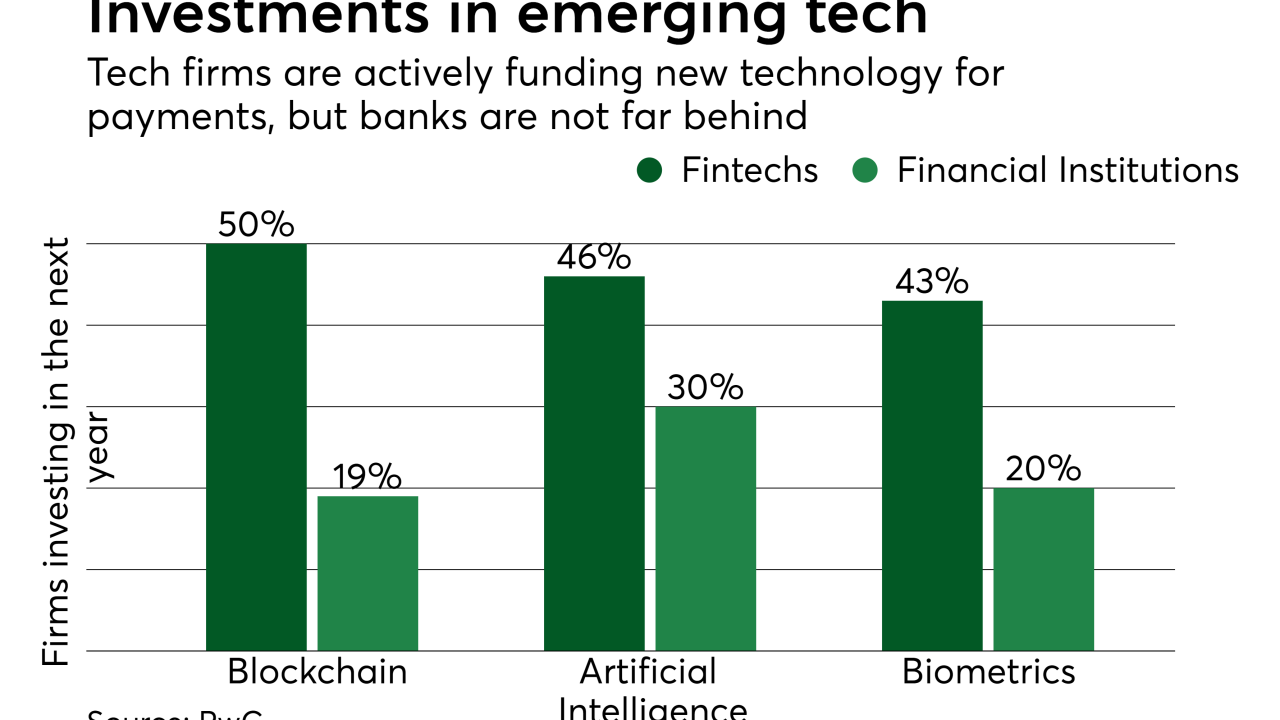
-
Security professionals have long argued against the use of static identifiers like passwords and Social Security numbers, while consumers have long questioned why a handful of bureaus can claim to be the ultimate judges of their identities.
September 14
-
The recent events of Charlottesville, Va., have exposed the dark underbelly of hate groups and their media channels, and raised fresh questions about how they get funding.
September 13
-
The legislation introduced by Reps. Jared Polis, D-Colo., and David Schweikert, R-Ariz., would allow cryptocurrency users to make transactions of up to $600 without paying taxes.
September 7
-
China's Metaverse Foundation collaborated with Russian crypto investment bank CyberTrust to create the Cryptocurrency Fund to support ICO projects from China and Russia through KICKICO's crypto crowdfunding platform.
September 6


The first three months of the year coincide with the start of President Donald Trump's second term in office. Investors are likely to be more interested in banks' outlooks amid swings in tariff policy than the first-quarter results.


Frequently Asked Questions:
How are banks approaching dollar-backed digital assets (stablecoins)?
Stablecoins have moved from the edge of the crypto, world to the center of policy and banking conversations. As regulators and banks weigh their role in payments, settlement, and reserves, this page follows the developments — from early pilots to proposed legislation.
Banks are testing stablecoins for cross-border payments, liquidity management, and digital wallets. Some are also exploring how stablecoins can support interbank transactions or be issued directly by regulated institutions. As the landscape takes shape, stablecoins are starting to look less like an experiment and more like infrastructure.
Why are banks paying attention to stablecoins?
Stablecoins are increasingly viewed as a potential upgrade to legacy payments systems. Banks are evaluating them for settlement, remittances, cross-border transactions, and tokenized deposit models.Are banks issuing their own stablecoins?
Some are exploring the option. Institutions like JPMorgan (with JPM Coin) and new entrants like PayPal are piloting bank-issued stablecoins, while others are watching regulatory developments before moving forward.How do stablecoins impact compliance and risk?
Issues include KYC/AML enforcement, cybersecurity, operational risk, and how reserve assets are held and reported. Banks exploring stablecoin activity must weigh both technological benefits and regulatory scrutiny.How are regulators responding to stablecoin innovation?
Congress is debating stablecoin-specific bills focused on reserve backing, issuer licensing, and oversight. The Federal Reserve, OCC, and state regulators are also shaping how bank involvement in stablecoin activity is supervised.How are banks using stablecoin?
Banks are using stablecoins to speed up cross-border payments, manage liquidity across global branches in real time, and test new forms of settlement between institutions. Some are integrating stablecoins into retail-facing digital wallets, while others are exploring interbank networks built on tokenized payments. These efforts are less about crypto speculation and more about making money move faster, with greater transparency and fewer intermediaries.- Real-time cross-border payments
- Internal liquidity management
- Retail-facing digital wallets
- Interbank tokenized payment networks
Top banks investing in stablecoin
List of institutions with greatest investment in stablecoin:- JPMorgan Chase – JPM Coin
- Custodia Bank – Avit Tokens
- Citigroup - Citi Token Services
- Societe Generale - USD CoinVertible
- Bank of America - Name yet to be released
- Fifth Third - Name yet to be released
- U.S. Bancorp - Name yet to be released