-
-
A second lawsuit challenging the Federal Reserve's debit interchange fee regime is set to be heard in the U.S. Court of Appeals for the 6th Circuit in October. JPMorganChase, Bank of America and Wells Fargo — as the largest debit issuers by purchase volume — are most at risk to see a dramatic cut in interchange revenue.
 August 26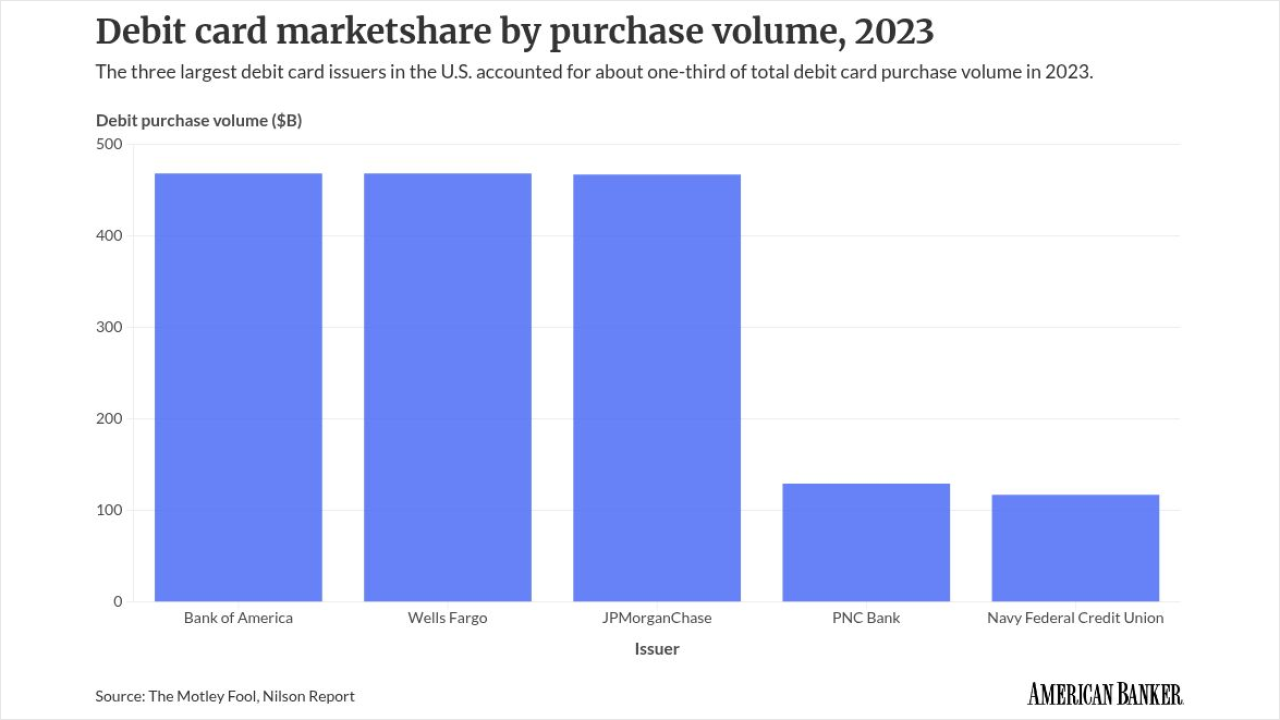
-
The U.S. Court of Appeals for the 8th Circuit is set to decide whether a lower court's decision that found the Federal Reserve mispriced debit interchange limits in the Durbin Act stands. Analysts say the battle will pressure banks toward faster payment options.
August 21
-
-
Some of the country's largest banks are reportedly considering buying a Fiserv-owned debit card network as a workaround to interchange caps instituted by the Durbin Amendment. It's an idea that looks good on paper, but could be harder to actually implement.
July 9
-
As JPMorganChase, Wells Fargo and others chase a potential $15 billion deal to buy Fiserv's Star network, experts say the growth of AI-powered transactions and competition among bank technology firms will make debit routing a hot commodity, portending more M&A and placing pressure on traditional card networks.
 July 7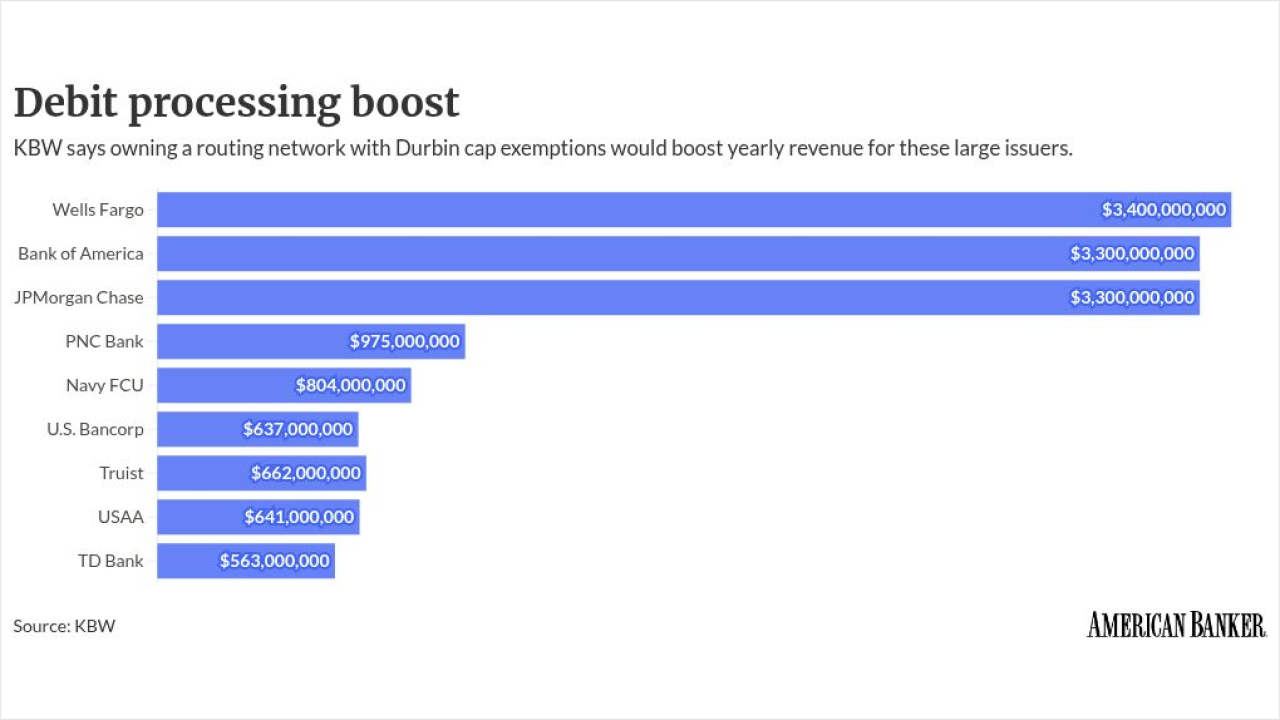
-
-
A New Jersey courier scam highlights the severe liability risks consumers face when using debit cards compared to credit cards.
 January 20
-
Airlines and hotel chains are taking advantage of the banking-as-a-service model and favorable debit interchange regulations offered to bank issuers with under $10 billion in assets to bring debit card rewards back to market after they all but disappeared following the so-called Durbin Amendment.
November 13
-
A recent court ruling found that the Federal Reserve had grossly overstepped in its implementation of the Durbin Amendment. The resulting changes to interchange fees will dramatically shift the debit card landscape.
September 10
-
The digital bank had previously notified about 1,000 business customers that they would lose access to their debit cards for a week, amid a systems update.
 July 10
-
The Swedish buy now/pay later provider and the San Jose, California-based payments system separately launched payment cards in an effort to bring their digital finance offerings to brick-and-mortar stores and compete with established credit card issuers.
June 3
-
The payments fintech is partnering with credit unions such as Michigan State Federal Credit Union to offer cash-back rewards on debit transactions using account-to-account payment schemes.
June 3
-
The Consumer Financial Protection Bureau had accused the Dallas bank of "deliberately disconnecting 24 million customer service calls" among other "unfair" acts. But the motion to dismiss allows the CFPB to refile the case again.
 April 11
-
The buy now/pay later company made a deal with Stride Bank to add banking-as-a-service heft as Affirm Card usage soars and Evolve grapples with defections.
April 1
-
While debit cards are less profitable, payment experts say they're still an important way to build relationships with consumers.
March 31 -
FIS' debit-processing bank clients will soon be able to integrate Affirm's pay-over-time products into existing digital banking infrastructure. For Affirm, it means even more potential BNPL transactions.
February 12
-
Credit Union Service Organizations such as Prizeout, have seen increased interest as credit unions get on board with automation.
November 13
-
Westpac, Capital One and JPMorgan Chase are offering savings accounts and debit cards to children below 10, using financial literacy to get an edge in building consumer relationships.
August 12
-
GLS had already stopped issuing first-use plastic as of 2018, but it wasn't enough for the eco-minded German bank. Fake plastic still looks and feels like plastic.
 April 29


