
-
The Community Home Lenders Association sent a letter to the Senate Banking Committee on Wednesday laying out its priorities for GSE reform.
January 24
-
Supporters of an unreleased bill to revamp the housing finance system say the plan strikes a middle ground that can gain support from both sides of the aisle.
January 24
-
Here's a look at what happens at five federal agencies that support the mortgage industry during a government shutdown.
January 19
-
Senate negotiators are working on a bill that would place Fannie Mae and Freddie Mac into receivership and replace them with multiple mortgage guarantors, according to sources.
January 18
-
FHFA Director Mel Watt said Fannie Mae and Freddie Mac should be reincorporated as private entities and the government must provide an explicit guarantee for catastrophic losses in the secondary mortgage market.
January 17
-
Cryptocurrencies continue to dominate much of the news, with a warning on bitcoin taking the top spot and a story about Ripple's partnership with MoneyGram doing well. Housing finance reform, Wells Fargo and the CFPB also featured.
January 12
-
Housing finance reform proposals could make it challenging for community banks and credit unions to serve rural mortgage markets, according to a report issued Wednesday by Brookings and the Center for Responsible Lending.
January 10 -
Outstandings top 2008 high mark, prompting some concerns; big banks are expected to take $31 billion in writeoffs from fourth quarter earnings due to tax reform.
January 10
-
The Senate Banking Committee is expected soon to release a bipartisan bill that would significantly reshape the housing finance market, but key issues remain unresolved.
January 8
-
Fannie Mae's serious delinquency rate climbed to a high not seen since March 2017, but remained lower than it was 12 months prior.
January 2
-
The announcement Thursday that Treasury Secretary Steven Mnuchin and Federal Housing Finance Agency Director Mel Watt agreed to let Fannie Mae and Freddie Mac each build a $3 billion capital buffer avoided a potential crisis.
December 21
-
Fannie Mae and Freddie Mac will be allowed to build capital buffers to protect against losses under an agreement between the Treasury Department and the Federal Housing Finance Agency announced on Thursday.
December 21
-
The two government-sponsored enterprises have relied on the “classic” FICO credit scoring model for the past 12 years. But the Federal Housing Finance Agency is weighing whether the GSEs should upgrade to more recent scoring alternatives.
December 20
-
For the second week in a row, the CFPB's leadership shakeout dominated readers' attention, while a regional banker discussed efforts to fight hacking and the impact of the tax cuts, and bitcoin's price soared.
December 8
-
Until recently, there was a consensus among policymakers that Fannie Mae and Freddie Mac needed to be eliminated. That just changed. Here's why.
December 8
-
Farmer Mac has terminated President and CEO Timothy Buzby for violating company policies not related to its financial and business performance.
December 7
-
House Financial Services Committee Jeb Hensarling shifted tactics on housing finance reform Wednesday, acknowledging that a bill he’s pushed for years to virtually eliminate the government’s role in the mortgage market lacks the support to become law.
December 6
-
Cutting payments helps stave off default, but principal reduction on underwater loans and lower consumer debt levels are less effective, according to JPMorgan Chase Institute's new study of post-crisis modifications.
December 5
-
Testing of the common securitization platform is taking longer than expected, but the Federal Housing Finance Agency said it won't delay the 2019 launch of Fannie Mae and Freddie Mac's new single "uniform mortgage-backed security."
December 4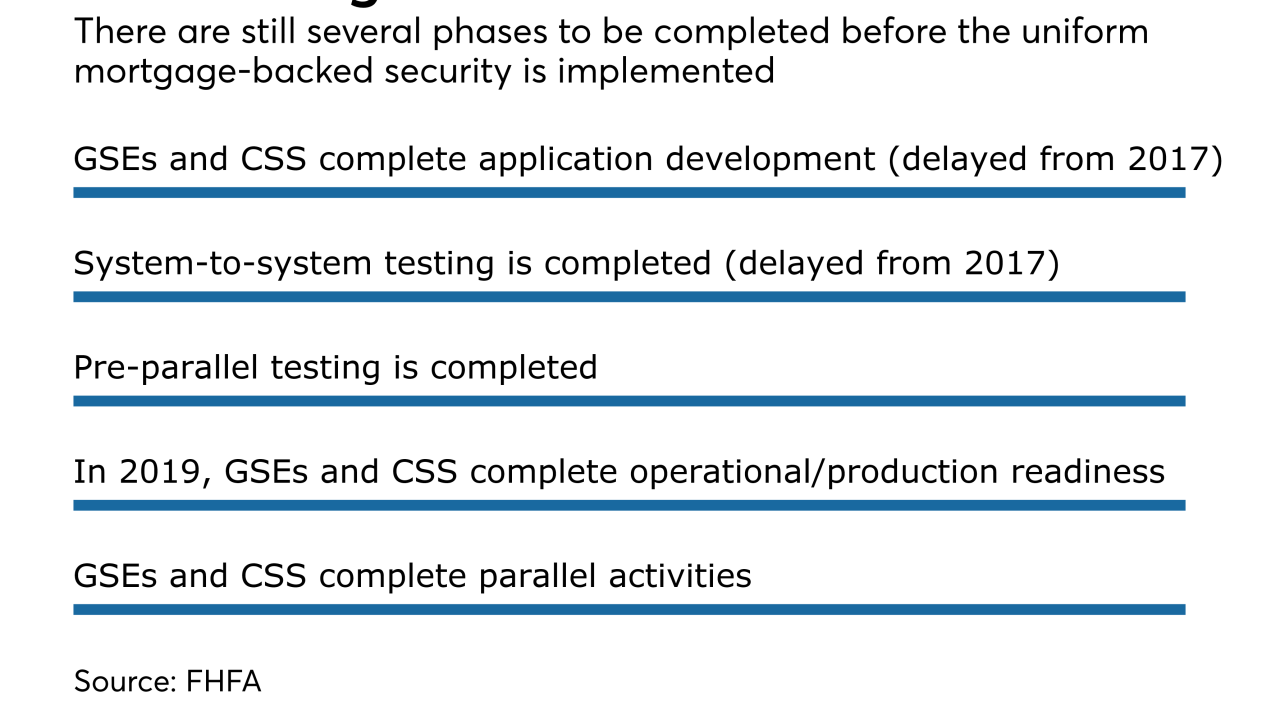
-
A provision in the original Senate tax reform bill would have required companies acquiring mortgage servicing rights to pay taxes upfront for their anticipated servicing income.
December 1


