-
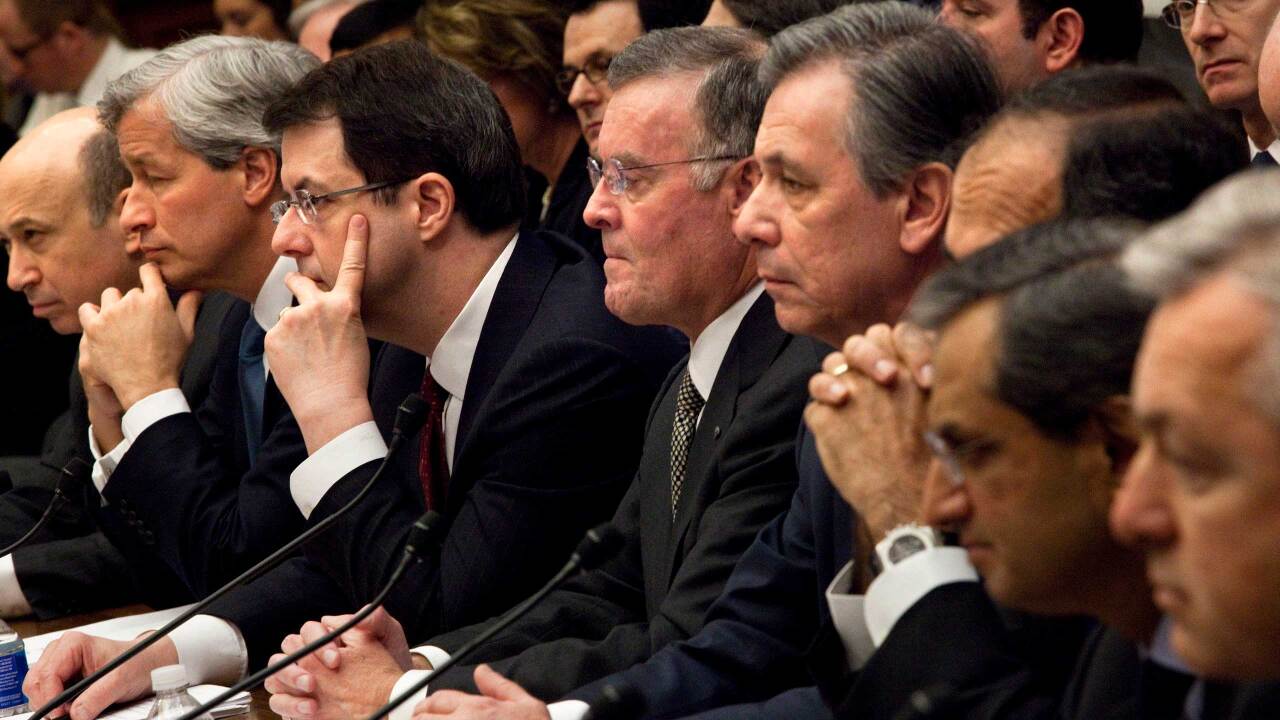
Beginning next year, banks will have to dramatically change the way they account for future credit losses, but experts disagree on the new rule's long-term impact.

-
Lending to companies with heavy debt loads is a growing business — one that many fear could lead to the next financial crisis.

-
Banks claim that regulators have been avoiding using a transparent public process to implement new regulations, opting instead to use informal guidance that has the impact of policy.
-
Stress tests have come a long way since first unveiled to shore up confidence in banks. But some critics fear that proposals to make the system more efficient would compromise its safety.

-
The U.S. still relies on antiquated payment processing technologies while other countries can process in real time. What's the holdup?

-
Branches are closing at the fastest pace in years, and keeping them relevant to customers is a problem banks are being forced to solve in ever more creative ways.

-
The biggest deal in more than a decade has sparked debate about the pressure for more bank consolidation and whether consumers will be hurt.
-
Presidential candidates aren't talking much about banking now, but that's likely to change as the Democratic primary heats up.

-
The Financial Stability Oversight Council first wanted to target individual nonbanks that are economically risky. Now it wants to target activities instead. Is that a good idea or a political ploy?

-
Changing demographics and cultural trends are making bank CEOs think beyond profitability and toward addressing what they stand for.

-
A rapidly changing workforce and the proliferation of public and shareholder activists have fundamentally reshaped the job of running a bank.

-
Most banks have an array of charitable endeavors designed to get workers involved. But the ones on our Best Banks list have built an emotional connection with employees

-
A multimillion-dollar deal between Chicago Mayor Rahm Emanuel and Stephen Calk was supposed to deliver 400 new jobs to the city. Here’s what really happened.

-
There are ways to fix vacant housing. So why can't we manage to do it?

-
Can community land trusts and Community Reinvestment Act reform fuel investment to stop urban blight?

-
The crisis in affordable housing has its roots in the high cost of building entry-level single-family homes. But why does it cost so much to build a house? And what did previous generations do to build affordable housing?

-
Small towns across the country struggle with vacant housing as much as cities, even though some of those places have plenty of jobs. Geography and a declining population are forcing many rural communities to make hard choices.

-
After blue collar jobs move out, crime often rushes in to take its place. That makes efforts to turn around housing that much harder.

-
Housing blight — concentrated areas of vacant properties — is harming communities across the country and posing a risk to the financial system. But governments seem powerless to turn it around. We're finding out why. A special 10-part podcast series by American Banker.

-
Ten years ago, it was a banking crisis, but it became a political one. That crisis never ended.