
-
Russia's invasion has disrupted life at Lithuanian startup Paysera, which has a dozen employees in Ukraine, including Yevhen Matasar, who fled from Kyiv to a nearby town where he still does some programming when he can. "This is a very difficult situation … it's helpful to be able to continue to work," Matasar said.
March 14
-
Best known as a maker of ATMs and point-of-sale devices, Diebold Nixdorf is launching a new cloud platform to support merchants and their customers as transactions become more hardware-agnostic.
March 11
-
Jamaica plans to give $16 of free money to the first 100,000 citizens who use its soon-to-be-launched Jam-Dex digital currency.
March 10
-
The bank's ongoing partnership with DailyPay complements services such as real-time billing and payments. This combination could help employers attract and retain employees amid the Great Resignation.
March 10
-
Germany has emerged as the main roadblock to broaden European Union sanctions against Russia by targeting the country’s biggest bank and its energy sector.
March 9
-
Early Warning Services, which operates the Zelle peer-to-peer payments network, is working to educate consumers about common scams, but it faces criticism over how its banks respond to victims.
March 9
-
Visa and Mastercard are set to cut interchange rates for some transactions, but merchants argue that they will still pay more overall and want Congress to put a stop to the card networks' plan.
March 8
-
Bank of America’s consumer clients made $294 billion of total payments last month, up 16% from a year earlier, as the U.S. economy continued its recovery from the coronavirus pandemic.
March 8
-
As Visa and Mastercard move swiftly to limit their business in Russia, their nascent rivals face a challenge to fill the gap.
March 8
-
U.S. payment giants like Visa, Mastercard, American Express and PayPal — along with smaller companies like Paysera in Lithuania — have blocked transactions or pulled out of Russia and Belarus in response to the invasion of Ukraine.
March 7
-
Sberbank said it’s looking at the possibility of issuing cards using the Russian payments system Mir and China’s UnionPay after Visa and Mastercard suspended operations following the invasion of Ukraine.
March 7
-
Block, the digital payments company run by Chief Executive Jack Dorsey, is under investigation by the Consumer Financial Protection Bureau and multiple state attorneys general in connection with its Cash App service.
March 7
-
Zeta Services, a banking and credit card technology unicorn, has raised $30 million from investors including Mastercard, and the two announced a five-year collaboration to help customers launch credit card services.
March 7 -
The companies' moves came a day after Visa and Mastercard said they were halting business in Russia because of its attack on Ukraine.
March 6
-
Russia reverberations, a rebranding, a resignation and more in banking news this week.
March 4
-
Sendi Young, the blockchain company's European managing director, discussed how a partnership with fintech Modulr supports its ongoing efforts to streamline money movement in a world where many payment rails predate the modern internet.
March 3
-
Visa has suspended access for certain clients as it works to comply with sanctions imposed after Russia’s invasion of Ukraine.
March 3
-
The Merchants Payments Coalition is appealing to lawmakers to reform credit card interchange rates as Visa and Mastercard prepare to increase some fees next month after a yearlong delay.
March 2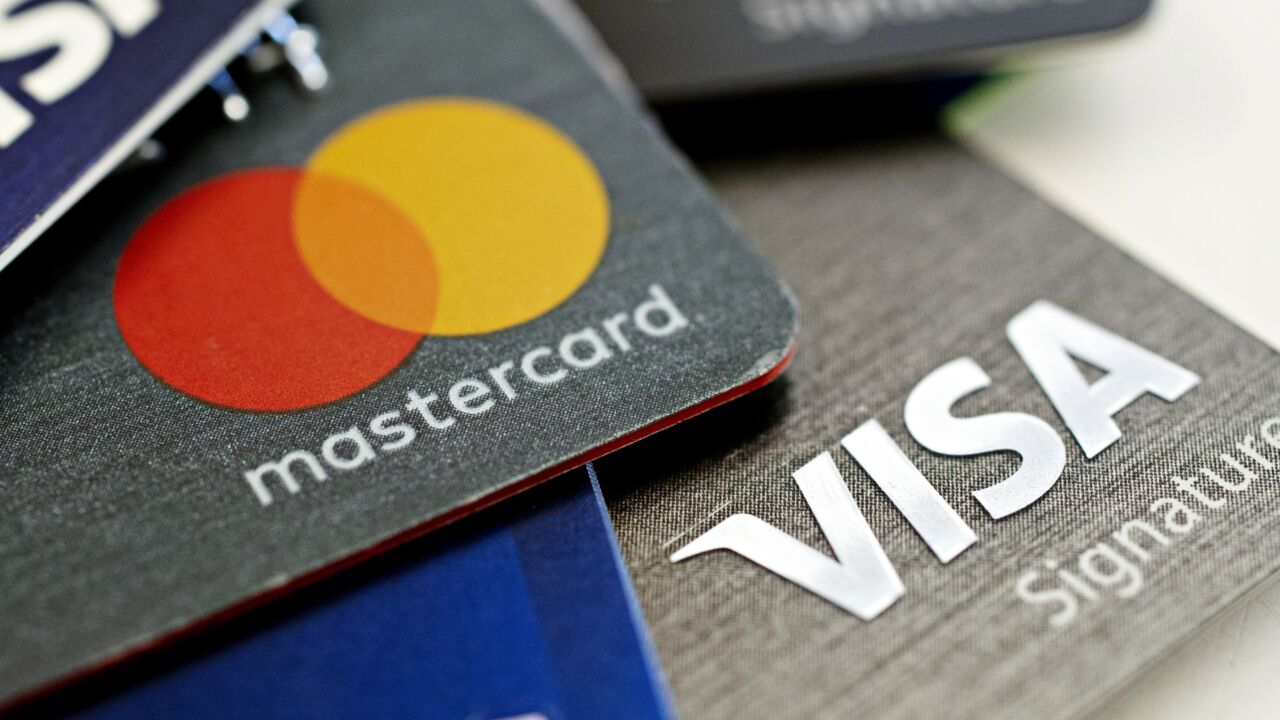
-
Mastercard said it got about 4% of its net revenues last year from business linked to Russia, as Western nations level sanctions against the country for its invasion of Ukraine.
March 2
-
The Federal Reserve Board is taking a fresh look at how financial firms get coveted access to the U.S. central bank’s payment system — a controversial question that’s weighing on President Biden’s pick to be Wall Street’s top bank regulator.
March 1


