
-
Long-time CEO grew M&T Bank into a $120 billion regional lender; Jim McCarthy, a high-profile manager, didn’t inform company about relationships.
December 18
-
The government-sponsored enterprises are at the heart of our housing finance problems, not the solutions.
December 15 American Action Forum
 -
For decades, Fannie Mae and Freddie Mac helped working-class Americans get mortgages. That essential and powerful role in the national economy is fading.
December 15 National Community Reinvestment Coalition
 -
Until recently, there was a consensus among policymakers that Fannie Mae and Freddie Mac needed to be eliminated. That just changed. Here's why.
December 8
-
House Financial Services Committee Jeb Hensarling shifted tactics on housing finance reform Wednesday, acknowledging that a bill he’s pushed for years to virtually eliminate the government’s role in the mortgage market lacks the support to become law.
December 6
-
Testing of the common securitization platform is taking longer than expected, but the Federal Housing Finance Agency said it won't delay the 2019 launch of Fannie Mae and Freddie Mac's new single "uniform mortgage-backed security."
December 4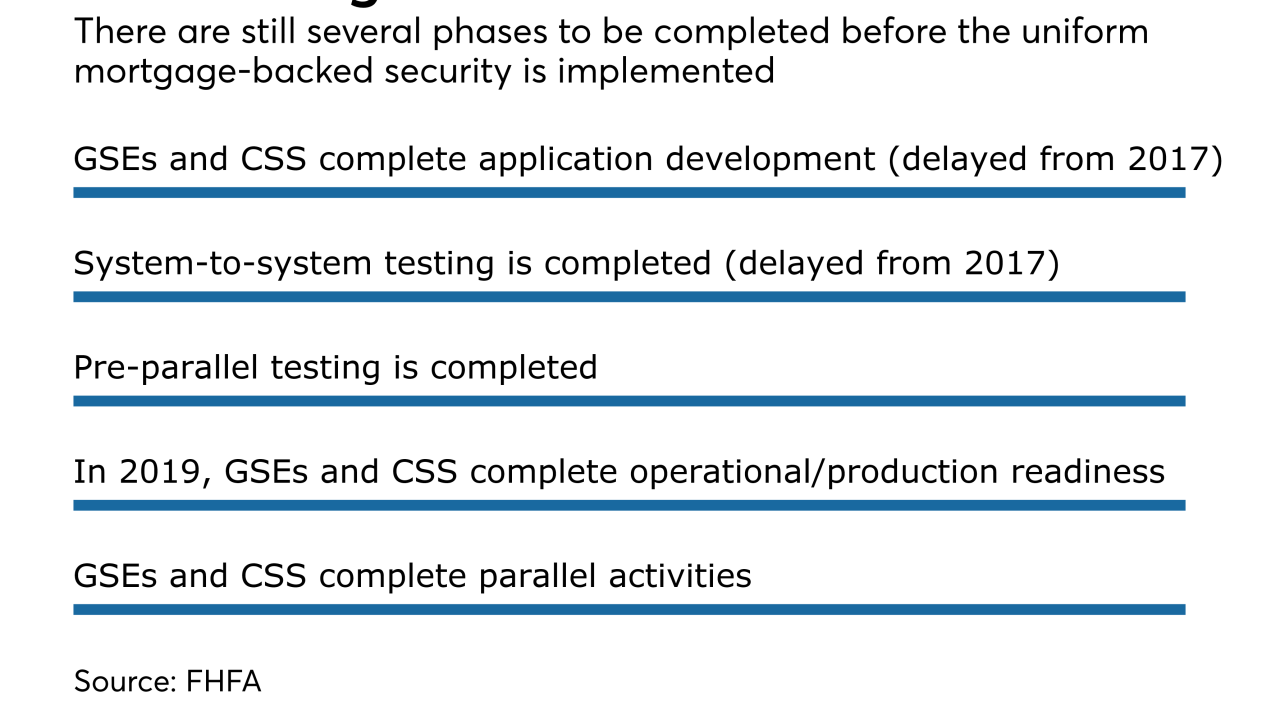
-
A provision in the original Senate tax reform bill would have required companies acquiring mortgage servicing rights to pay taxes upfront for their anticipated servicing income.
December 1
-
The financial services industry has cheered a proposed reduction in the corporate tax rate, but a lower rate could force Fannie Mae and Freddie Mac to write down assets, increasing the odds that the companies will need Treasury support.
November 29
-
Conforming loan limits for mortgages bought by Fannie Mae and Freddie Mac will increase for the second consecutive year in response to the rapid rise in home prices, the Federal Housing Finance Agency said.
November 28
-
The White House and congressional GOP leaders are eyeing a tight window between tax reform passage and the 2018 midterms to pass housing finance reform. And with key policymakers readying their exit, the effort could be the most concerted push yet.
November 17
-
Growth in loans with higher debt-to-income ratios is reviving focus on a regulatory exemption for Fannie Mae, Freddie Mac and other federal agencies that back mortgages.
November 3
-
The Federal Housing Finance Agency must set fees equal to the cost of capital that private banks hold against similar risk, not just the amount of capital that Fannie and Freddie think are right for themselves.
November 3
-
Mark Calabria, the chief economic adviser to Vice President Mike Pence, said the administration is focused for now on more pressing issues than GSE reform, including addressing housing damage from recent hurricanes.
November 1
-
A securities settlement, portfolio asset sales and greater interest among smaller lenders helped Freddie Mac compensate for potential losses from the catastrophic hurricane season.
October 31
-
In a moment of rare unity, the Independent Community Bankers of America and National Association of Federally-Insured Credit Unions sent a joint letter to FHFA arguing to stop the GSEs' profit sweep.
October 19
-
Fannie Mae and Freddie Mac were not affected by a hacking incident against the accounting giant Deloitte, the companies said Tuesday, after a British newspaper alleged a server containing emails from government agencies was compromised.
October 10 -
Though FHFA Director Mel Watt stopped short of saying he would break with a Treasury agreement that forces all profits of the GSEs to go to the government, he emphasized that it couldn’t continue indefinitely.
October 3 -
The week of Oct. 2 is shaping up to be a significant one for the financial services industry on Capitol Hill, as lawmakers grill the top executives of Equifax and Wells Fargo, as well as the top regulator of Fannie Mae and Freddie Mac.
September 29
-
Sen. Bob Corker has been a key voice in the housing finance reform debate. His departure at the end of next year puts a deadline of sorts on his efforts to unwind and replace Fannie Mae and Freddie Mac.
September 26
-
The gulf between those at the upper ends of the wealth ladder and lower-income Americans has worsened markedly since the financial crisis, despite the trillions of subsidies that taxpayers provide for housing.
August 21


