
Regulation and compliance
Regulation


-

A long-running conservative push to undercut federal regulatory authority could shake the foundations of U.S. banking law, for better and worse.
June 12 -

Fintech partnerships and new legislation could help make marijuana more viable and less risky for banks.
June 10 -

With the industry facing increasing pressure around climate disclosures, a new report highlights the challenges in measuring financed emissions as well as the potential payoff for banks that choose to be proactive.
June 9 -

A new study has found that Black and Hispanic borrowers are denied conventional mortgages at higher rates than white applicants and pay up to $2,000 more to refinance.
June 9 -

The Consumer Financial Protection Bureau ended the first “no action letter” agreement with a fintech that had provided immunity from regulatory actions.
June 8 -

The Federal Housing Finance Agency and the Consumer Financial Protection Bureau want financial institutions to provide more outreach to non-English speakers, a move that could foreshadow multilingual disclosure mandates.
June 8 -

The creation of a U.S. dollar central bank digital currency is an existential threat to the banking industry and needs to be treated as such.
June 8 -

Lauded as the first step toward comprehensive regulation of digital assets, the package hits at the heart of a critical debate between banks and fintechs: Who gets a Fed account?
June 7 -

PayPal Holdings will let users transfer certain cryptocurrencies to other customers, exchanges and external wallets, a new service that’s part of the company’s effort to boost use of its app.
June 7 -
The supervisory checkups examine the capital resiliency of 34 large banks.
June 6 -

A report from the Roosevelt Institute published Monday urges Biden’s bank regulators to address climate risks through supervisory guidance, a move unlikely to garner support from banks.
June 6 -

For all of the regulators’ progress over the years, many are still relying on an internal technology framework that was built for 1992, not 2022.
June 6 -

President Biden is considering forgiving $10,000 in student loans per borrower, but eliminating interest on the debt could be a more effective way to reduce the financial burden, according to experts.
June 3 -

Acting Comptroller of the Currency Michael Hsu lauded the agencies' unified Community Reinvestment Act proposal's focus on climate policies, while Federal Reserve Vice Chair Lael Brainard trumpeted the data-driven aspects of the proposal.
June 3 -

Risky loan applications had been on the rise for more than a year, according to the analytics firm CoreLogic. Now that activity is slowing down, lenders face a higher risk of fraud, and many could be ill-equipped to handle it.
June 3 -
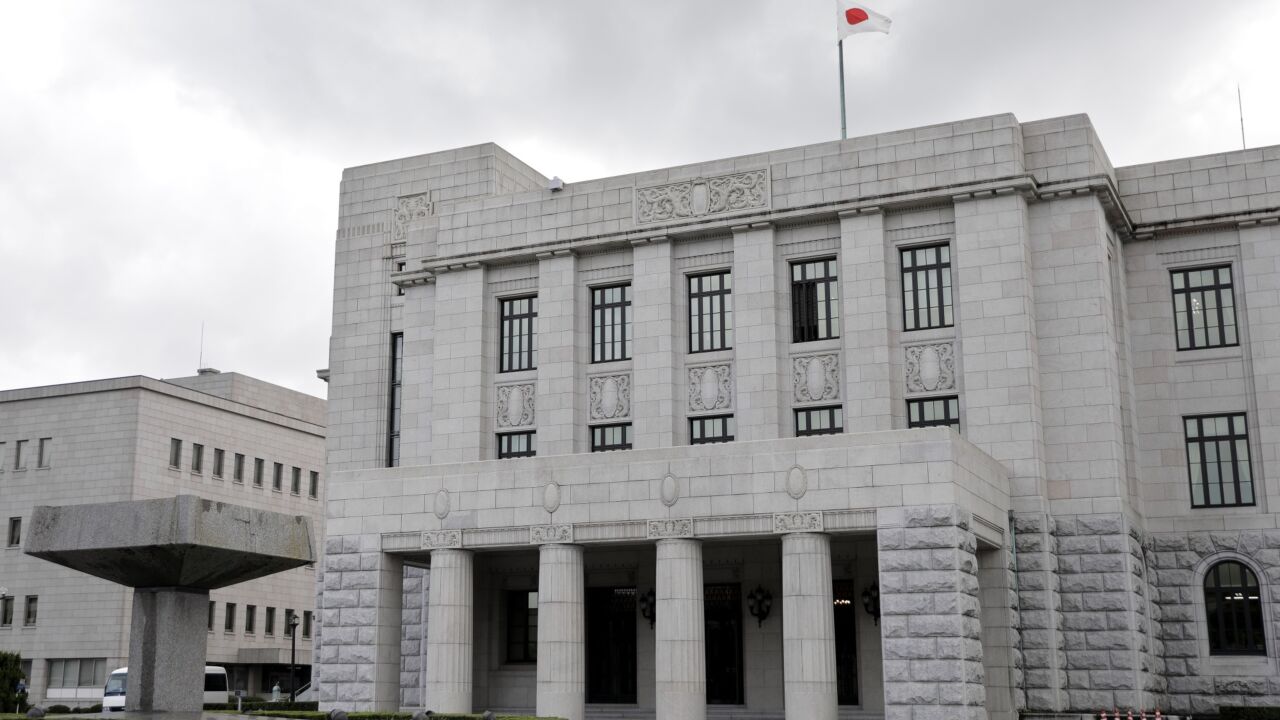
Japan became one of the first major economies to introduce a legal framework around stablecoins, the cryptocurrencies thrust into the global spotlight by last month’s collapse of the TerraUSD token.
June 3 -

To create sensible rules around decentralized finance, regulators have to have an open discussion with businesses in the industry. To do that, they must create a path for collaboration.
June 3 -

The legislation blocked by John Bel Edwards, a Democrat, would have allowed consumer loans of up to $1,500 with triple-digit interest rates. Edwards wrote that the measure does not protect the public from “predatory lending practices.”
June 1 -

The president invited Jerome Powell to the White House Tuesday and voiced his support of the Federal Reserve’s independence in the fight against inflation. Some see the move as Biden ducking blame for rising prices.
June 1 -

The Federal Reserve is about to start shrinking its $8.9 trillion balance sheet, deploying a second tool along side higher interest rates to curb inflation, though officials don’t know just how effective it will be.
June 1


