-
Regulators announced Monday they would extend the conformance period by two years under the Volcker Rule for banks with legacy collateralized loan obligations, but at least one lawmaker is already saying the agencies should do more.
 April 7
 -
The controversial industry will soon be regulated for the first time on a nationwide basis. Heres a guide to what's coming.
 April 4
 -
Rep. Scott Garrett, R-N.J., a senior member of the House Financial Services Committee, introduced a bill Thursday designed to increase transparency at the Financial Stability Oversight Council.
April 3 -
Drew Breakspear spent decades as a banker before becoming the top industry enforcer in Florida. He is empathetic to banks, realizes the growing importance of virtual currencies like Bitcoin and believes more bankers should serve on the Fed's Board of Governors.
 April 2
 -
Former Rep. Barney Frank said regulators are going against congressional intent in their latest risk retention proposal, while former Sen. Chris Dodd acknowledged that their law would need some changes to make it work as envisioned.
 April 1
 -
The Consumer Financial Protection Bureau has employed unusual practices in its efforts to guide the public's perception of it. They've included funding the trip of a consumer advocate who posed a question from the audience of one of its events and regularly releasing information at midnight to prevent critics from weighing in on the first wave of media coverage.
April 1 -
Despite efforts to reform the global banking system, the perception that the world's largest financial institutions are "too big to fail" has yet to be eliminated, according to a report issued Monday by the International Monetary Fund.
 March 31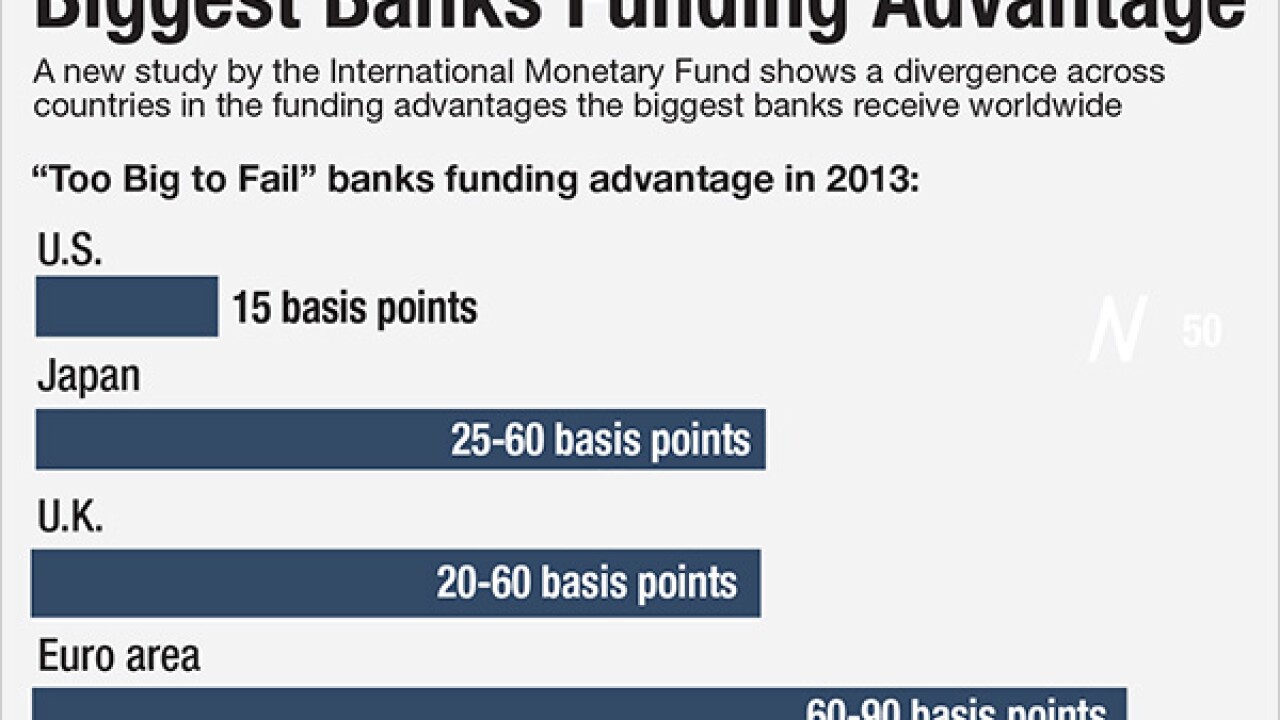
-
To make the process fairer to small banks, regulators should issue community bank summaries during the proposal stage, not when releasing final rules. They also should do more outreach to small banks and extend comment periods on major rules, writes the ABA's Hugh Carney.
March 31
-
The Federal Reserve Board's stress tests left a fair amount of blood on the floor for banks. Twenty-five of 30 passed, but the central bank rejected the capital plans of four banks based on qualitative factors, rather than straight-up numbers. Only one bank failed both rounds of stress tests based on its numerical score. Following are the banks that fared poorly:
March 27
-
An obscure bill in the House would go a long way to protect taxpayers by giving megabanks an incentive to deleverage and shrink. So why has it gone nowhere?
March 27 -
After the stress tests, come the tears and the gloating.
 March 26
 -
A collective of business trade groups on Wednesday warned of potential risks for end users of margin requirements mandated under the Dodd-Frank Act.
March 26 -
The Federal Reserve Board denied the capital plans of Citigroup, HSBC, RBS Citizens, Santander and Zions in its second round of stress tests this year.
March 26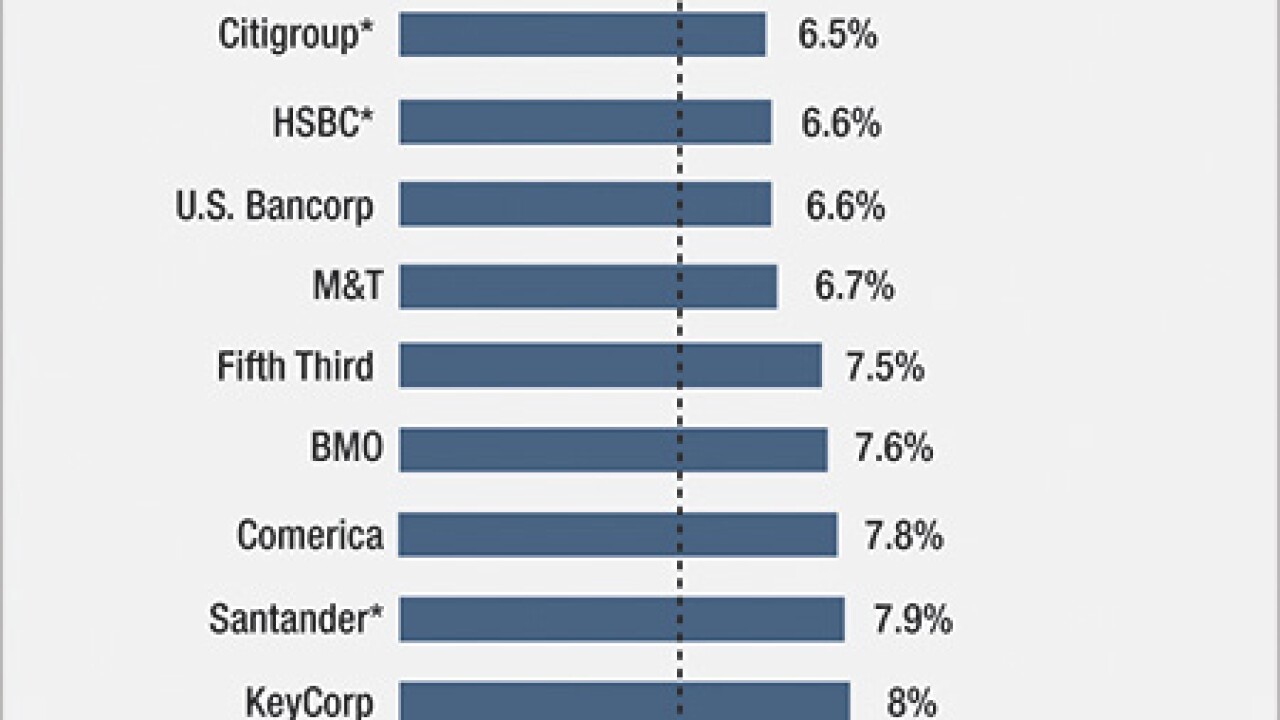
-
The top five U.S. financial institutions benefited from a funding advantage in key markets prior to the enactment of regulatory reform, according to a study released Tuesday by economists at the Federal Reserve Bank of New York.
March 25 -
The agency released new research that suggests its likely to restrict the frequency with which consumers can take out payday loans.
March 25 -
Federal banking regulators issued a proposal that would establish standards for states that register and track appraisal management companies.
 March 24
 -
The Consumer Financial Protection Bureau released a report Friday to employees detailing its diversity statistics and the racial disparities in performance evaluations reported two weeks ago by American Banker.
March 21 -
The Federal Reserve Board revised its findings to the closely watched Dodd-Frank Act stress tests on Friday, citing inconsistencies in the treatment of some figures during its calculations.
March 21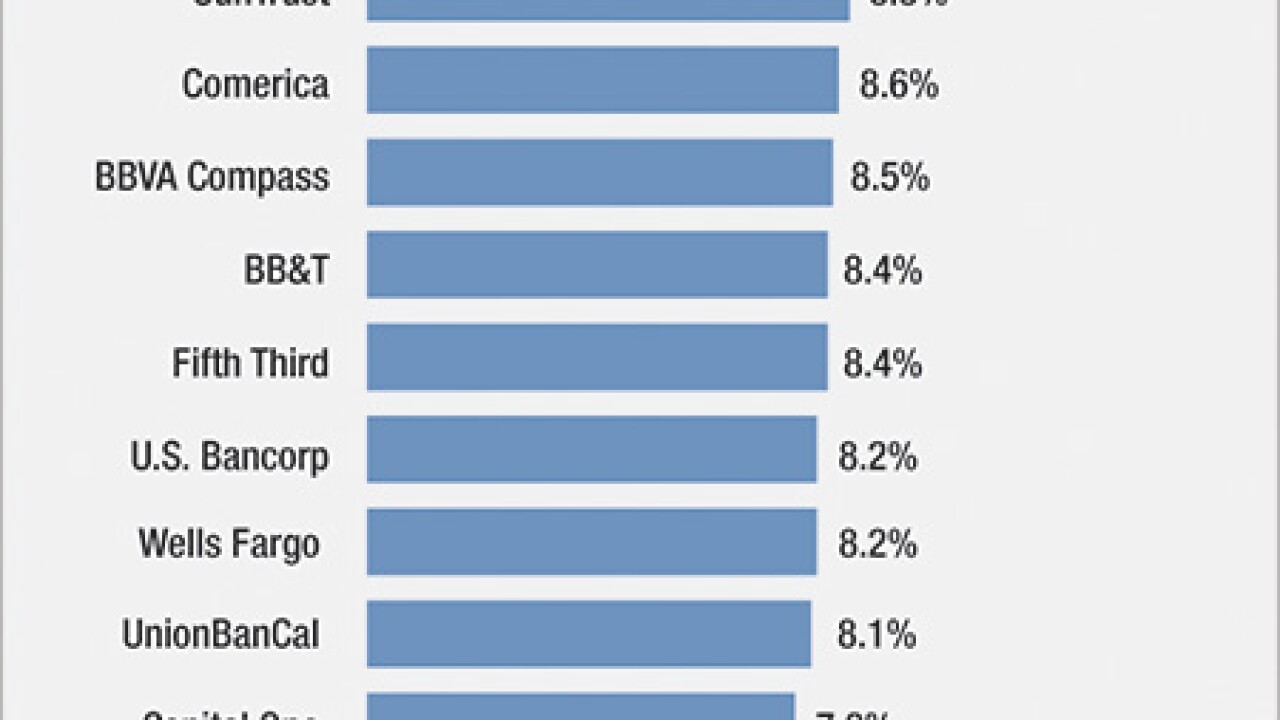
-
The Office of the Comptroller of the Currency recently freed 11 banks from regulatory orders.
 March 21
 -
A federal appeals court panel ruled Friday that the existing restrictions on debit card swipe fees should largely stand, turning back a challenge by retailers who argued that banks are still earning too much money from the fees.
March 21


