
Federal Reserve
Federal Reserve


-

There are several forbearance measures the agencies can take now to keep banks from failing in a downturn triggered by the coronavirus.
March 17 -

The agencies were up and running Monday but have taken steps to allow employees to work from home.
March 16 -

Bankers say they understand the need for an extraordinary government response to the coronavirus outbreak, but worry that even slashing interest rates won’t stimulate demand.
March 16 -

The Fed cuts rates near zero and will buy $700 billion in Treasuries and mortgage bonds; big banks put off stock buybacks until July at the earliest.
March 16 -

The actions include cutting the federal funds rate to between 0% and 0.25% and other steps to ease economic stress from the spread of the coronavirus.
March 15 -
The actions include cutting the federal funds rate to between 0% and 0.25% and other steps to ease economic stress from the spread of the coronavirus.
March 15 -

The biggest U.S. banks are once again preparing to show how they'll be able to withstand a severe economic shock in a hypothetical doomsday scenario, and they're eager to get on with it as a real one unfolds.
March 13 -

The central bank will inject $1.5 trillion into the money market, including buying more longer-term bonds; JPMorgan says its CEO “is doing very well” as he recovers from heart surgery.
March 13 -

The central bank has been under increasing pressure to act as investors have been losing faith in the Trump administration's efforts to contain the economic fallout.
March 12 -

The central bank is trying to get ahead of possible funding disruptions caused by the coronavirus. Policymakers want to avert a repeat of September, when short-term borrowing costs spiked amid imbalances in supply and demand for cash.
March 11 -

The Fed can take steps now to speed up existing networks.
March 10 -
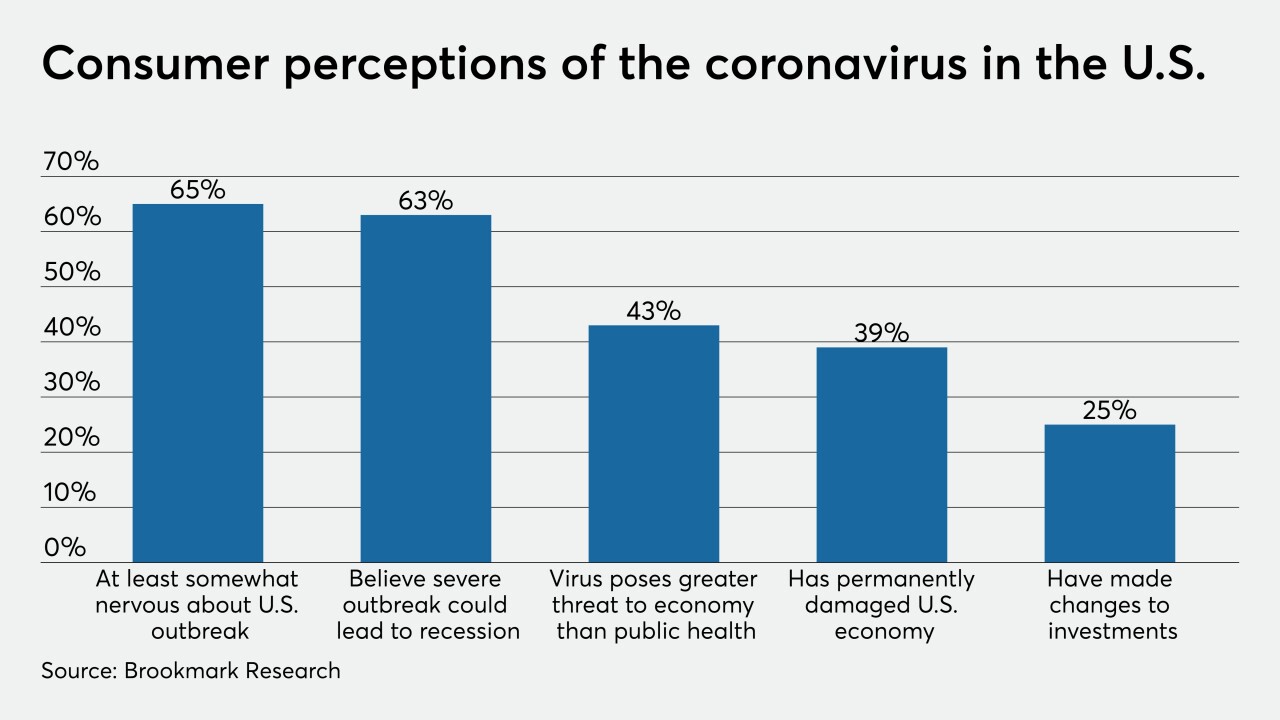
There may only be so much institutions can do if the outbreak affects borrowers' ability to repay credit.
March 10 -

State and federal officials committed to providing “appropriate regulatory assistance” to banks whose customers may be hurt by the coronavirus outbreak and said prudent measures would not be subject to criticism by examiners.
March 9 -
Sen. Mark Warner led a group of Democratic senators in calling on bank, credit union and GSE regulators to give detailed instructions on helping consumer and commercial borrowers hurt by the COVID-19 outbreak.
March 9 -

The agencies recommend steps financial institutions should take to proactively prevent disruption of operations, minimize contact between staff and consumers, and plan for how affected employees reenter the workplace, among other things.
March 9 -
The agencies recommend steps banks should take to proactively prevent disruption of operations, minimize contact between staff and customers, and plan for how affected employees reenter the workplace, among other things.
March 6 -

The bank said it was Sloan's decision to retire, but a new report from House Democrats reveals that Fed and OCC officials made moves behind the scenes in 2018 and 2019 to pressure the bank's board to remove him.
March 5 -

The banking regulators have announced that they are postponing next week’s National Interagency Community Reinvestment Conference because of growing health concerns about the virus outbreak.
March 5 -

Compliance, risk management and staffing will likely come under added scrutiny as regulators lay out a framework for future fintech-bank mergers.
March 4 -

The rule establishes a measure of capital adequacy meant to simplify how banks are assessed in the Comprehensive Capital Analysis and Review program.
March 4


