
Stablecoins
How are banks approaching dollar-backed digital assets (stablecoins)?
Stablecoins have moved from the edge of the
Banks are testing stablecoins for cross-border payments, liquidity management, and digital wallets. Some are also exploring how stablecoins can support interbank transactions or be issued directly by regulated institutions. As the landscape takes shape, stablecoins are starting to look less like an experiment and more like infrastructure.
-
The new regulation in New Zealand shows other jurisdictions how best to address cryptocurrencies and their use in payments.
September 13 NEM Ventures
 -
The creator of the Zelle precursor clearXchange is heading a company building a blockchain-based international payment technology for banks.
 September 12
-
The Marshall Islands is proceeding with the creation of a blockchain-based national currency, the Marshallese sovereign or SOV, the country said.
September 12 -
This ruling by the New Zealand Government shows the jurisdiction’s versatility in broaching how best to address cryptocurrencies and the implementation of regulations around their use in payments, says NEM Ventures' Dave Hodgson.
September 12 NEM Ventures -
Mastercard and blockchain software provider R3 plan to test a new blockchain-enabled cross-border payments service to connect global faster payments rails supported by a Mastercard-operated clearing and settlement network.
 September 11
-
Swiss financial regulator Finma said Libra would need a payment system license and would be subject to additional rules to take “bank-like” risks into account. The “highest international anti-money laundering standards” would also need to be applied, it said in a statement on Wednesday.
September 11 -
Next up for BB&T-SunTrust: deciding where to unload branches; how the Trump administration would reform Fannie Mae, Freddie Mac; why the CFPB's payday rule is in the hands of a Texas judge; and more from this week's most-read stories.
September 6
-
The patent office is getting buried in applications for distributed ledger systems, a mountain of documents that chart a clear course toward making static identity and password protection irrelevant.
 September 6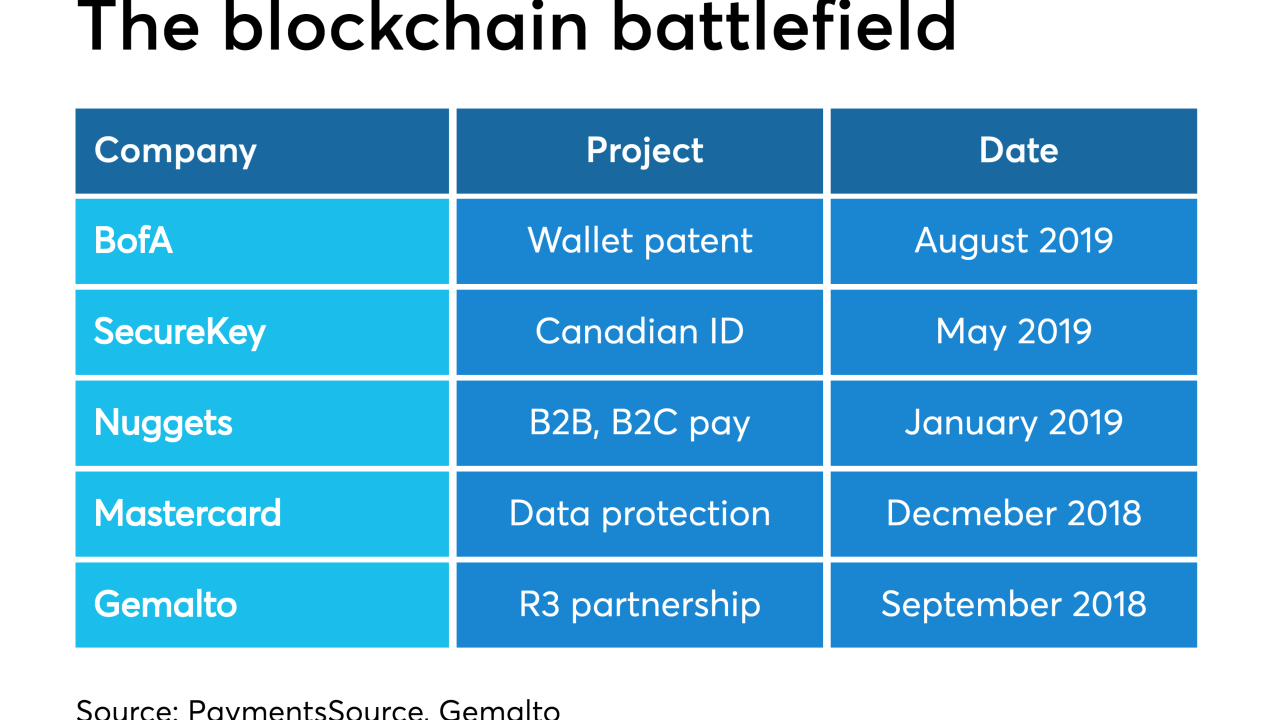
-
The company sees increasing consumer demand for cryptocurrency, especially in Asia, and gradual acceptance among financial institutions.
September 4
-
The European Central Bank’s key legal official Yves Mersch described Facebook Inc.’s plan for its Libra digital currency as “beguiling but treacherous,” in a defense of money issued by institutions such as his.
September 4


The first three months of the year coincide with the start of President Donald Trump's second term in office. Investors are likely to be more interested in banks' outlooks amid swings in tariff policy than the first-quarter results.


Frequently Asked Questions:
How are banks approaching dollar-backed digital assets (stablecoins)?
Stablecoins have moved from the edge of the crypto, world to the center of policy and banking conversations. As regulators and banks weigh their role in payments, settlement, and reserves, this page follows the developments — from early pilots to proposed legislation.
Banks are testing stablecoins for cross-border payments, liquidity management, and digital wallets. Some are also exploring how stablecoins can support interbank transactions or be issued directly by regulated institutions. As the landscape takes shape, stablecoins are starting to look less like an experiment and more like infrastructure.
Why are banks paying attention to stablecoins?
Stablecoins are increasingly viewed as a potential upgrade to legacy payments systems. Banks are evaluating them for settlement, remittances, cross-border transactions, and tokenized deposit models.Are banks issuing their own stablecoins?
Some are exploring the option. Institutions like JPMorgan (with JPM Coin) and new entrants like PayPal are piloting bank-issued stablecoins, while others are watching regulatory developments before moving forward.How do stablecoins impact compliance and risk?
Issues include KYC/AML enforcement, cybersecurity, operational risk, and how reserve assets are held and reported. Banks exploring stablecoin activity must weigh both technological benefits and regulatory scrutiny.How are regulators responding to stablecoin innovation?
Congress is debating stablecoin-specific bills focused on reserve backing, issuer licensing, and oversight. The Federal Reserve, OCC, and state regulators are also shaping how bank involvement in stablecoin activity is supervised.How are banks using stablecoin?
Banks are using stablecoins to speed up cross-border payments, manage liquidity across global branches in real time, and test new forms of settlement between institutions. Some are integrating stablecoins into retail-facing digital wallets, while others are exploring interbank networks built on tokenized payments. These efforts are less about crypto speculation and more about making money move faster, with greater transparency and fewer intermediaries.- Real-time cross-border payments
- Internal liquidity management
- Retail-facing digital wallets
- Interbank tokenized payment networks
Top banks investing in stablecoin
List of institutions with greatest investment in stablecoin:- JPMorgan Chase – JPM Coin
- Custodia Bank – Avit Tokens
- Citigroup - Citi Token Services
- Societe Generale - USD CoinVertible
- Bank of America - Name yet to be released
- Fifth Third - Name yet to be released
- U.S. Bancorp - Name yet to be released