-
The big payday comes after a year in which the bank made progress toward the removal of a federally imposed asset cap.
January 31
-
AI isn't inherently good or bad; its value depends entirely on how it's used. For financial institutions, this means shifting the focus from internal productivity gains to customer outcomes.
January 31
-
The cannabis industry and its financial partners see potential gains under Trump, either in the form of direct changes in policy, economic incentives or the nascent effort to curb debanking.
 January 31
-
Federal Reserve Gov. Michelle Bowman is widely seen as the president's most likely choice for vice chair for supervision, a position soon to be vacated by Michael Barr. But while Bowman is the administration's most straightforward option, it's not the only one being considered.
January 31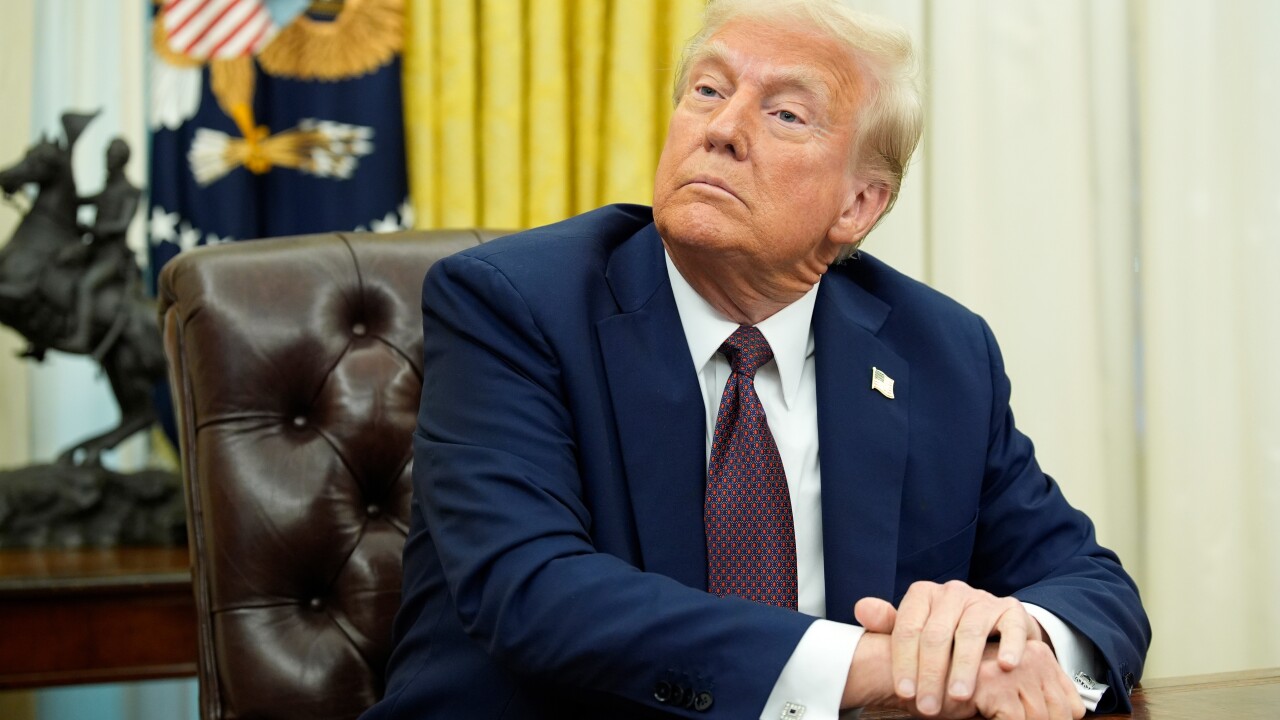
-
The card network will provide payments support for the social network's financial app, potentially contributing to its ability to scale.
 January 30
-
Money remittance provider Wise said it "strongly disagrees" with the Consumer Financial Protection Bureau's characterization that it advertised inaccurate fees and did not properly disclose exchange rates.
 January 30
-
More than 80% of bankers surveyed said they increased their tech budgets to invest more in security, data analytics and AI.
 January 30
-
The Dallas bank made some headway on its goal to slim down its multifamily loan portfolio, but $17 million in bad loans led to a bottom-line loss in the fourth quarter.
 January 30
-
The Long Island-based company, which is in the middle of a makeover, saw its stock price rise sharply after reporting a net loss that was less than what analysts expected.
 January 30
-
Russell Vought, should he be confirmed by the full Senate, would join a short list of those able to lead the CFPB, as his predecessor Mick Mulvaney did, per the requirements of the Vacancies Act.
 January 30
-
The Chinese startup roiled markets with its AI assistant, which appears to be a less expensive answer to ChatGPT. Banks have reasons to be cautious about this particular model but also to hope it will bring down AI's costs.
 January 30
-
The credit card issuer's earnings missed Wall Street estimates, but it reported improvement in sales, delinquencies and charge-offs. Management said unclear political direction and cloudy monetary policy could threaten an already conservative outlook for 2025.
 January 30
-
The group was still the most active such gang last year, but its activity appears to have been severely hampered by law enforcement.
 January 30
-
Non-stablecoin cryptocurrencies have no inherent value, so creating a federal "reserve" of them is absurd on its face. Chinese hacking of bitcoin will have no significant economic impact.
January 30
-
The Rutherford-based Blue Foundry Bancorp reported an eighth consecutive quarter of red ink, but a widening margin and positive loan growth trends hint at better times ahead.
 January 30
-
CEO Michael Miebach says the card network's business in areas such as debit cards will enable it to compete if the mega merger results in the loss of Capital One's debit business.
January 30
-
Pressing tech items across banking include the Federal Deposit Insurance Corp.'s impending Synapse rule and Regions Bank's play for an open banking future.
 January 30
-
President Trump's executive order is meant to roll back his predecessor's emphasis on diversity and inclusion, but it could also complicate the Federal Deposit Insurance Corp.'s efforts to correct its own workplace-harassment problems.
January 30 American Banker
 -
Capital One's five-day interruption, President Trump's planned dismantling of the Consumer Financial Protection Bureau and more this month.
January 30
-
A trio of high-profile lawsuits issued at the tail end of the Biden administration indicate that the agency cares more about pursuing a political agenda than it does about helping American consumers.
January 30


