-
JPMorganChase and Bank of America raised concerns about the proposed removal of risk-weighted assets from the denominator of the short-term wholesale funding component of the GSIB surcharge — changes backed by Goldman Sachs and Morgan Stanley.
 June 26
-
A potential deletion from a long-standing regulatory definition has banks questioning how to classify vast swaths of their lending books.
 June 18
-
Bank groups said that although the Federal Reserve's eased capital plans are a major improvement over previous versions, the recent proposals still need changes to help avoid risk assessments they say may hinder banks' ability to boost lending.
April 29
-
Jamie Dimon said the revised Basel III plan still overstates risk and penalizes the largest banks.
April 7
-
Treasury Secretary Scott Bessent is slated to testify in the House Financial Services Committee Wednesday morning as part of the committee's regular oversight of the Financial Stability Oversight Council.
February 4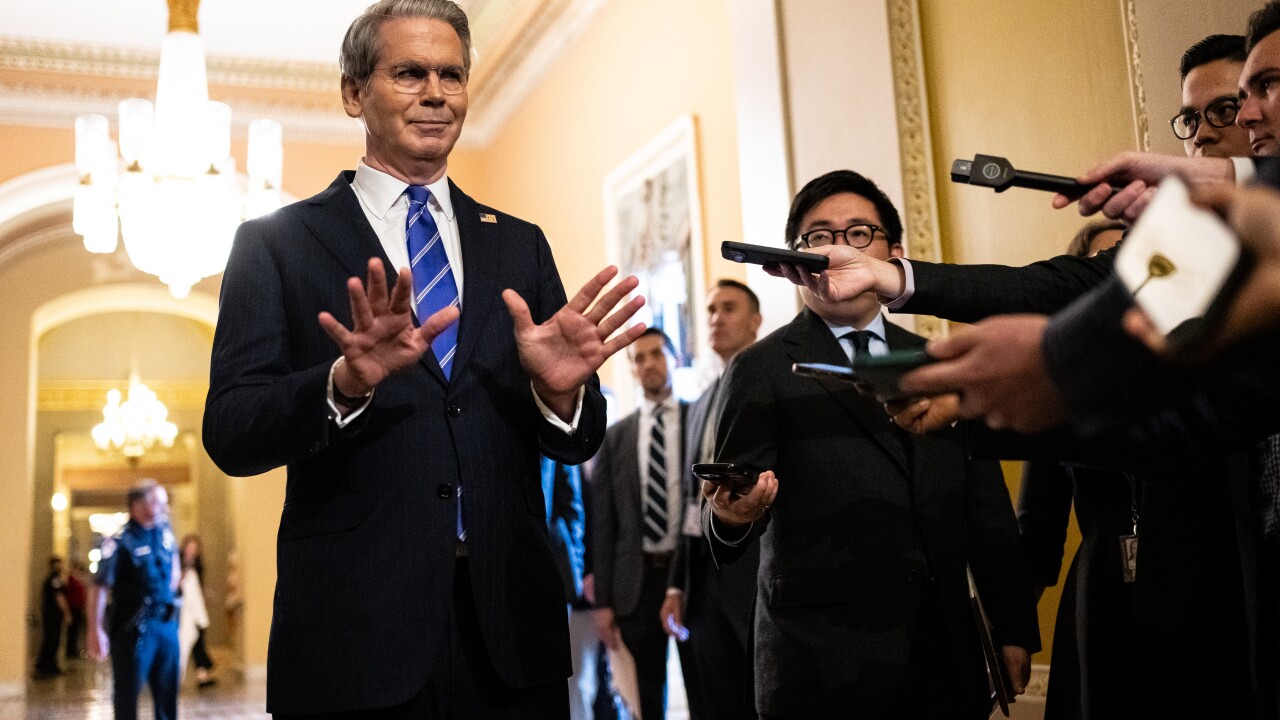
-
A Government Accountability Office report warns the Office of the Comptroller of the Currency to clarify which records from the Basel Committee on Banking Supervision should be treated as federal records and thus retained according to the Federal Records Act.
 January 29
-
The Task Force on Climate-related Financial Risks won't be disbanded, according to people familiar with the matter.
May 16
-
Committee Chair Sherrod Brown is facing a tough election.
 August 23
-
Brandon Milhorn, the new CEO of the Conference of State Banking Supervisors, used the platform offered by his first major speech to sound an alarm against one-size-fits-all solutions emanating from Washington. "The pendulum has swung too far in the direction of federal regulatory uniformity," Milhorn argued.
 February 2
-
Banks and Congressmen alike see U.S. regulators' version of Basel III as overly stringent for the securitization market.
January 24
-
Proposed capital rules aimed at bigger institutions will force regional and larger community banks to consider ways to grow or seek an exit strategy, bankers and analysts predict.
December 11
-
Regulators will now accept feedback until Jan 16, 2024 — a six-week extension — concurrent with a Federal Reserve effort to gather additional information about the potential implications of the proposed capital changes.
 October 20
-
The Biden administration is poised to put its stamp on the banking regulatory landscape, but there are few slam-dunk solutions that will satisfy both the industry and a vocal Democratic base.
August 2
-
-
The Basel Committee on Banking Supervision issued a proposal this month laying out how banks should treat cryptocurrencies held on their balance sheets. It could give stablecoins, which are tied to traditional assets, an edge over more volatile digital assets like Bitcoin.
June 22
-
The Fed’s recent action capping dividend payments might prove inadequate once the coronavirus crisis really hits banks’ capital.
July 14
-
The Fed has already eased certain capital requirements in response to the coronavirus pandemic. It should avoid making any further adjustments to the surcharge, which is meant to keep global banks from creating systemic risks.
July 10
-
In separate letters to Congress, the Fed asked for legislative action to ease Tier 1 capital minimums while the FDIC said it may use its own authority to address the market strain on banks.
 April 30
-
Under the plan, large banks would have to hold additional capital if they purchase another bank's "loss-absorbing" debt that is used to contain fallout from a collapse.
 April 2
-
The Federal Reserve’s top regulator, who assumed the chairmanship of the international board in November, said the FSB should explain the rationale behind its financial benchmarks while establishing new ones to combat emerging threats.
 February 11


