-
During earnings calls, bankers praised regulators' latest efforts to modify capital rules. JPMorgan Chase CFO Marianne Lake, meanwhile, called on policymakers to focus on overhauling the G-SIB surcharge.
April 13
-
The bank, which already offers mortgages through seven offices across North Carolina, is the fourth group to announce plans for a de novo in the state.
April 13
-
Over the past week, regulators have proposed the most substantial changes to capital requirements for the largest banks in years, but the most startling thing was how unremarkable they were.
 April 13
-
The Pittsburgh company reported a 39% gain in retail banking profits amid a lot of strong first-quarter numbers, yet it still fell short of analysts' earnings expectations by a penny and wants to push for stronger loan growth.
 April 13
-
James Smith said his late enrollment in the state’s Republican Party meant he would be ineligible to be a candidate in its August primary and that he did not want to disrupt the nomination process.
April 11
-
The agencies proposed changes to the way they apply a capital backstop to the largest systemically important firms, replacing a static leverage ratio with a more dynamic ratio that takes each bank’s risk profile into account.
April 11
-
The Treasury secretary has suggested raising an asset cutoff used by the Financial Stability Oversight Council to assess systemically significant nonbanks, removing some hedge funds and other risky firms from the council's purview.
April 10 Center for American Progress
 -
The comptroller said he is looking to capitalize on the industry's strong profits and high capital reserves to reduce costs and lower exam fees next year.
 April 10
-
The reserve bank's proposal to address banks and nonbanks that remain "too big to fail" does not include two of the largest such institutions: Fannie Mae and Freddie Mac.
April 9
-
With the largest banks remaining profitable and globally competitive, Federal Reserve Chairman Jerome Powell said he has not yet heard a compelling case for giving them substantial regulatory relief.
April 6
-
James Smith said he would decide soon whether he’ll seek the Republican nomination for governor. He said he was inspired partly by his recent work on a commission tasked with recommending fixes to the state’s fiscal and economic problems.
April 6 -
BB&T is the nation's fifth-largest insurance broker. The deal, expected to close in the third quarter, would further expand its reach in the Southeast and Texas.
April 6
-
Several states have created their own operations aimed at shoring up what they see as oversight holes created by the CFPB; JPMorgan CEO’s annual letter (47 pages, this one) runs the gamut.
April 6
-
The Financial Stability Oversight Council will hold an executive session next week to consider whether Zions Bancorp. should still be considered a systemically important financial institution.
April 5
-
The Treasury's recommendations come as federal bank regulators have indicated they will soon release a proposal to reform Community Reinvestment Act policy.
 April 3
-
On quarterly earnings calls set to begin next week, investors will be listening closely to CEO comments for any hints of how banks might deploy excess capital if they are no longer deemed systemically important.
 April 2
-
Short sellers tend to go against the tide, making investments based on a belief that a stock is going to tank. These 10 banks have drawn the greatest amount of short-interest activity recently.
 April 1
-
The agency said Cross River Bank and an affiliated debt settlement company misled customers into thinking a debt consolidation program would settle their debts and boost their creditworthiness.
March 28
-
The biggest legacy of the current regulatory relief effort may be the increasing focus on whether organizing banks in supervisory buckets by asset size makes sense. Yet the bill deals with just one of the two big asset thresholds in the law.
 March 26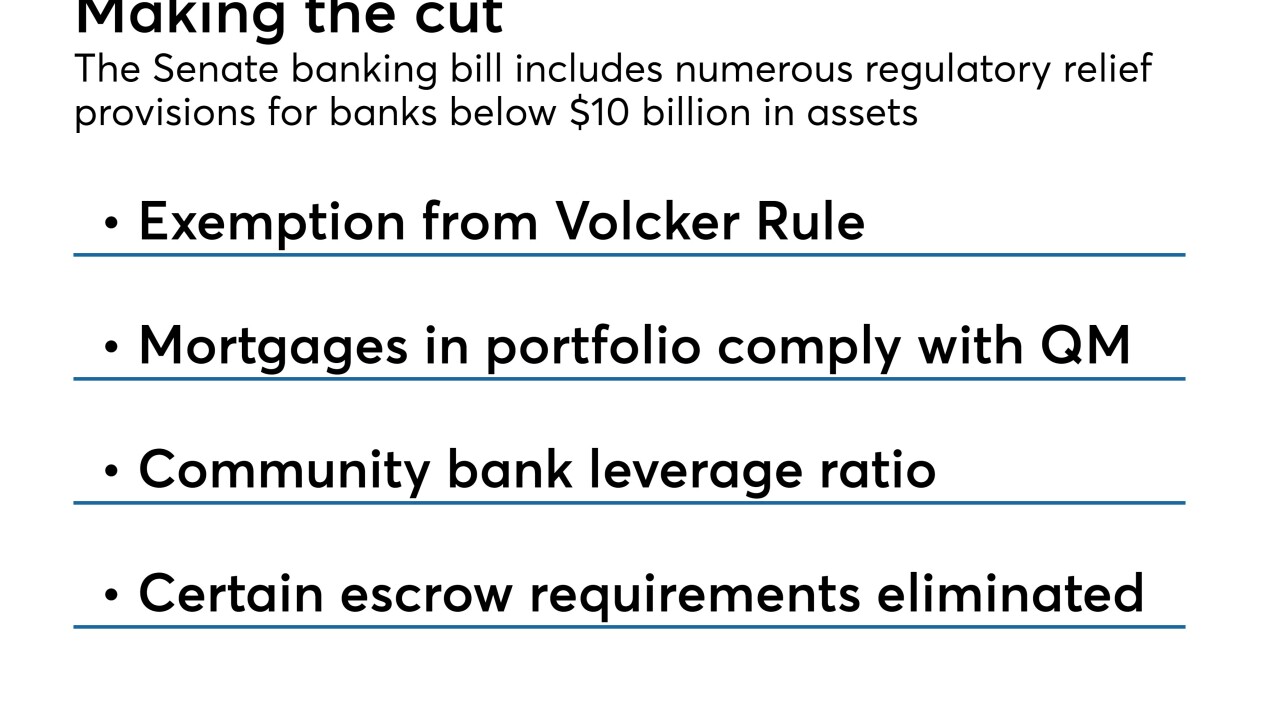
-
Mid-Southern Bancorp could use proceeds to make more loans or to pursue acquisitions.
March 26


