-
Nine of the world's biggest banks won dismissal of a lawsuit accusing them of conspiring to rig bonds issued by government entities and institutions like the World Bank, after a federal judge said the investors who sued didn't show how the alleged collusion led to higher prices for the securities.
August 29
-
OCC proposal would broaden the types of loans that would count toward CRA obligations; new law helps parents freeze accounts of minors.
August 29
-
Institutions must enhance their fraud prevention strategy, and the most effective and successful way for doing so is by empowering customers to detect and respond to suspicious activity before the funds ever leave their account, writes Deborah Peace, CEO of ACH Alert.
August 29 ACH Alert
 -
Growing consumer expectations for 24/7 digital access and real time decisions as well as competitive pressures have reduced the time that organizations have for manual review, writes Mike Lynch, chief strategy officer at InAuth.
August 28 InAuth
 -
The Texas bank, which partners with the U.S. Treasury to dispense federal benefits via prepaid cards, is alleged to have dropped the ball as hundreds of cardholders say their money was forwarded to fraudsters posing as them.
 August 26
-
Citigroup was so impressed with a test drive of AI software it invested in its maker; the FBI's warning of a cyberattack targeting ATMs came to pass — expect more to come; debating whether state AGs can serve as de facto CFPBs; and more from this week's most-read stories.
August 24
-
State Treasurer John Chiang says that Wells Fargo is keeping patterns of abuse hidden from view by resolving customer disputes through private arbitration.
 August 23
-
A Maryland-based credit union is suing the nation's largest CUSO in a dispute related to call center services provided by PSCU.
August 22
-
Enforcement actions are on the rise despite recent rollbacks of regulations. Fair lending, money laundering compliance and CRA remain focal points for examiners.
August 22
-
The bank said the candidate planned to accept money from the medical marijuana industry; the crash in digital currency prices’ long-term consequences.
August 21
-
Bank of America and several other large U.S. financial services companies, as part an effort organized by the Thomson Reuters Foundation and Western Union, have published resources to help smaller banks spot signs of forced labor and kidnapping.
 August 20
-
After 20 years of working with a clunky, time-consuming 3-D Secure authorization method for online purchases, the wheels are finally in motion to get the upgraded 2.0 version in place for merchants and banks, granting access to more data for spotting fraud.
 August 20
-
The money trail is a prominent part of investigations dominating headlines in the Trump era, casting attention on banks that have facilitated transactions for various people in the president's orbit.
 August 19
-
One community bank decided it can build closer relationships with business clients by hosting events to help them learn how to fortify their cyberdefenses.
August 17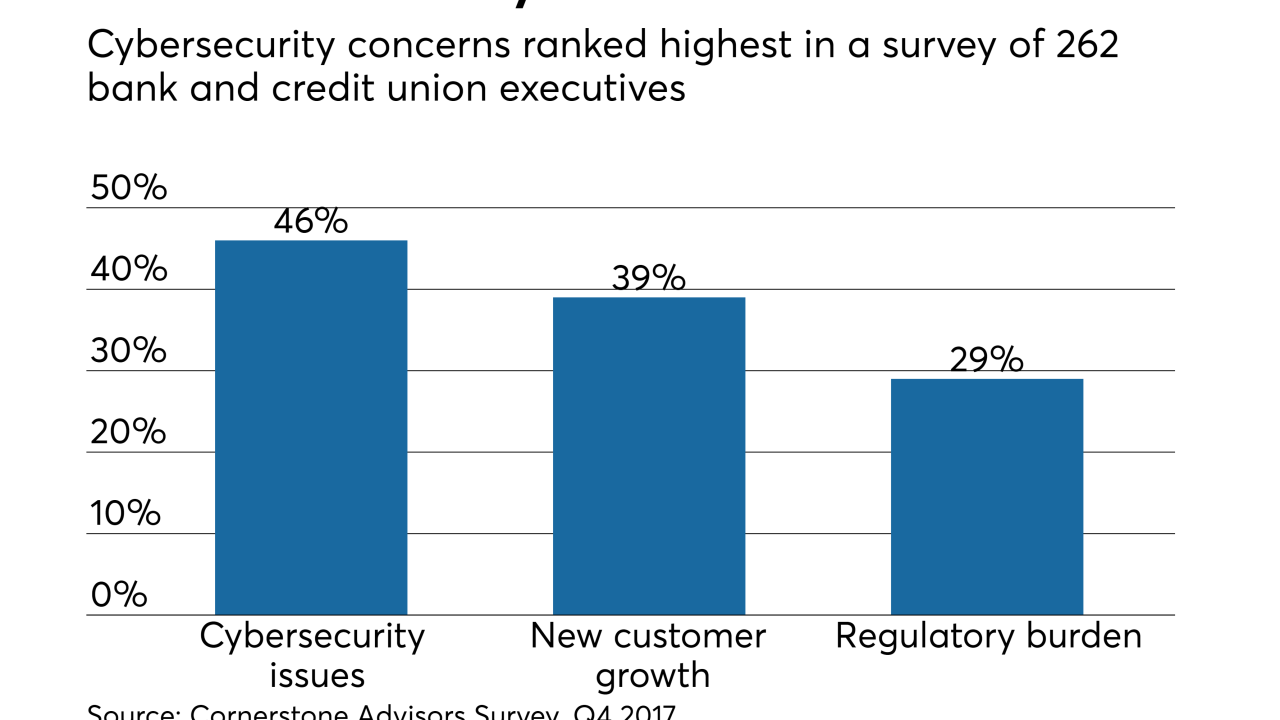
-
No outrage over more Wells disclosures; Steve Calk accused of conspiring with Manafort against his own bank; FBI warns banks about threat to ATMs; and more from this week's most-read stories.
August 17
-
As the state phases in tougher requirements from its 2017 regulation, federal agencies continue to show an interest in updating their cyber policies.
 August 17
-
CO-OP Financial Services is currently pilot testing the new data-driven tool with credit unions in its shared branching network.
August 17
-
Cybersecurity remains a chief concern for small credit unions as a panel of experts warns small CUs may not just be a target, they could be one step in a larger attack.
August 16
-
More than 100 staffers at the Allentown, Pa.-based credit union took to the picket lines in a dispute with management over compensation and benefits, forcing the credit union to temporarily close at least two branches.
August 16
-
Rep. Emanuel Cleaver, D-Mo., says he is concerned that banks are freezing accounts of customers if they aren't providing citizenship information.
 August 16


