
Regulation and compliance
Regulation


-

The decision to stop requiring U.S. companies to report beneficial ownership information is misguided. The compliance burden could be substantially eased by collecting the data at the state level.
May 1 -

In a recent executive order, President Trump tried to wipe out a legal concept used to root out discrimination. But banks, worried about what will happen the next time a Democrat is in the White House, may be reluctant to change their policies.
May 1 -

A new survey conducted by IntraFi found that nearly three-quarters of bank executives say a recession is here or imminent, and tariffs now rank among their top three economic concerns.
May 1 -

A budget bill passed by the House Financial Services Committee would eliminate the Public Company Accounting Oversight Board and cap the Consumer Financial Protection Bureau's budget at roughly $249 million.
April 30 -

President Donald Trump's shrinking of the Federal Deposit Insurance Corp. and the Consumer Financial Protection Bureau add to bankers' uncertainty into May.
April 30 -

The administration's major moves include weakening the Consumer Financial Protection Bureau and rolling back numerous Biden-era regulations.
April 30 -

At a House subcommittee hearing, Republicans proposed "tailoring" regulations for community banks while Democrats railed against Trump's tariffs and cuts to the Consumer Financial Protection Bureau.
April 29 -

Senate Banking Committee ranking member Elizabeth Warren, D-Mass., and House Financial Services Committee ranking member Maxine Waters, D-Calif., urged the National Credit Union Administration's Inspector general to look into President Trump's removal of two board members.
April 29 -

Rapid deregulation, tariffs and a campaign to dismantle the Consumer Financial Protection Bureau have defined the early days of President Donald Trump's second term for bankers.
April 29 -

Sens. Elizabeth Warren, D-Mass., and Ron Wyden, D-Ore., will force the vote Wednesday on a bipartisan resolution aimed at terminating the national emergency declaration used by Donald Trump to impose sweeping tariffs.
April 29 -

By changing the form and function of the federal bureaucracy, questioning judicial review and launching a trade war, the president has injected uncertainty into a government built on predictability and process.
April 29 -

A panel of federal appeals judges prohibited the Consumer Financial Protection Bureau from issuing any further reduction-in-force notices to employees until after it hears arguments on the case next month.
April 28 -

The crypto asset platform is returning to the U.S. after leaving in 2022 amid regulatory friction.
April 28 -

In the megabank's latest sign of progress with regulators, it said that a 7-year-old CFPB order has been terminated.
April 28 -

Two Democratic members of the National Credit Union Administration board of directors are suing the Trump administration for wrongful dismissal, a suit that could have implications for the Federal Reserve and Federal Deposit Insurance Corp.
April 28 -

President Trump suggested his sweeping tariffs would help him reduce income taxes for people making less than $200,000 a year.
April 28 -

As the president's policy changes on a dime, machine learning can quickly alter strategies for compliance, payments and supply-chain management.
April 28 -
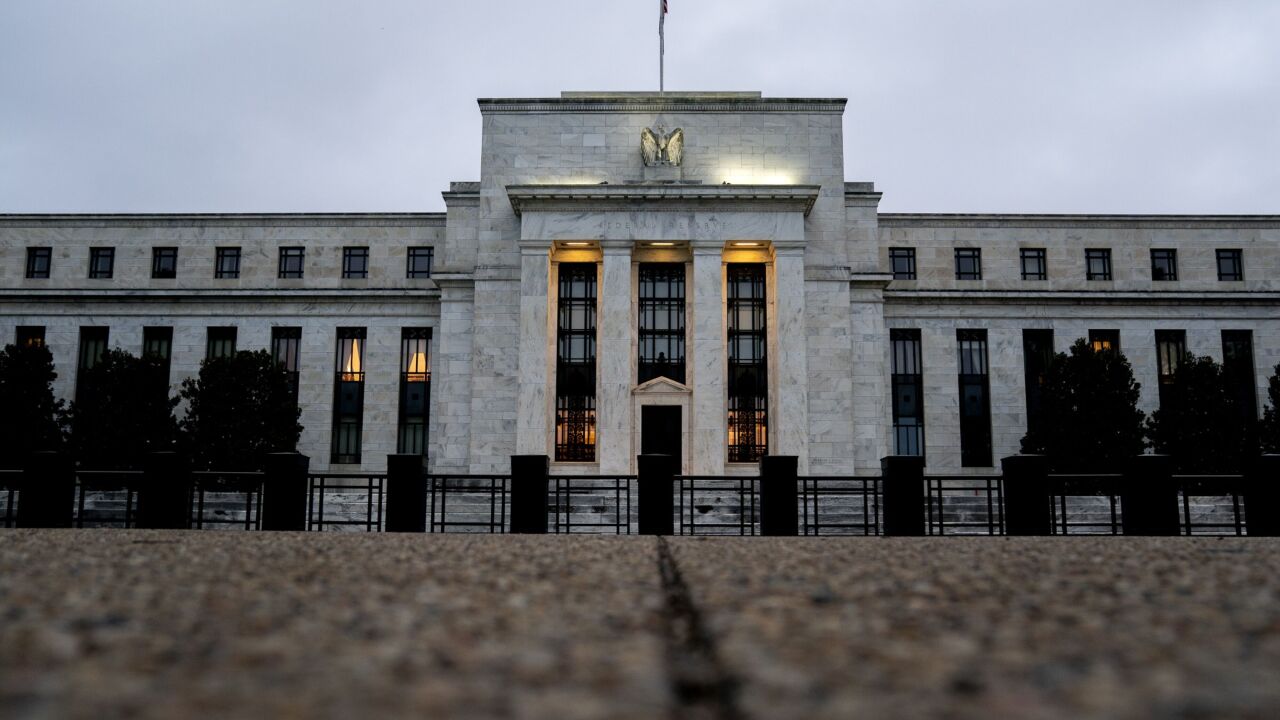
In its latest financial stability report, the Federal Reserve found that asset prices continue to exceed underlying fundamentals and leverage levels remain high, especially by hedge funds.
April 25 -

The Consumer Financial Protection Bureau's exit from a suit jointly filed with the New York attorney general's office narrows a major subprime lending case.
April 25 -

Acting Chair Travis Hill's push for quick weekend bank sales signals a break from past crisis strategies — but some experts warn of higher costs and increased consolidation risks
April 25


