
-
The London interbank offered rate was a flawed benchmark, but it was nonetheless a centerpiece of finance for decades. Congress should ensure it doesn't replace one interest rate monoculture with another as Libor winds down.
July 21 Willkie, Farr & Gallagher LLP
 -
Federal Reserve Chairman Jerome Powell said the market dislocations of the past year resulting from the pandemic had changed the impact that the supplementary leverage ratio was having on the largest banks. After temporarily easing the requirement, the central bank is considering longer-term reforms.
June 16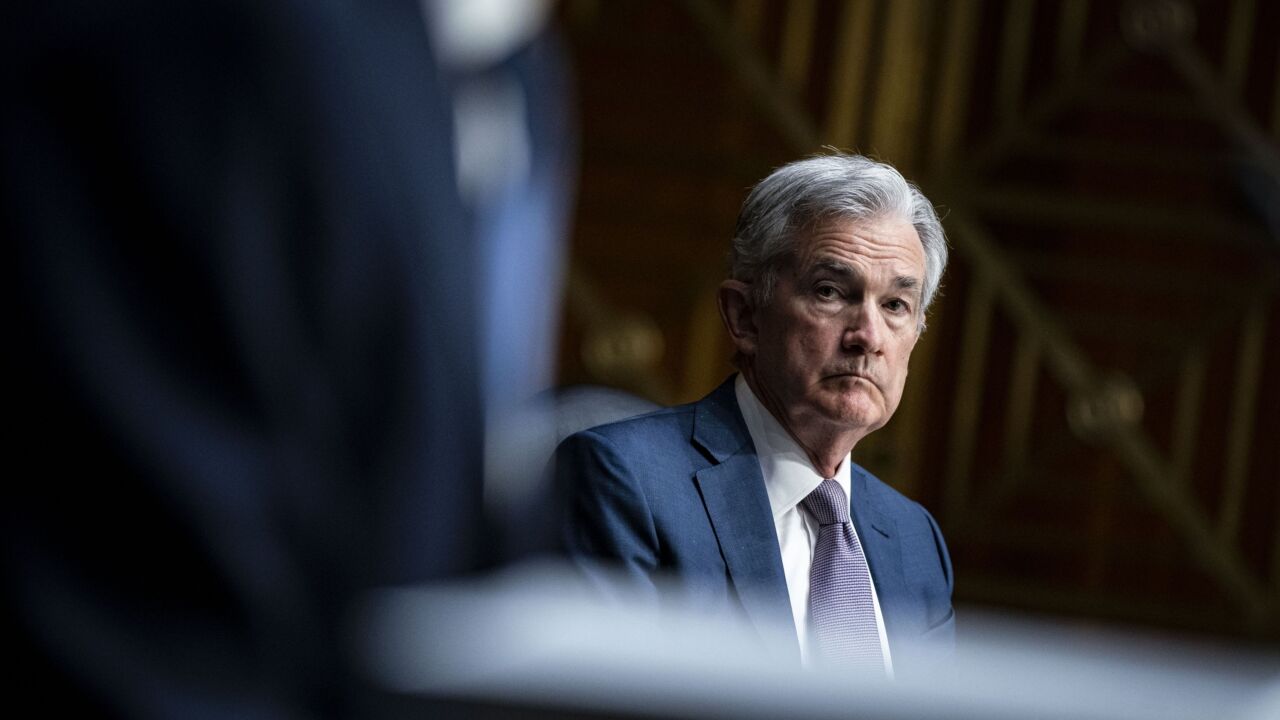
-
Federal Reserve Vice Chair of Supervision Randal Quarles suggested that the massive influx of reserves stemming from the central bank's COVID-19 response may lead to a recalibration of the supplementary leverage ratio.
June 1
-
The decision is seen as a setback for the banking industry, which had been pushing for an extension, and a win for Democrats, who have argued that a pandemic is no time for banks to be shedding capital.
March 19
-
The industry wants regulators to extend a temporary measure making it easier to satisfy the supplementary leverage ratio. But Democrats’ control of the White House and Congress has given a bigger platform to those who say banks have had enough relief.
March 4
-
Temporary policy responses have mitigated problems in the short-term funding markets related to the pandemic, but permanent fixes may be necessary in some areas, the agency said in a report.
November 9
-
Regulators said they will allow banks to deduct Treasury securities — a source of market volatility in the pandemic — from the net stable funding ratio on the same day they provided relief from auditing requirements.
October 20
-
The market was upended because the largest banks hold more liquid assets in Treasuries than at the Fed, limiting their ability to supply repo funding on short notice, according to a new analysis from the Bank for International Settlements.
December 9
-
The custody bank has deployed more than 300 bots and is using artificial intelligence throughout the organization.
October 15
-
The Federal Reserve said it will begin buying $60 billion of Treasury bills per month to improve its control over the benchmark interest rate it uses to guide monetary policy after turmoil rocked money markets in September.
October 11
-
The EU wants to protect the euro and ensure Facebook’s digital currency isn’t used for money laundering; the brokerage is partnering with six banks to offer 2% on account balances.
October 9
-
The bank started buying more Treasurys and mortgage-backeds over a year ago, long before talk about rate cuts. What did it know that its rivals didn't?
August 25
-
M&T Bank, Zions and Comerica are among the regional banks facing the most pressure on net interest margins, Wells Fargo analysts said in a research note to investors.
August 16
-
Now that the Federal Reserve has raised short-term rates four times in the past 18 months, all eyes are on deposit costs as banks seek to keep pricing low and fatten margins. But that effort is complicated by the fact that banks must prepare for the unwinding of the Fed's balance sheet and consumers' rapid adoption of mobile deposits.
July 21


