
U.S. Bancorp
U.S. Bancorp


U.S. Bancorp with nearly 70000 employees and $554 billion in assets as of December 31 2020 is the parent company of U.S. Bank National Association the fifth-largest commercial bank in the United States. The Minneapolis-based bank blends its relationship teams branches and ATM network with digital tools that allow customers to bank when where and how they prefer.
-
The Minneapolis-based company reported an 18% increase in quarterly net income thanks largely to slimmed-down operating expenses. It also notched modest increases in loans and deposits, while asset quality issues remained manageable.
July 17 -

A month after Gunjan Kedia was named the company's president, the Minneapolis firm has promoted Stephen Philipson and Felicia La Forgia into new roles that will cover Kedia's former duties.
June 5 -
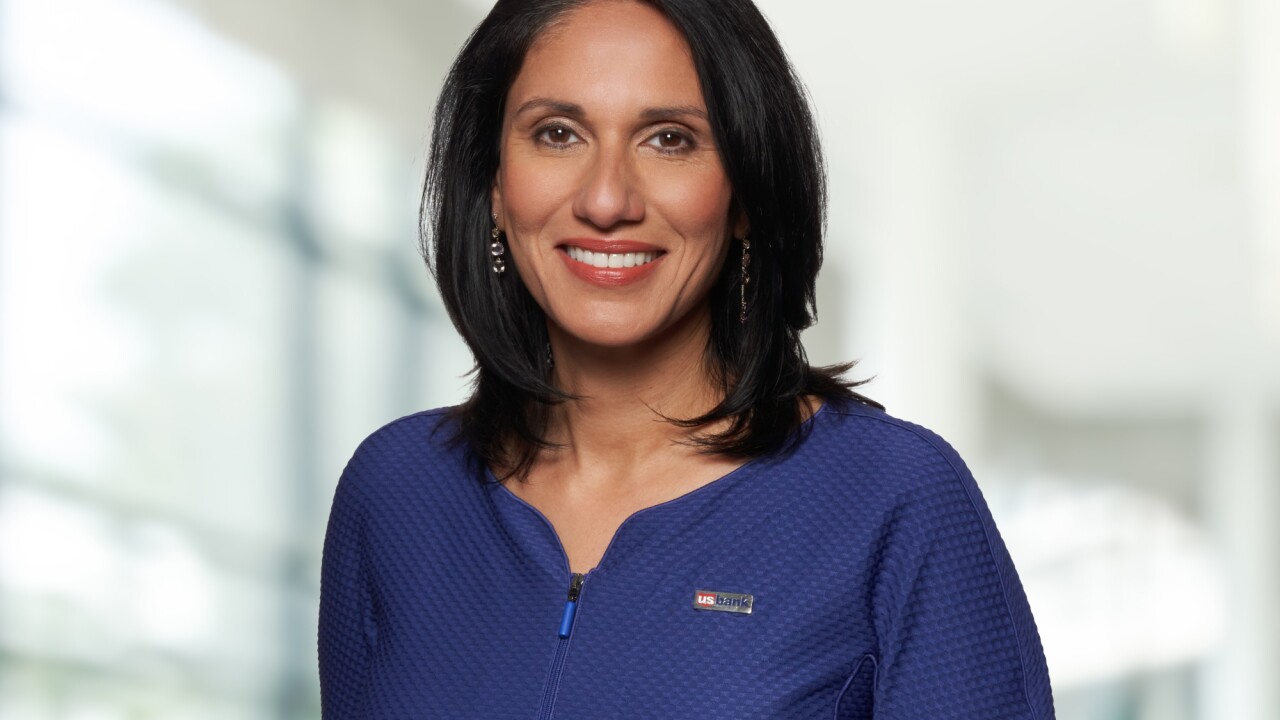
The Minneapolis-based company has promoted Kedia to president, a role that CEO Andy Cecere and his predecessor both held before being named to the top job.
May 6 -
After the Minneapolis-based company reported stubbornly high commercial deposit costs, it reduced its full-year forecast for net interest income by $200 million-$500 million.
April 17 -

The first major hurdle arises for lenders that approach $100 billion in assets. That's when they have to deal with a key regulatory threshold, becoming so-called Category IV banks, which are subject to stiffer capital rules and oversight.
April 4 -

The enforcement action involved problems with the Japanese-owned Union Bank's information security and operational risk controls.
March 7 -

With tougher capital requirements looming, a number of regionals including U.S. Bancorp, Huntington and Santander are using these new instruments to share risk with nonbank investors and lighten their capital load. Experts point out the pros and cons.
February 1 -

Banks can choose to only receive transactions instantly, and it's the most popular choice. Simply preferring to get paid faster isn't the reason.
February 1 -

Plaintiffs' lawyers are targeting various companies in connection with a California law that ensures customers can air grievances publicly without the threat of retribution. BofA and U.S. Bank say the suits against them are meritless.
January 22 -

Financial institutions, led by the biggest U.S. banks and regional lenders, have dominated high-grade issuance, making up over 60% of the $149 billion that has priced so far this month.
January 22 -
The Minneapolis company's balance sheet is still feeling the weight of higher funding costs, but CEO Andrew Cecere gave several reasons why he anticipates revenue growth will begin to outpace noninterest expense growth and efficiency will improve after midyear.
January 17 -
-
-
-

Despite tougher economic conditions, BNPL lenders are driving growth by expanding to new audiences and checkout channels, as well as fine-tuning proprietary risk-management models.
December 26 -

Across the industry, the pace of branch shutdowns slowed this year. Still, large financial institutions continued to trim their physical footprints, with two super-regional banks taking the most aggressive actions.
December 15 -

The $668 billion-asset company sold investment securities and certain mortgages to avoid more stringent liquidity and other federal requirements for larger banks. Yet CEO Andy Cecere says U.S. Bancorp is "not under an asset cap at all."
October 18 -

U.S. Bancorp and Truist picked literal names for their virtual assistants to avoid confusing customers, while Fifth Third and Regions created characters called "Jeanie" and "Reggie" to put clients at ease. Other companies are trying to split the difference.
October 3 -

Cash remains king, but some credit card customers prefer giving their rewards to nonprofits, so the Minneapolis banking giant has made it a year-round option where it's matching donations dollar for dollar.
September 27 -
As Apple and Android enable smartphones to accept payments with little setup, an exec at the bank's Elavon unit contends countertop devices have a lot of life left.
September 19


STOCK SNAPSHOT
