
Stablecoins
How are banks approaching dollar-backed digital assets (stablecoins)?
Stablecoins have moved from the edge of the
Banks are testing stablecoins for cross-border payments, liquidity management, and digital wallets. Some are also exploring how stablecoins can support interbank transactions or be issued directly by regulated institutions. As the landscape takes shape, stablecoins are starting to look less like an experiment and more like infrastructure.
-
With the CLARITY Act stalled in Congress and GENIUS implementation ongoing, experts are questioning how much of a threat the products pose to bank deposits and services.
 August 21
-
Commodity Futures Trading Commission Chair Michael Selig said the agency is exploring regulations that would establish clearer rules of the road for crypto exchanges and decentralized finance developers operating in the U.S.
 August 20
-
President Trump lobbied again for Congress to pass the CLARITY crypto market structure bill, but paths toward this Congress doing so are treacherous with few legislative days left.
 August 19
-
Executives at three regional banks that are participating in a tokenized-deposit network discussed how they are retooling their risk practices to fit always-on conditions.
 August 18
-
The Securities and Exchange Commission kicked off rulemaking intended to make it easier for crypto firms to raise money without having to go through the full securities registration process.
August 18
-
Democratic Sens. Ruben Gallego, Ariz., and Angela Alsobrooks, Md., signed on to the bill, signaling a hardening of their position on an ethics provision in the CLARITY market structure bill.
August 17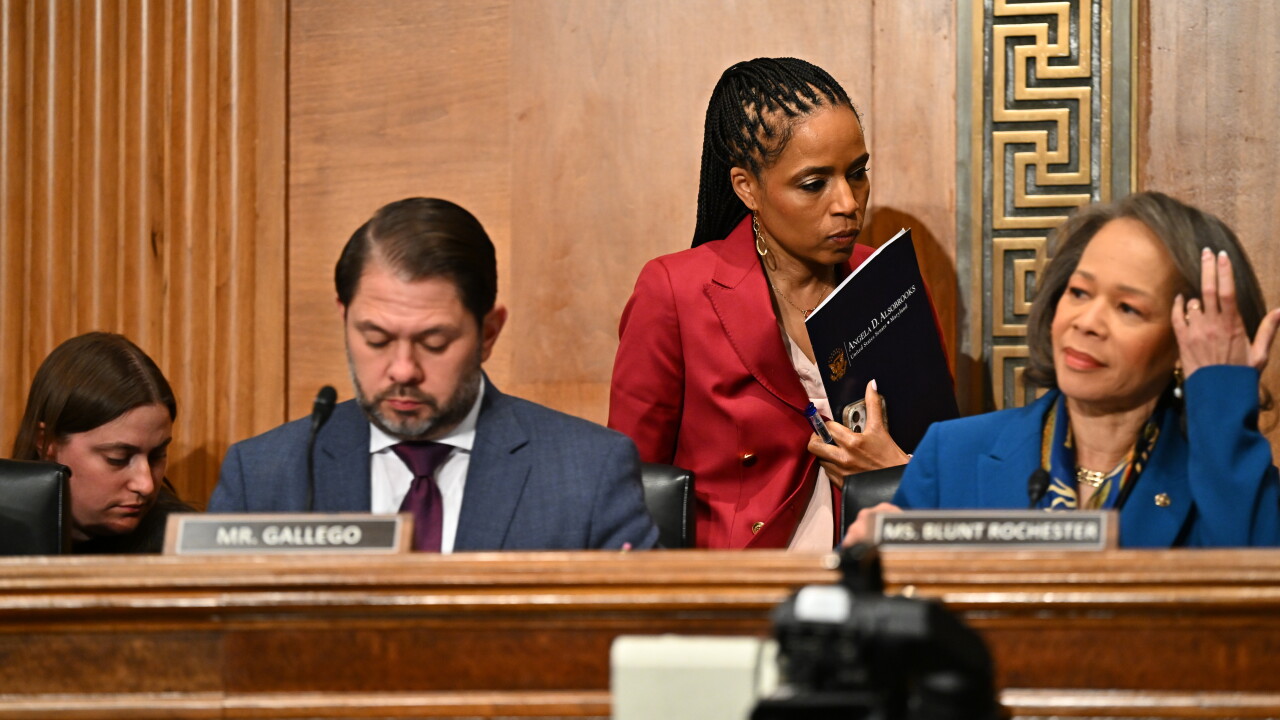
-
World Liberty Financial, a digital asset venture co-founded by members of the Trump family, received conditional approval for a national trust bank charter.
 August 14
-
An SEC spokesperson attributed the cancellation to an "unforeseen scheduling issue" and said the meeting would be rescheduled "to a later date."
August 14
-
The future of on-chain finance in the U.S. is dependent on there being statutory certainty about the rules of the road. The Clarity Act may not be perfect, but passing it is essential to maintaining U.S. leadership in the field.
August 13
-
American Banker's digital asset index found growth in digital assets is outpacing stablecoins.
 August 13


The first three months of the year coincide with the start of President Donald Trump's second term in office. Investors are likely to be more interested in banks' outlooks amid swings in tariff policy than the first-quarter results.


Frequently Asked Questions:
How are banks approaching dollar-backed digital assets (stablecoins)?
Stablecoins have moved from the edge of the crypto, world to the center of policy and banking conversations. As regulators and banks weigh their role in payments, settlement, and reserves, this page follows the developments — from early pilots to proposed legislation.
Banks are testing stablecoins for cross-border payments, liquidity management, and digital wallets. Some are also exploring how stablecoins can support interbank transactions or be issued directly by regulated institutions. As the landscape takes shape, stablecoins are starting to look less like an experiment and more like infrastructure.
Why are banks paying attention to stablecoins?
Stablecoins are increasingly viewed as a potential upgrade to legacy payments systems. Banks are evaluating them for settlement, remittances, cross-border transactions, and tokenized deposit models.Are banks issuing their own stablecoins?
Some are exploring the option. Institutions like JPMorgan (with JPM Coin) and new entrants like PayPal are piloting bank-issued stablecoins, while others are watching regulatory developments before moving forward.How do stablecoins impact compliance and risk?
Issues include KYC/AML enforcement, cybersecurity, operational risk, and how reserve assets are held and reported. Banks exploring stablecoin activity must weigh both technological benefits and regulatory scrutiny.How are regulators responding to stablecoin innovation?
Congress is debating stablecoin-specific bills focused on reserve backing, issuer licensing, and oversight. The Federal Reserve, OCC, and state regulators are also shaping how bank involvement in stablecoin activity is supervised.How are banks using stablecoin?
Banks are using stablecoins to speed up cross-border payments, manage liquidity across global branches in real time, and test new forms of settlement between institutions. Some are integrating stablecoins into retail-facing digital wallets, while others are exploring interbank networks built on tokenized payments. These efforts are less about crypto speculation and more about making money move faster, with greater transparency and fewer intermediaries.- Real-time cross-border payments
- Internal liquidity management
- Retail-facing digital wallets
- Interbank tokenized payment networks
Top banks investing in stablecoin
List of institutions with greatest investment in stablecoin:- JPMorgan Chase – JPM Coin
- Custodia Bank – Avit Tokens
- Citigroup - Citi Token Services
- Societe Generale - USD CoinVertible
- Bank of America - Name yet to be released
- Fifth Third - Name yet to be released
- U.S. Bancorp - Name yet to be released