-
Now that the Apple Watch has arrived, banks and technology companies are making a big effort on the wearable's small screen. Some are focused on alerts and budgeting; others take advantage of the device's unique hardware.
April 24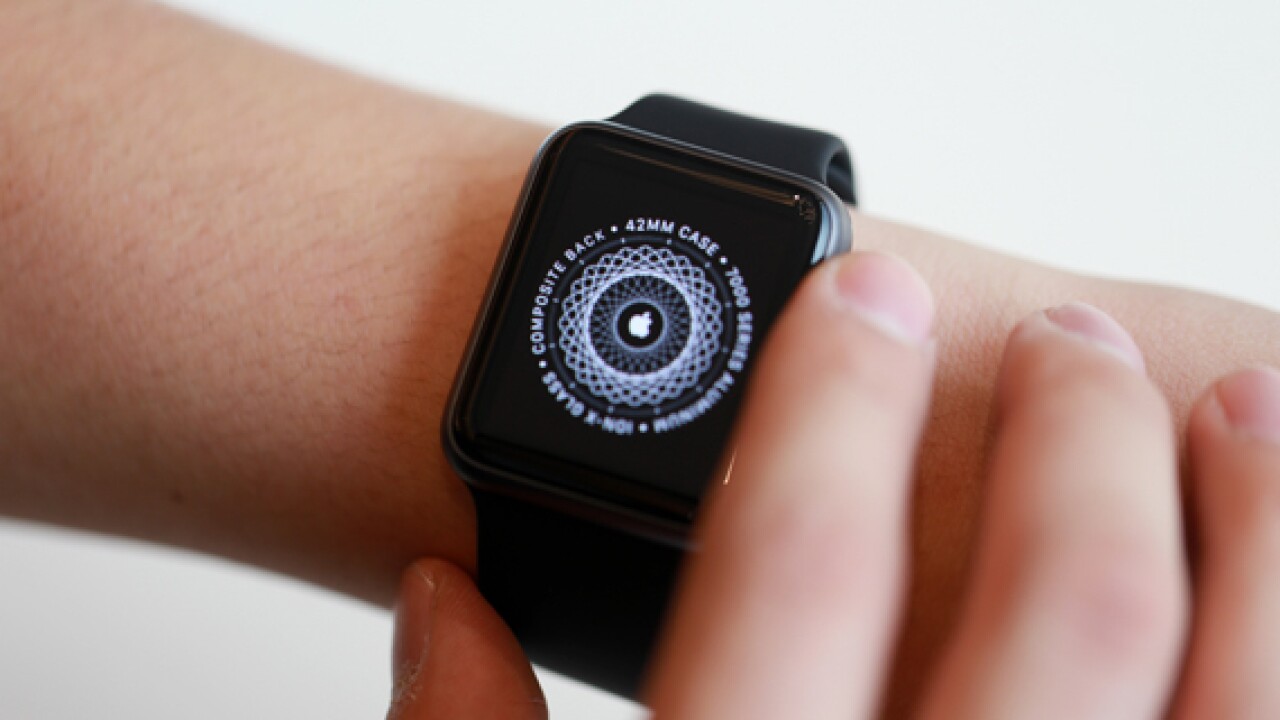
-
To address integration concerns for retailers, Bindo is connecting its iPad-based point of sale software to Powa Technologies' hardware for clients in the U.S. and Asia.
 April 24
 -
Millions of dollars spent on software upgrades are worth the hit to short-term profits, executives at the Buffalo bank said, because it will be able to run deeper credit profiles of borrowers.
 April 24
 -
The Apple Watch officially goes on sale today, bringing Apple Pay to the wrists of many consumers, but the device's competitors a large number of increasingly sophisticated and far less expensive wearables are also attracting the attention of Apple Pay issuers.
April 24 -
The Starbucks mobile app is now used for eight million transactions per week, or 19% of the company's U.S. sales, but the biggest development is not in the numbers but the nature of the app's users.
 April 23
 -
Capital One Financial's earnings fell slightly in the first quarter when compared to a year earlier, as rising expenses outpaced revenue gains.
 April 23
 -
Citigroup and AT&T have unveiled a new credit card that offers a credit for a new smartphone, potentially boosting adoption of Citi Wallet.
 April 23
 -
Increasingly, the goal of more payments providers from megabanks like Wells Fargo to startups like YoYo is to hide the fact that they are payments providers.
 April 23
 -
PayPal is investing heavily in technology to make sure it is properly equipped for the challenge ahead of it when its split from eBay is finalized.
April 23 -
Despite a series of challenges and missteps from Google Wallet's earliest days, the app has tightened its grip on the Android ecosystem and squeezed out the competition and Google must now decide whether Apple Pay is its next target or its most unlikely ally.
 April 22
 -
Discover Financial Services reported a 7% drop in quarterly earnings on Tuesday, driven by rising expenses, a growing loss provision and shrinking yields in its flagship credit card business.
April 21 -
Uber Technologies Inc. and Capital One Financial Corp. have joined to give the credit-card issuer's customers cheaper rides on the car-sharing service.
April 21 -
When a mobile wallet fails, it doesn't go away. Companies can upgrade dormant apps and remove their functionality, but the apps stay on users' phones, each one a headstone in a growing digital graveyard.
April 21 Arizent
 -
CoinTent, a San Francisco-based micropayments company, has released a product to enable media companies to sell individual articles to non-subscribers.
April 20 -
CUNA is trying to recruit at least one credit union from each of the 50 states to join a class-action lawsuit against Home Depot in connection with a massive data breach at the retail giant late last year.
April 20 -
Amazon long ago redesigned the way consumers shop and pay online, and it envisions a retail environment where payments happen just as seamlessly and shoppers never even need to slow down to check out.
April 20 -
MasterCard is betting that there is a third choice besides plastic cards and mobile wallets. And that choice is one that has sputtered in the past.
April 20 -
Costco Wholesale Corp. has attained a goal that retailers have sought for years: near-zero expenses for credit-card payments.
April 17 -
RANCHO CUCAMONGA, Calif. CO-OP Financial Services has signed an agreement that will give it a deeper foothold into Canada.
 April 17
 -
Google's rumored bill presentment service, called Pony Express, is still in development and has not been officially announced. But the email-based payment service has the potential to disrupt the banking world if it can overcome the significant obstacles ahead of it.
April 17