
Regulation and compliance
Regulation


-

More than a dozen large European banks plan to launch a payment system that would rival U.S. payment companies and technology firms, an idea that hasn’t worked in the past but may have a better chance given the current global health, economic and political crises.
July 2 -

The Senate had passed the bill Tuesday, shortly before the Small Business Administration was to stop accepting new loan applications.
July 2 -

The Main Street Lending Program is off to a slow start, while the PPP is extended five weeks to distribute the remaining $130 billion in loans; the European regulator is softening its stance to allow more deals.
July 2 -

The agency has proposed letting firms seek specific guidance, which can be applied to other institutions. But consumer groups worry the plan circumvents formal rulemaking.
July 1 -

The credit union regulator has not yet announced an agenda, but the meeting could potentially include mattes related to field of membership and risk-based net worth.
July 1 -

The Paycheck Protection Program propped up many banks' balance sheets in the first half of the year, but what will drive loan demand in the second half?
July 1 -

An obscure-sounding statistic gives a fresh look at how dramatic the move to digital finance has been the past few months — and how permanent the move will be.
July 1 -

Jelena McWilliams explains the agency's decision to enlist the help of tech innovators to modernize a reporting process that the coronavirus epidemic has exposed as outdated.
July 1 -

In a letter to Director Mark Calabria, 17 organizations requested an additional 60 days to weigh in on the proposal meant to strengthen Fannie Mae and Freddie Mac's balance sheets post-conservatorship.
July 1 -

The company seeks to help funnel more loans to minority businesses and consumers; the regulator says short-staffed banks are having trouble handling new government programs.
July 1 -

The Consumer Financial Protection Bureau's leadership structure could be set for a revamp, but there may be political reasons for both parties to maintain the status quo. Either option could prove problematic for the industry.
July 1 -

The extension to Aug. 8 was offered by Sen. Ben Cardin, a Maryland Democrat, and cleared the chamber by unanimous consent. The House has yet to take up the bill but could pass it as soon as Tuesday night.
June 30 -

Chris Dodd and Barney Frank said the legislation — nearing its 10th anniversary — put banks in position to be a stabilizing force during the coronavirus crisis.
June 30 -

Six of the eight regional banks that announced their stress capital buffers on Tuesday said they will need just a 2.5% cushion to weather an economic downturn. All eight said they’ll keep their dividends steady.
June 30 -
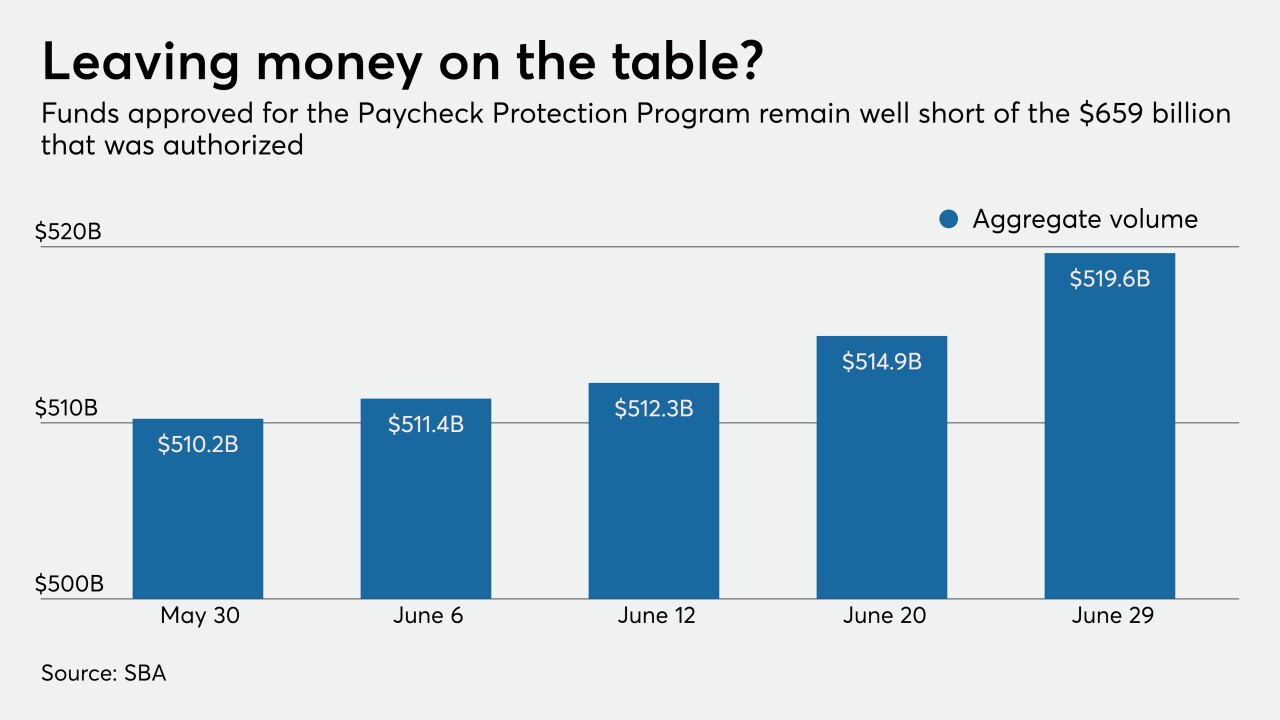
Lenders are selling their Paycheck Protection Program loans or hiring outside companies to navigate the process in an effort to reduce risk and avoid overloading their employees.
June 30 -

Credit unions won the day as the Supreme Court rejected an appeal that would have limited consumers' access to financial services. Now Congress must act to remove those field-of-membership restrictions entirely.
June 30 -

Technology has helped banks expand globally, but complying with country-specific laws restricting data flows is a constant struggle.
June 30 -

While the resolution sends a message of disapproval of the OCC’s reform of the anti-redlining law, the Republican-controlled Senate is not expected to consider the measure.
June 30 -

Supreme Court says the president has the power to remove the director at will; the bank is the only one of the six largest U.S. banks to say it will cut its dividend next quarter.
June 30 -
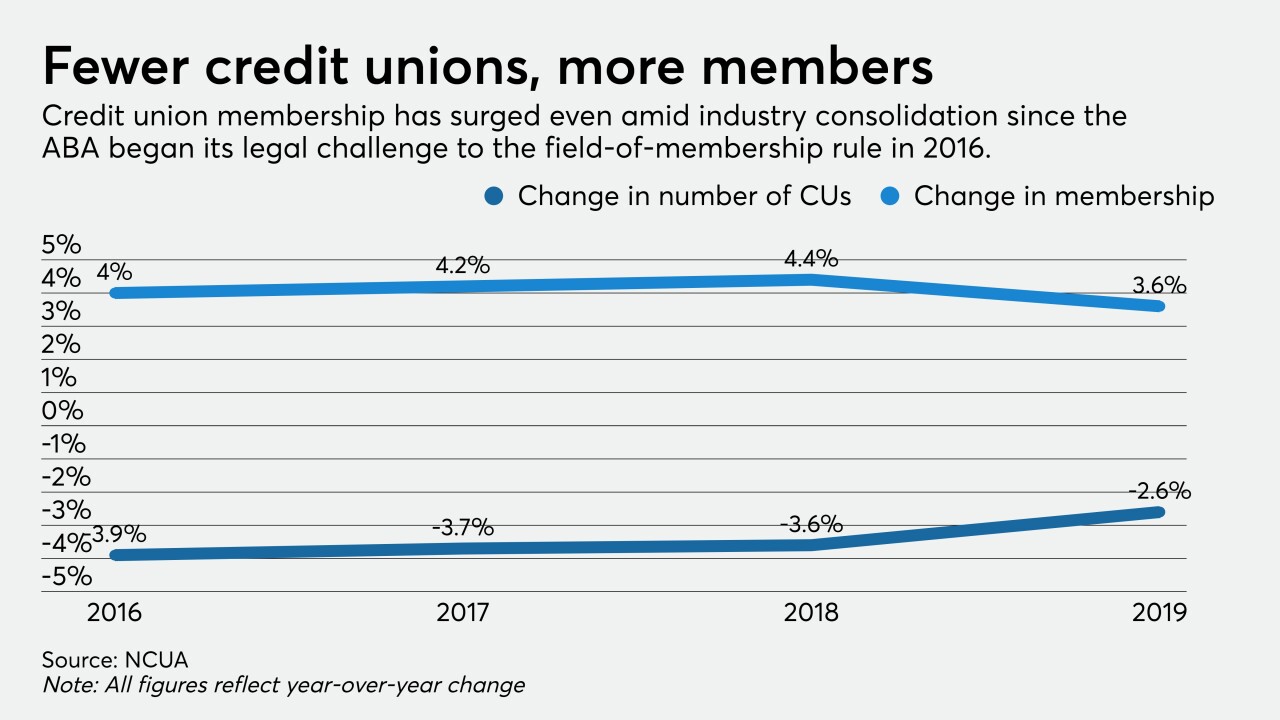
The industry claimed victory over banks as the Supreme Court elected not to hear a challenge to a controversial 2016 rule, but the landscape has shifted dramatically since NCUA approved the measure.
June 30


