-
Concerns about large unrealized losses on bond investments have receded since the spring banking crisis, but the paper losses have started growing again in recent months. The worries today are less about banks' survival — and more about how much their margins will get squeezed.
 September 12
-
The top three fintech SPAC mergers have a combined announced deal value of more than $2.6 billion as of the end of June 2023.
September 12
-
Recent Arizent research shows that having appealing digital spaces is one of the most important factors for customer experience at banks.
 September 12
-
Securities and Exchange Commission Chairman Gary Gensler told lawmakers that artificial intelligence could be used to game securities transactions in favor of corporate interests over those of investors. Critics say the SEC's plan to combat such conflicts of interest is hostile to technology.
 September 12
-
More than half of investment firms for the world's superrich seek opportunistic direct deals based on attractive valuations, Citigroup found in a survey of 268 family offices representing $565 billion in net worth.
September 12
-
The securities have been hard to sell in part because the bonds will probably pay below-market coupons for years.
September 12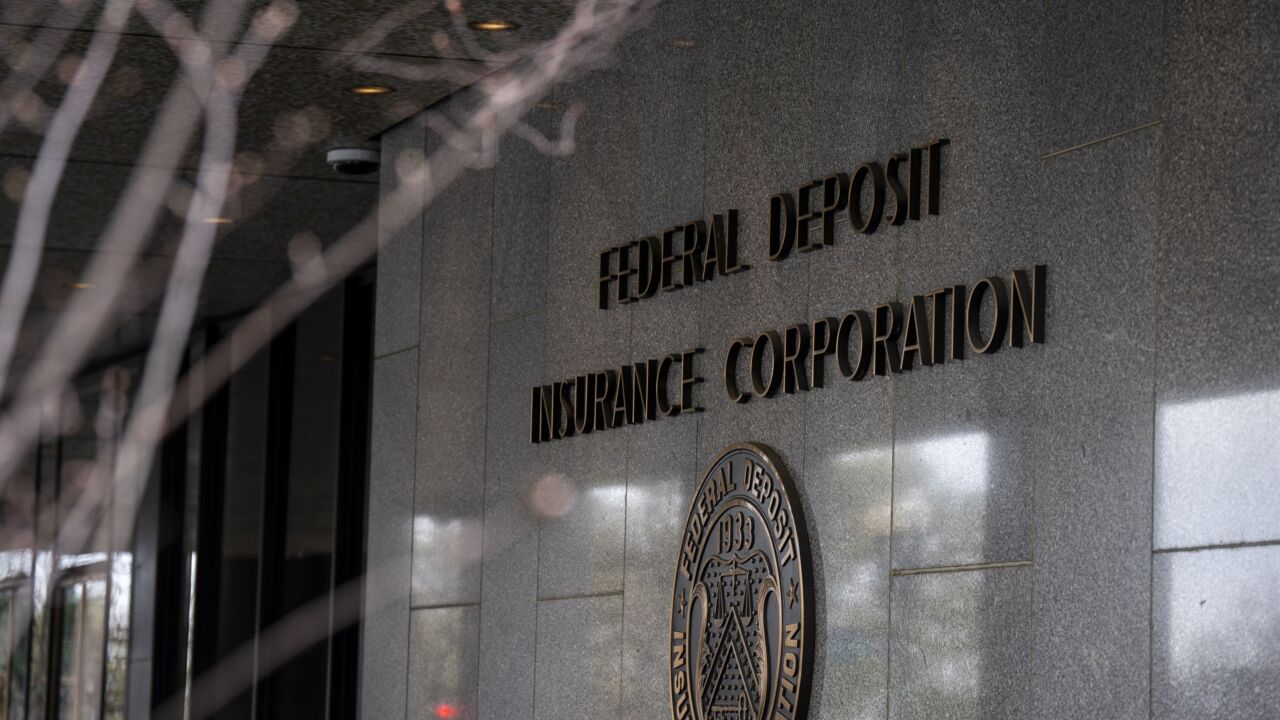
-
Blackhawk Network now offers Visa gift cards made of paper, while Venmo and Hallmark are putting QR codes in standard greeting cards. Both initiatives address the environmental harms of first-use plastic.
 September 12
-
The Department of Health and Human Services' recommendation to reclassify cannabis as a Schedule III substance has sparked renewed interest in cannabis banking reforms in Congress, but in itself will do little to make banking cannabis businesses easier.
 September 11
-
After taking incremental steps to bolster its wealth management business, the Rhode Island bank is preparing to roll out a broader strategy focused on high-net-worth clients.
 September 11
-
The avoidance of one of the harsher economic scenarios is good news for banks, which are also contending with tighter profit margins and increasing competition for customers. But loan growth and credit quality could be at risk.
 September 11
-
The North Carolina bank, which has been facing pressure to curb spending, rolled out a plan that includes job cuts, the consolidation of businesses and lower technology spending. Analysts wonder whether it will soothe investor frustration over Truist's sagging stock price.
 September 11
-
Bank of America and TD Bank are finding that new employees and interns respond well to onboarding and training that takes place in the magical worlds of virtual reality.
 September 11
-
The CU Relief Fund for Ukraine, which launched in late 2022, now takes public donations and is working to recruit more institutions to its cause.
 September 11
-
Hybrid working made it easier for some women to pursue a career while balancing family demands but a renewed return-to-office push may reverse some of those gains, a report predicted.
September 11
-
Brokered deposits had nothing to do with this year's bank failures, and regulators shouldn't pretend otherwise.
September 11
-
Low-code programming, which uses easy-to-understand visual elements to guide upgrades, is catching on with fintechs that want to avoid large projects.
 September 11
-
Executives at the Columbus, Ohio-based regional bank were convinced by a presentation Veuu, the solution's developer, made earlier this year.
 September 8
-
Some analysts and investors want the North Carolina bank to make big changes to meet financial targets, which they say aren't being met more than four years after the BB&T-SunTrust merger. The critics will be closely watching a presentation by top Truist executives on Monday.
September 8
-
Michael DeVito has been able to grow the government-sponsored enterprise's net worth, but at the current pace and without a rule change, it could take 10 years to build enough capital to exit conservatorship.
 September 8
-
The Federal Deposit Insurance Corp. acknowledges in a new report that it didn't adequately monitor First Republic Bank's uninsured deposits, interest rate risk sensitivity and rapid growth — and as a result left the bank vulnerable to contagion.
September 8


