
Fraud
Fraud


-

Fraudsters hit U.S. banks and merchants hardest with bogus credit card applications in April, while most consumers were in full pandemic lockdown, according to new data from Socure.
July 16 -
While the use of behavioral biometrics such as keystroke patterns has become commonplace for web-based security, this has less applicability to mobile commerce given the different form factor and interface of a smartphone, says Incognia's André Ferraz.
July 16 -

Banks' fear of big penalties, the changing tactics of nimble criminals and a greater openness among regulators to new approaches are among the factors driving big investments.
July 15 -

Ashton Ryan, the New Orleans bank's CEO, and two other officers are accused of disguising the financial condition of certain borrowers before the bank's 2017 collapse.
July 14 -
Payment fraud remains a credible threat and unfortunate reality for the majority of businesses, something that is unlikely to go away as fraud methods continue to evolve, says JPMorgan Chase's Alec Grant.
July 14 -

The bank is expected to report a small net profit for the second quarter next week; shareholders are challenging the government's 2012 decision to appropriate nearly all of the agencies' profits.
July 10 -
To ensure safe, secure transactions that are protected against fraud, retailers moving to EMV have been encouraged by their POS partners to replace or upgrade the network infrastructure, says TNS' Brian DuCharme.
July 10 -

For the past several years, the concept of sharing transaction data between merchants, processors and issuers has been considered a good security measure to curb fraud. But someone has to compile and compare that data in such a way to not only stop fraud, but assure legitimate transactions are not declined.
July 9 -
With a growing number of new applications integrated into the fabric of banking and financial services businesses, security throughout the system becomes a critical success factor, says White Hat Security's Craig Hinkley.
July 9 -
The technology addresses both security and hygiene concerns, says Fingerprints' Lina Andolf-Orup.
July 7 -
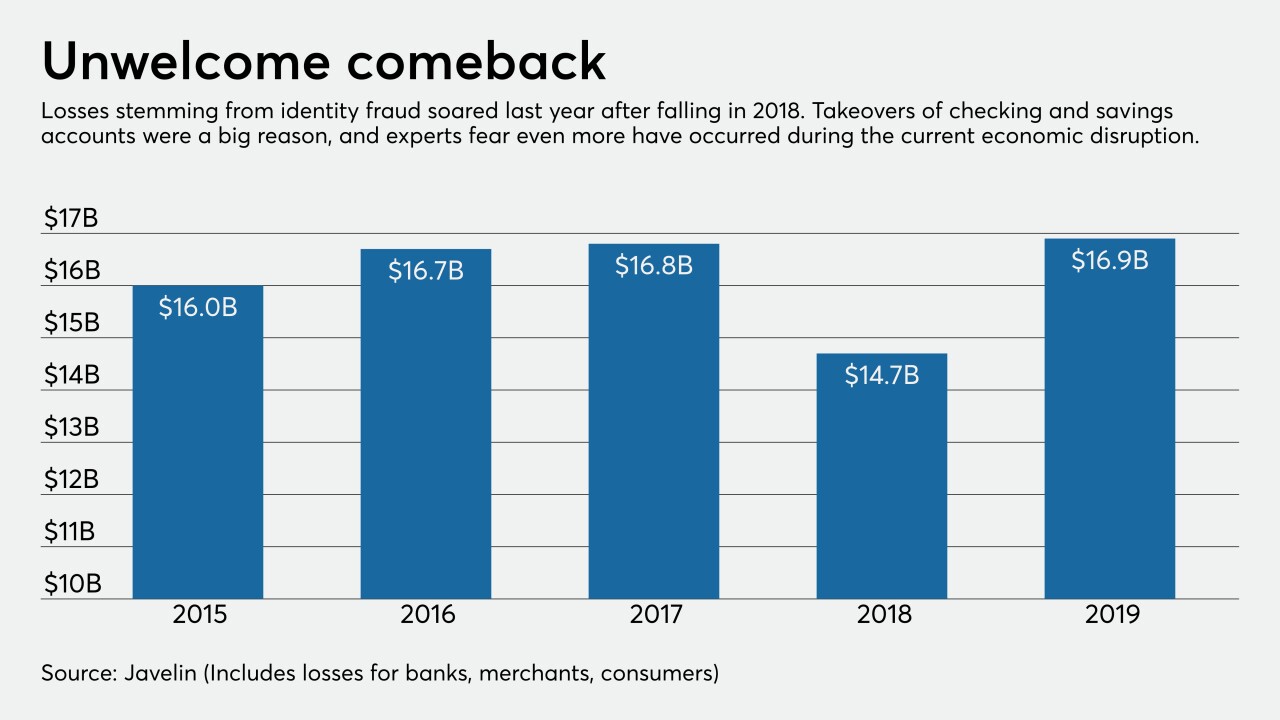
Axcess Financial is using stronger authentication, studying up on bad actors and planning to use a federal service that automates verification of Social Security numbers.
July 2 -

The U.K.’s six major banking groups are now required to have implemented the new Confirmation of Payee (CoP) scheme for Faster Payments and Chaps as part of a regulatory push to tackle the rampant rise in Authorized Push Payment (APP) fraud.
July 2 -

Tia Ilori, Senior Director of global fraud and breach investigations at Visa, joins us to talk with Michael Moeser, PaymentsSource's senior analyst, about the new attacks and fraud trends that have emerged since the start of the pandemic.
June 30 -
Details about the level of global fraudulent attacks on consumer bank accounts during the coronavirus pandemic are coming into focus with new data from TransUnion.
June 26 -
Always view fraud prevention tactics and strategies within the proper context. Be aware of current economic and societal conditions and analyze how behaviors may vary, says Sift's Jeff Sakasegawa.
June 26 -
While it’s inevitable that fraudsters will continue to hone and change their methods, businesses must continually monitor the factors that affect fraud — from changing consumer behaviors to major economic trends — and the actions they can take to safeguard against them.
June 23 -
Decentralizing staff makes strong internal controls even more important, Josh Cyphers and Derek Halpern of Nvoicepay write.
June 22 -

As more people create false identities to open card accounts, Visa has launched a new scoring system that takes advantage of the card brand's scale.
June 22 -

The bank says fraud attempts involving commercial wire transfers have escalated since the outbreak began. It's training employees and customers how to head off the often hard-to-detect scams.
June 18 -
Through employee education and deploying tools that allow you to rapidly thwart threats internally and externally, you can reduce the risk of payments fraud and gain greater peace of mind, says Fleetcor's Scott duFour.
June 18


