
Regulation and compliance
Regulation


-

The long-running feud between banks and fintech companies over screen scraping is morphing into a more nuanced and important conversation about how to exchange consumers' financial data securely and fairly.
January 27 -

Critics fear a large player obtaining a charter could quickly be seen as systemically important to the economy, while supporters argue there will be safeguards in place.
January 27 -

Sugarman left less than two weeks after the SEC launched an investigation into company statements.
January 27 -

American Banker readers share their views on the most pressing banking topics of the week. Comments are excerpted from reader response sections of AmericanBanker.com articles and our social media platforms.
January 27 -

Chinese's largest online payments company to get a footprint in the U.S.; Believers in blockchain bemoan the lack of global cooperation.
January 27 -
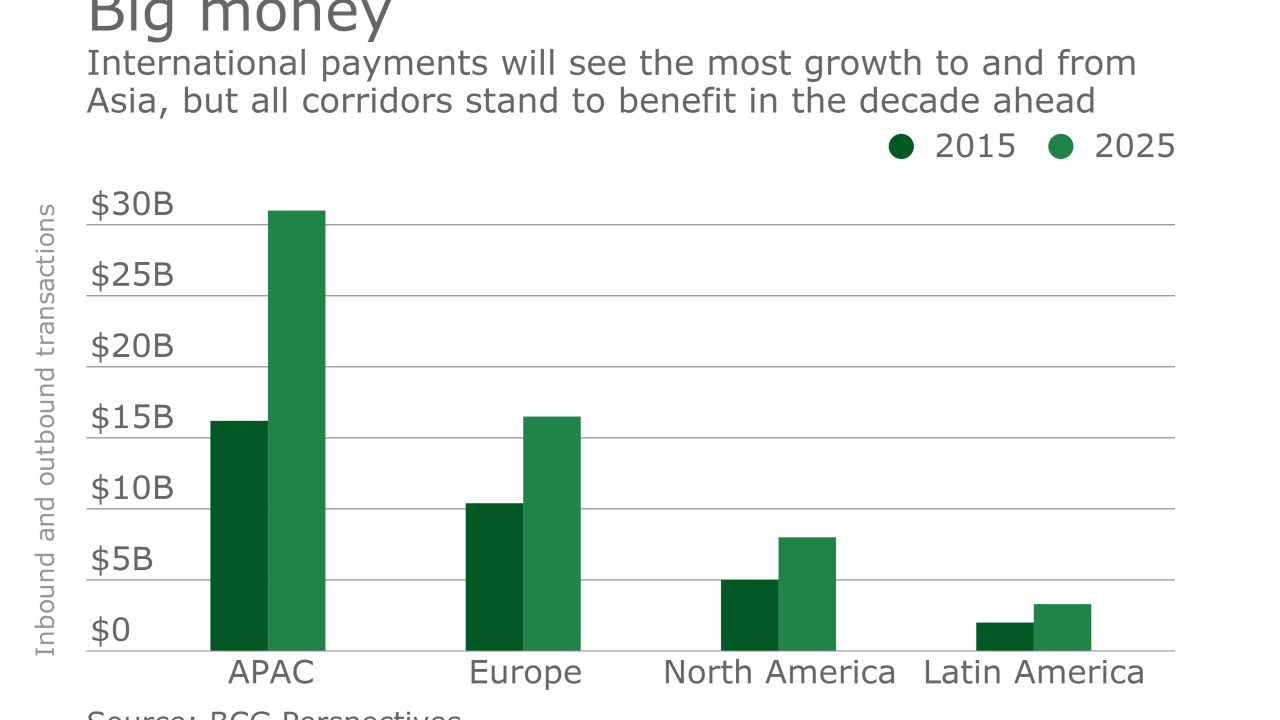
The U.S.-to-China payments corridor is one of the biggest in the world, according to the most recent World Bank data. It is dwarfed only by the U.S.-to-Mexico corridor, which the Trump campaign targeted as part of its border wall plan.
January 27 -

With Republicans in control of Congress and the White House, smaller banks see a window of opportunity.
January 26 -

NCUA’s latest list of supervisory priorities offers credit unions a glimpse at what examiners will be focusing on in 2017 – and even well into 2018.
January 26 -
One reader decries inconsistencies in a recent CUJ op-ed.
January 25 -

The proposed charter for fintech firms is rapidly becoming a massive battle that pits state regulators, consumer protection groups and even some banks against a broad assortment of fintech firms and financial institutions.
January 25 -

President Donald Trump's signing of an executive order Wednesday to push forward with plans for a "security wall" between the U.S. and Mexico has strong implications for how the plan will affect cross-border payments.
January 25 -

Many banks are weighed down with orders tied to the Bank Secrecy Act and anti-money-laundering laws. Others are dealing with low Community Reinvestment Act ratings. Bank M&A and branching are typically off the table until such issues are addressed, but that doesn't mean all growth opportunities are gone. Here are some ways constrained banks might be able to add revenue while working through their regulatory challenges.
January 25 -

The annual registration period for CUSOs opens on Feb. 1 and observers say the second year of the process comes with significantly less anxiety than last year.
January 25 -
Bank customers will be able to check information on Mint, TurboTax and QuickBooks without sharing their JPM passwords; Treasury secretary nominee says regulation should account for bank "complexity and activity"
January 25 -

The deal had been delayed since Investors had been hit with a BSA-related regulatory order.
January 24 -

The New York credit union is touting double-digit growth for 2016.
January 24 -

The plan to offer special-purpose national charters to fintech companies is a one-size-fits-all approach that could prove detrimental to the growth of startups.
January 24 -

If the new White House engages in the same process of listening to and researching the fintech industry that President Obama initiated eight years ago, startups should just take a pass.
January 24 -

Banks are becoming more comfortable with robotic process automation and could use it overhaul everything from the payroll functions to advising customers.
January 23 -

The Consumer Financial Protection Bureau ordered two units of Citigroup to pay a combined $28.8 million for failing to help borrowers with foreclosure relief.
January 23


