-
The political pendulum appears to be swinging toward significantly lower capital requirements, but that threatens to undo the gains banks made in the wake of the financial crisis.
October 30 Peterson Institute for International Economics
 -
Momentum is building to replace the hard-target $50 billion asset systemic risk threshold for banks with an indicator test, but it remains unclear whether it will be enough to get Congress to act.
October 27
-
While stress testing can provide valuable insight into the strength and resilience of our financial system, regulators are increasingly acknowledging shortcomings in the post-crisis regime.
October 26 American Bankers Association
 -
Consolidation has led to too few community banks, which is amplified in areas where capital is needed most.
October 25 Calvert Advisors LLC
 -
Republicans were able to use an obscure legislative process to overturn a rule that banks and credit unions feared would raise their litigation costs.
October 24
-
For community bankers, the current environment is more challenging than ever, with high regulatory burden and tough competition. Four bank CEOs sat down to discuss the future of the industry, and what they are hoping may change.
 October 24
-
Top executives at nineteen regional banks sent a letter to the Senate Banking Committee endorsing a bill that would change the systemically important financial institution threshold from $50 billion in assets to an indicator test.
October 23
-
Federal Housing Finance Agency Director Mel Watt said the agency is poised to examine alternatives to how a Fannie Mae and Freddie Mac assess creditworthiness of home buyers, including seeking public comment on the issue later this fall.
 October 23
-
In a moment of rare unity, the Independent Community Bankers of America and National Association of Federally-Insured Credit Unions sent a joint letter to FHFA arguing to stop the GSEs' profit sweep.
October 19
-
Recent regulatory reform activity is a step in the right direction, but the changes envisioned in both a Treasury Department report and a suite of House bills are a mixed bag.
October 18 Cato Institute
 -
The president of the St. Louis Fed said that regulators should go back to the pre-Dodd Frank framework for small banks, while warning about changes to the system as fintechs expand their presence.
October 17
-
The current regulatory focus drives the growth of ever-larger, harder-to-manage and harder-to-regulate megabanks, while community banks have been left to be picked up by acquirers.
October 17 University Bank
 -
Senate lawmakers will soon introduce a bill that could more than quadruple the current $50 billion threshold to be considered a systemically important bank, National Economic Council Director Gary Cohn said Monday.
October 16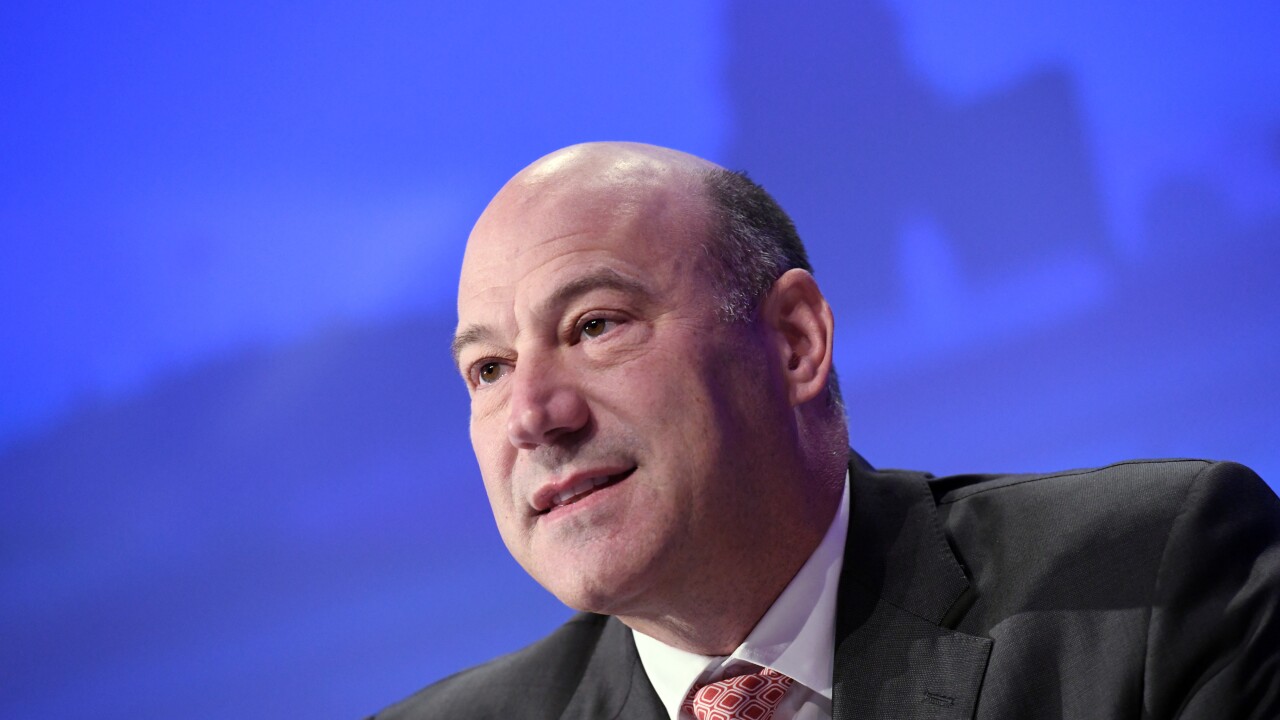
-
Credit union trade associations commended the committee’s work that was the result of a two-day mark-up
October 13
-
The bills were individual pieces of the larger Financial Choice Act, including measures to raise the systemic threshold for banks and raise the threshold for banks subject to CFPB supervision.
October 12
-
The Consumer Financial Protection Bureau was created in part to ensure that nonbanks are subject to federal oversight, but the fact is that 99% of banks are exempt from CFPB supervision.
October 11 Community Home Lenders of America
 -
Cynthia Blankenship, an executive at Bank of the West in Grapevine, Texas, has been a regular in Washington for years fighting for regulatory changes. She is encouraging other bankers to do likewise.
October 4
-
Though FHFA Director Mel Watt stopped short of saying he would break with a Treasury agreement that forces all profits of the GSEs to go to the government, he emphasized that it couldn’t continue indefinitely.
October 3 -
The week of Oct. 2 is shaping up to be a significant one for the financial services industry on Capitol Hill, as lawmakers grill the top executives of Equifax and Wells Fargo, as well as the top regulator of Fannie Mae and Freddie Mac.
September 29 -
Under the bill, regional banks may eventually be able to shed the systemically important financial institution designation that subjects those with more than $50 billion in assets to tougher regulatory requirements.
September 28


