
Stablecoins
How are banks approaching dollar-backed digital assets (stablecoins)?
Stablecoins have moved from the edge of the
Banks are testing stablecoins for cross-border payments, liquidity management, and digital wallets. Some are also exploring how stablecoins can support interbank transactions or be issued directly by regulated institutions. As the landscape takes shape, stablecoins are starting to look less like an experiment and more like infrastructure.
-
Tokenization projects are no longer viewed as modernization initiatives, but rather as a potential source of new revenue, lower operating costs, improved capital efficiency and differentiated products.
September 7
-
Swift's network of 11,500 banks can exchange deposit tokens in a standardized way.
 September 4
-
The digital bank announced a collaborative partnership with the crypto exchange platform as it continues to expand its overall digital asset strategy.
 September 4
-
The Commodity Futures Trading Commission asked a federal court to drop a suit filed by the Chicago Mercantile Exchange challenging the agency's decision to let Kalshi offer bitcoin perpetual futures contracts, known as perps.
 September 3
-
The crypto firm has resubmitted its request for a national trust bank charter from the federal agency after its first filing was quietly returned.
September 1
-
The initial coin offering boom of a decade ago was a manic free-for-all, but inside that mania was the germ of a genuinely good idea.
 September 1
-
The crypto company made the acquisition to expand its institutional platform after it received approval from the OCC for a national trust bank charter.
August 31
-
As institutions look to ease exposure, digital assets are the largest area of concern, according to American Banker Market Intelligence research
 August 31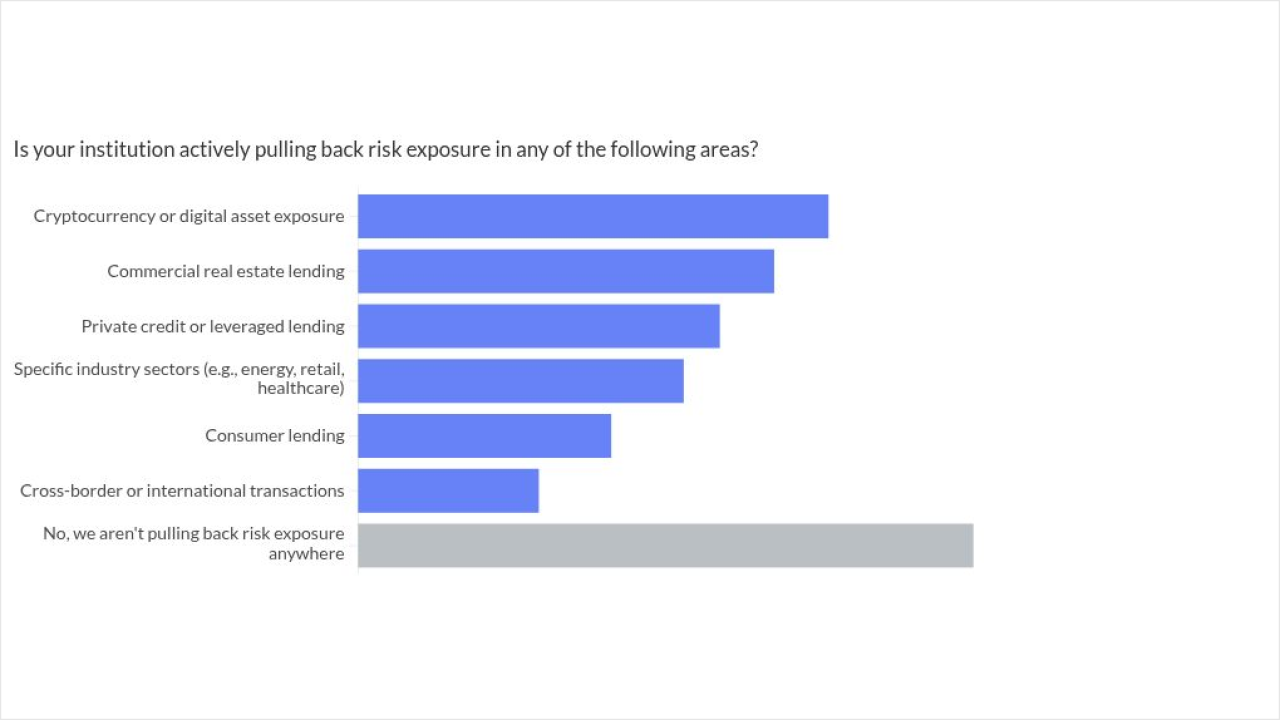
-
As summer comes to an end, there are a surprising number of things to keep an eye on. Here is American Banker's handy cheat sheet for the rest of the year.
August 31
-
As prospects for the CLARITY Act dim, some agencies are moving to develop their own crypto-related frameworks, but questions remain about how those rules will affect the banking sector and how durable they will be.
 August 31


The first three months of the year coincide with the start of President Donald Trump's second term in office. Investors are likely to be more interested in banks' outlooks amid swings in tariff policy than the first-quarter results.


Frequently Asked Questions:
How are banks approaching dollar-backed digital assets (stablecoins)?
Stablecoins have moved from the edge of the crypto, world to the center of policy and banking conversations. As regulators and banks weigh their role in payments, settlement, and reserves, this page follows the developments — from early pilots to proposed legislation.
Banks are testing stablecoins for cross-border payments, liquidity management, and digital wallets. Some are also exploring how stablecoins can support interbank transactions or be issued directly by regulated institutions. As the landscape takes shape, stablecoins are starting to look less like an experiment and more like infrastructure.
Why are banks paying attention to stablecoins?
Stablecoins are increasingly viewed as a potential upgrade to legacy payments systems. Banks are evaluating them for settlement, remittances, cross-border transactions, and tokenized deposit models.Are banks issuing their own stablecoins?
Some are exploring the option. Institutions like JPMorgan (with JPM Coin) and new entrants like PayPal are piloting bank-issued stablecoins, while others are watching regulatory developments before moving forward.How do stablecoins impact compliance and risk?
Issues include KYC/AML enforcement, cybersecurity, operational risk, and how reserve assets are held and reported. Banks exploring stablecoin activity must weigh both technological benefits and regulatory scrutiny.How are regulators responding to stablecoin innovation?
Congress is debating stablecoin-specific bills focused on reserve backing, issuer licensing, and oversight. The Federal Reserve, OCC, and state regulators are also shaping how bank involvement in stablecoin activity is supervised.How are banks using stablecoin?
Banks are using stablecoins to speed up cross-border payments, manage liquidity across global branches in real time, and test new forms of settlement between institutions. Some are integrating stablecoins into retail-facing digital wallets, while others are exploring interbank networks built on tokenized payments. These efforts are less about crypto speculation and more about making money move faster, with greater transparency and fewer intermediaries.- Real-time cross-border payments
- Internal liquidity management
- Retail-facing digital wallets
- Interbank tokenized payment networks
Top banks investing in stablecoin
List of institutions with greatest investment in stablecoin:- JPMorgan Chase – JPM Coin
- Custodia Bank – Avit Tokens
- Citigroup - Citi Token Services
- Societe Generale - USD CoinVertible
- Bank of America - Name yet to be released
- Fifth Third - Name yet to be released
- U.S. Bancorp - Name yet to be released