-
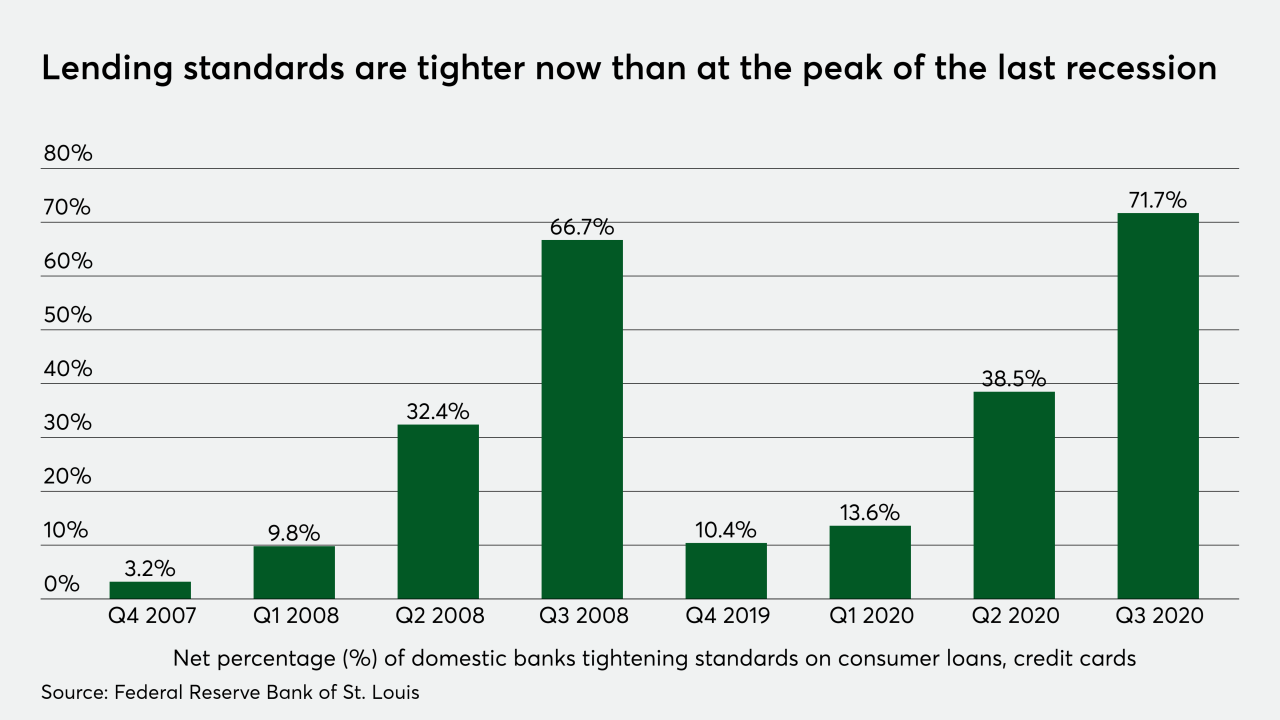
Payment rates for auto lenders and credit card issuers have remained strong despite a spike in unemployment. Whether these trends continue into 2021 will depend largely on the actions of Congress and the pace of medical advances.
 November 2
-
On Jun. 30, 2020. Dollars in thousands.
November 2 -
The agency’s final rule modernizing the Fair Debt Collection Practice Act limits calls to seven per week, but collectors won stronger protections from liability claims and other key changes to the original proposal.
 October 30
-
The lawsuit filed on behalf of the National Association for Latino Community Asset Builders says the rule was based on “an invented evidentiary standard,” and failed to consider consumer protections mandated by Dodd-Frank.
October 29
-
The subprime lender cited low odds that Washington will deliver further economic relief, and the fact that $1.5 billion of loans whose deferral period expired are now more than 30 days behind.
October 28
-
Even as consumers shift more spending away from cash and the market for personal travel picks up, the coronavirus pandemic is still exerting a heavy toll on Mastercard's consumer and corporate spending.
 October 28
-
The agency found a 40% error rate in the 2016 data submitted by the Seattle bank. In addition to the fine, the institution is required to improve its compliance systems.
October 27
-
A 2019 decision by Amy Coney Barrett, then a 7th Circuit judge, cited an earlier Supreme Court ruling suggesting a high bar for plaintiffs to claim harm. But other jurists have favored a less onerous standard.
October 27
-
Wells Fargo is exploring a sale of its corporate-trust unit that could fetch more than $1 billion and is considering whether to find a buyer for its student loan portfolio, according to people familiar with the matter.
October 26
-
With the sector facing serious headwinds — from declining enrollment during the pandemic to the prospect of a Biden administration making college free for many families — the departure of a major player could be a shot in the arm for the likes of Discover and Sallie Mae.
October 22
-
The Cleveland company will exit indirect auto lending and close branches so it can devote more resources to mortgages, student loans and other relationship-driven, digital-friendly businesses.
 October 21
-
Banks have managed to steer around trouble spots in energy, hotel and mall-related credits. But fears of further deterioration, an eviction wave or more job losses are keeping lenders circumspect.
 October 21
-
The new policy will allow the company to close some work sites and reduce the size of others. It’s part of a broader effort to cut expenses to help offset revenue declines brought on by the coronavirus pandemic.
October 20
-
The auto lender says consumers’ skittishness about flying and using public transit during the pandemic has fueled a surge in demand for new and used cars. But executives remain wary of high unemployment and the potential for a rise in loan defaults.
October 16
-
Defaults have been milder than expected thanks to government relief and stricter underwriting. But with the crisis dragging on and policymakers unable to agree on a stimulus plan, loans to highly indebted companies remain at risk.
October 15
-
Spending is up and deferrals are down sharply, signaling that the economy has turned a corner, CEO Brian Moynihan said. The outlook stood in stark contrast to JPMorgan Chase, which set aside more funds to address potential exposure in consumer banking.
October 14
-
The industry can gain lifelong members in this demographic by validating their financial concerns as the economy struggles and offering guidance without judgment.
October 9 FindCreditUnions.com
 -
The Consumer Financial Protection Bureau's overhaul of its Qualified Mortgage standard is alarming free-market advocates who say it will precipitate a return to easy credit and higher defaults and could disproportionately harm minorities.
October 8
-
Bank of America plans to offer some of its customers access to short-term loans, the latest blow to the payday lending industry.
October 8
-
The company, which provides credit cards to millennials, is expanding its target audience beyond thin-file consumers and those without credit histories. It will now also target those with blemished, nonprime credit histories.
 October 7