
Regulation and compliance
Regulation


-

The Massachusetts senator and presidential contender sent a letter to eight of the biggest U.S. banks asking about how they assess climate-related risks to assets and how they plan to mitigate social and economic fallout.
January 22 -

The new group should look at protecting consumer data and how nonprime financial consumers are treated through new regulations.
January 22 -

Liability for missteps by vendors, jurisdictional headaches tied to locations of servers and legacy technology are other potential impediments.
January 21 -

The agency is sending a strong message that it won’t rush to end an exemption for Fannie Mae and Freddie Mac while also signaling longer-term changes that will affect all lenders.
January 21 -

The OCC said Citigroup's main bank subsidiary violated the Flood Disaster Protection Act by not ensuring that borrowers with homes in flood hazard areas had insurance coverage.
January 21 -

Director Kathy Kraninger has told lawmakers that the agency will delay the expiration of the so-called QM patch, now set for January 2021.
January 21 -
Some of the world’s major central banks are teaming up to assess potentially developing their own digital currencies, acknowledging that their role is being challenged by new technologies and private sector initiatives such as Facebook Inc.’s Libra.
January 21 -

Banks in the U.S. should take note of these requirements before opening their systems to third-party developers.
January 21 -
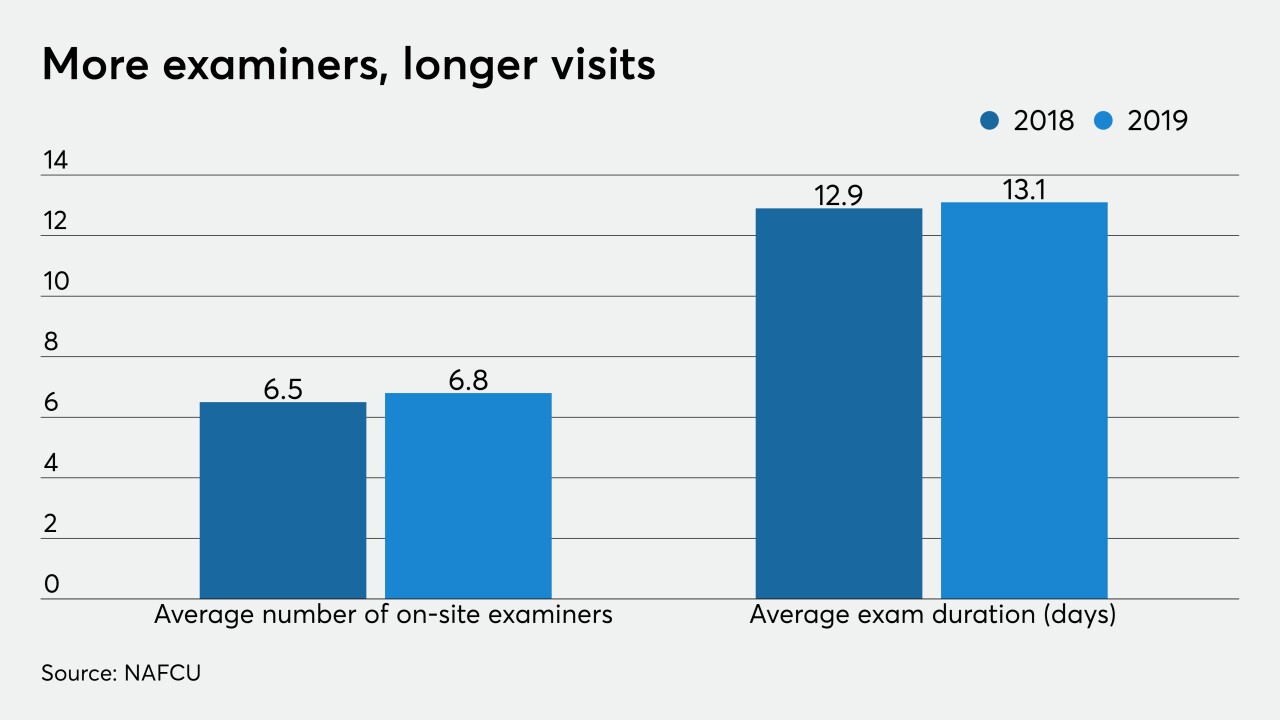
The National Credit Union Administration promised qualified credit unions under $1 billion in assets would be on an 18-month exam timeline by the end of 2019. A recent report says that hasn't happened.
January 21 -

Last week, Indian regulators ordered an antitrust probe of Walmart and Amazon while Jeff Bezos and other Amazon execs traveled to New Delhi to tout a $1 billion investment to digitize local businesses. The message is U.S. investment is welcome, as long as U.S.-driven data mining is kept at bay.
January 20 -

Truist emphasizes high-touch, high-tech focus with new logo; Wells Fargo loses another patent lawsuit to USAA; what the Visa-Plaid merger means for banks, fintechs; and more from this week's most-read stories.
January 17 -

The central bank’s top regulatory official laid out a comprehensive set of proposals to update how the agency supervises banks — particularly large institutions — with an eye toward improving transparency.
January 17 -

The agency issued a fair housing proposal last month that would perpetuate segregation and make it harder to detect discrimination.
January 17 -
European Union privacy watchdogs are gearing up to police digital assistants after revelations that Amazon.com Inc. workers listened in on people’s conversations with their Alexa digital assistants.
January 17 -

While not as large as the U.S. both in number of people and number of credit card owners, the U.K. remains a very lucrative market for issuing banks and card networks, as well as a host of alternative financial service providers catering to younger, underserved consumers.
January 17 -

The central bank is aiming to finish a rule creating a streamlined capital buffer ahead of the upcoming round of stress testing, but industry experts say that timeline may be too ambitious.
January 16 -

The Colorado Banking Board may be the first regulator to ever block a credit union-bank merger.
January 16 -
Colorado's State Banking Board voted 6-1 to stop Elevations Credit Union from buying Cache Bank & Trust. This is believed to be the first time regulators have blocked such a deal.
January 16 -

Lenders grew more optimistic that Congress will undo or narrow the loan-loss accounting standard after members of a House subcommittee assailed Russell Golden for approving the rule without studying its impact on credit availability.
January 16 -
Data security and infrastructure custodian Very Good Security (VGS) received a strategic investment from Visa, which has been spending heavily this week on fintech.
January 16


