-
Following are notable cases where banks were tripped up by the Fed's stress tests either by flunking the numbers (or quantitative) part of the test or raising red flags on a qualitative basis.
 June 19
-
Readers chime in on the GSE conservatorships, bitcoin’s future, regulatory relief for regional banks, a recent Supreme Court ruling on debt collection, and more.
June 16
-
One of the greatest factors hindering a full recovery following the 2008 crisis is improperly calibrated regulation, particularly of regional banking institutions.
June 14 Zions Bancorp.
 -
Fed Gov. Jerome Powell says central bank will provide more information to banks about how it conducts annual tests; bank CTO discusses its 2018 blockchain test.
June 2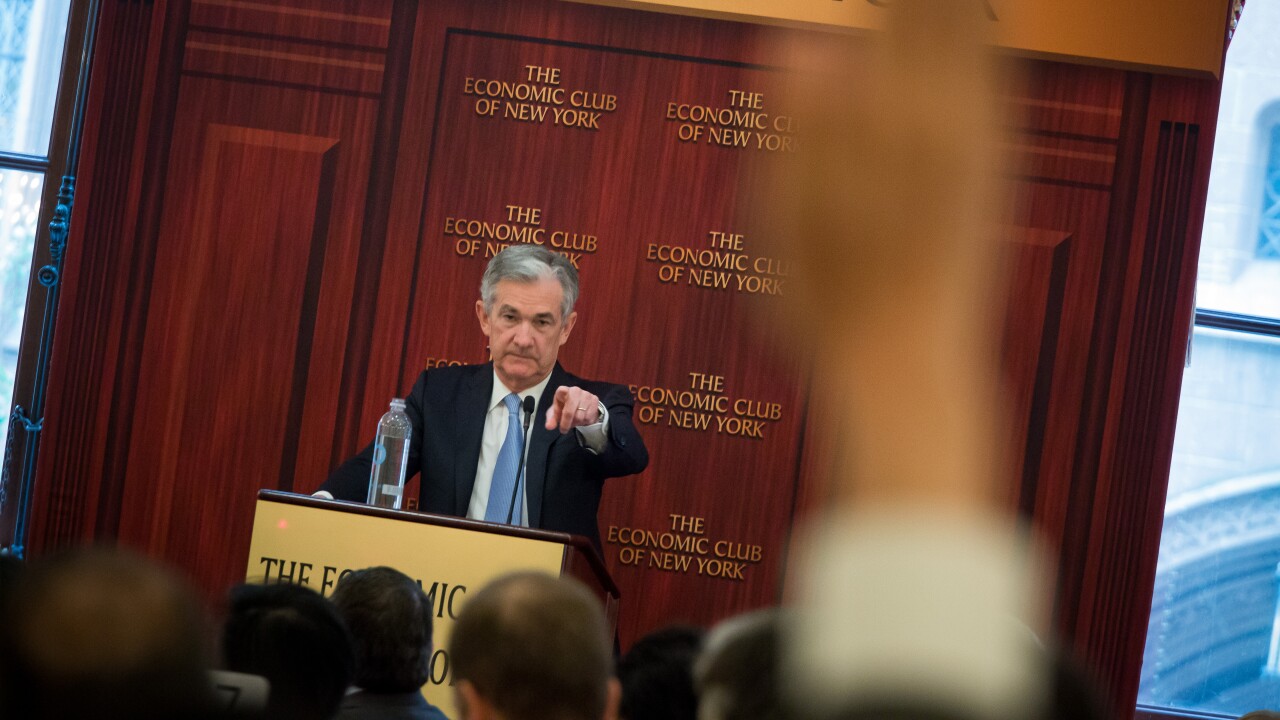
-
The Federal Reserve will announce the results of its stress tests beginning June 22.
June 1
-
The Fed is working on providing a more helpful guide on how the central bank’s testing models work and taking a lighter touch to supervising bank boards.
June 1
-
The Arkansas company is selling more than $300 million in stock a year before its DFAST test in June 2018.
May 25
-
Federal Reserve official Tim Clark oversaw the development of the agency’s stress testing program. He will see through this year's round of stress tests and leave this summer.
May 22
-
The $701 million acquisition will make Union the biggest community bank based in Virginia.
 May 22
-
Some believe that increased bank regulation is to blame for overall slower growth in commercial and industrial loans. Yet that assessment misses some important details.
May 17 Milken Institute
 -
In an interview, CEOs for midsize banks said they are hopeful for a bipartisan Dodd-Frank Act reform bill that eases regulatory requirements for institutions with assets of more than $10 billion.
April 13
-
In his annual letter to shareholders, M&T Bank chief Robert Wilmers laid out in compelling detail how government policies intended to protect American families have ultimately stymied economic growth.
April 4
-
Because the fates of banks and the communities they serve are so intertwined, the regulatory impacts borne by regional banks are inextricably linked to the repercussions experienced by their customers.
April 4 M&T Bank
 -
Pinnacle Financial wanted to be in high-growth markets. BNC Bancorp saw more regulatory burden looming and limited opportunities to sell itself. Those factors spurred what is currently the year's second-biggest bank deal.
March 10
-
Using stress tests as the capital benchmark in a reformed regulatory system could enable some forms of relief, but other rules should remain in place to ensure financial stability.
March 9
-
The recent decision by the Federal Reserve Board to exempt banks with less than $250 billion in assets from the qualitative aspects of the CCAR stress tests may be a sign of things to come, says Joo-Yung Lee, head of North American financial institutions at Fitch Ratings.
March 3
-
After questions arose after the 2016 Comprehensive Capital Analysis and Review stress test, the Fed said Thursday that it would not object to the bank’s resubmitted capital plan.
March 2 -
As banking leaders gain a more substantial policymaking role, they will have a greater impact if they stake out a clear position in favor of regulations that protect investors and depositors.
February 27 CLP Strategies
 -
Congressional Republicans are weighing potentially broad changes to the stress test program, including alterations to the way the tests are performed and the consequences of failing them.
February 24
-
The House proposal establishes a 10% leverage ratio as the standard for bank strength, but it says nothing about the riskiness of the bank’s business or the size of its exposure to economic downturns.
February 23


